Showing posts with label video. Show all posts

Wednesday, May 31, 2023

WW: Rico's First Show (Video)

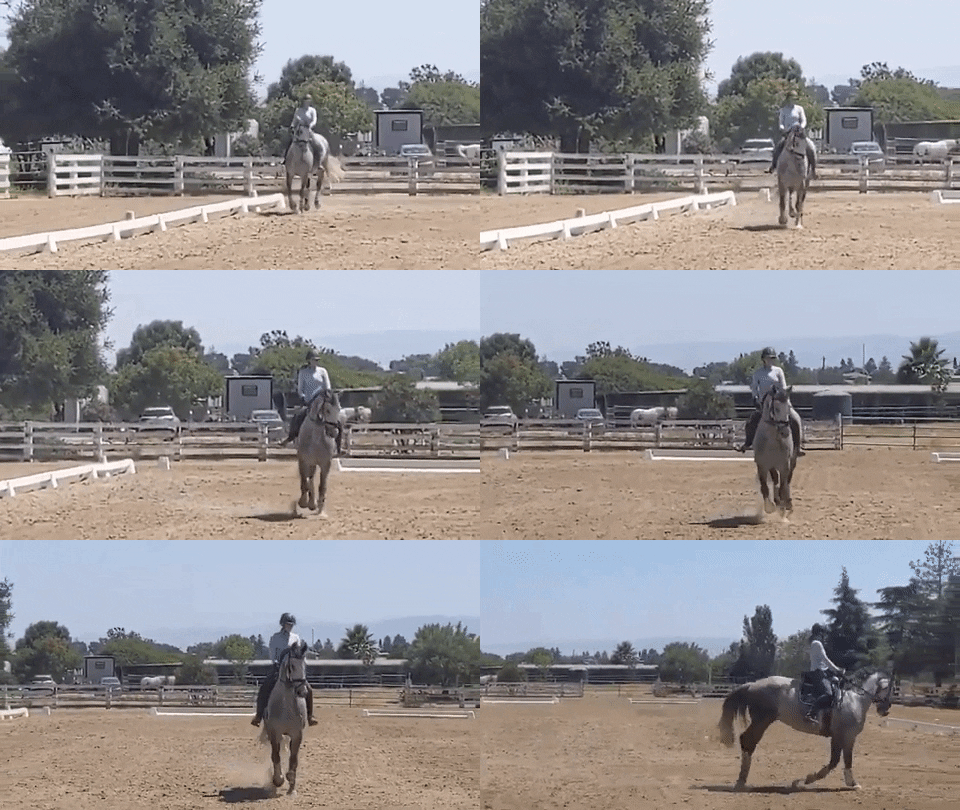
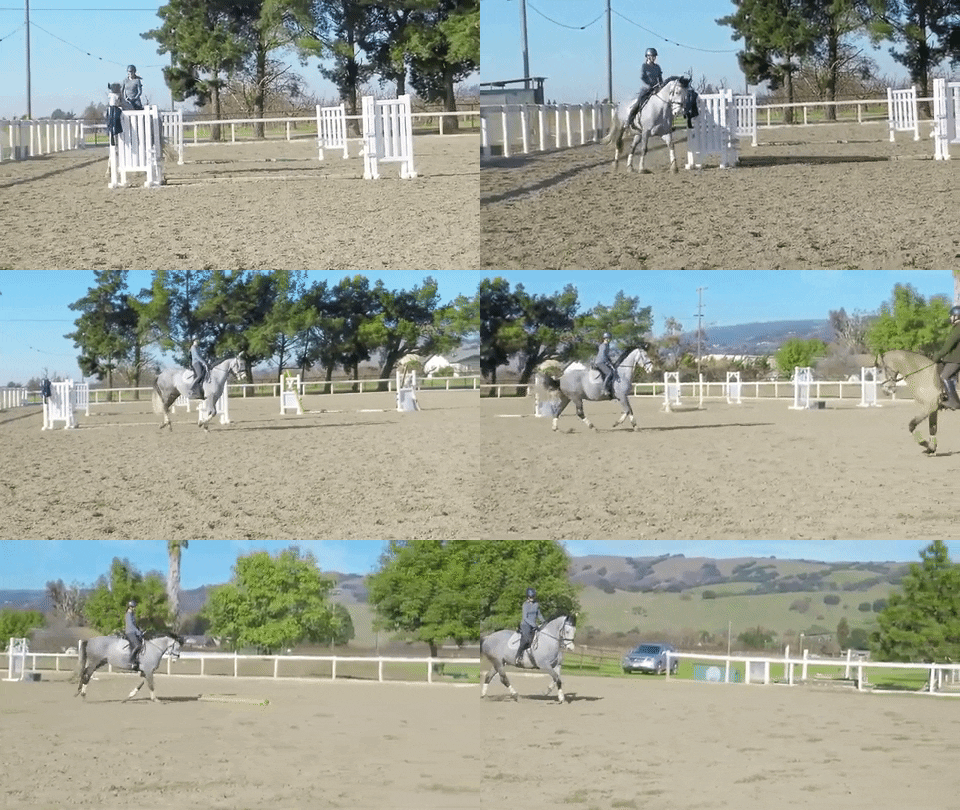
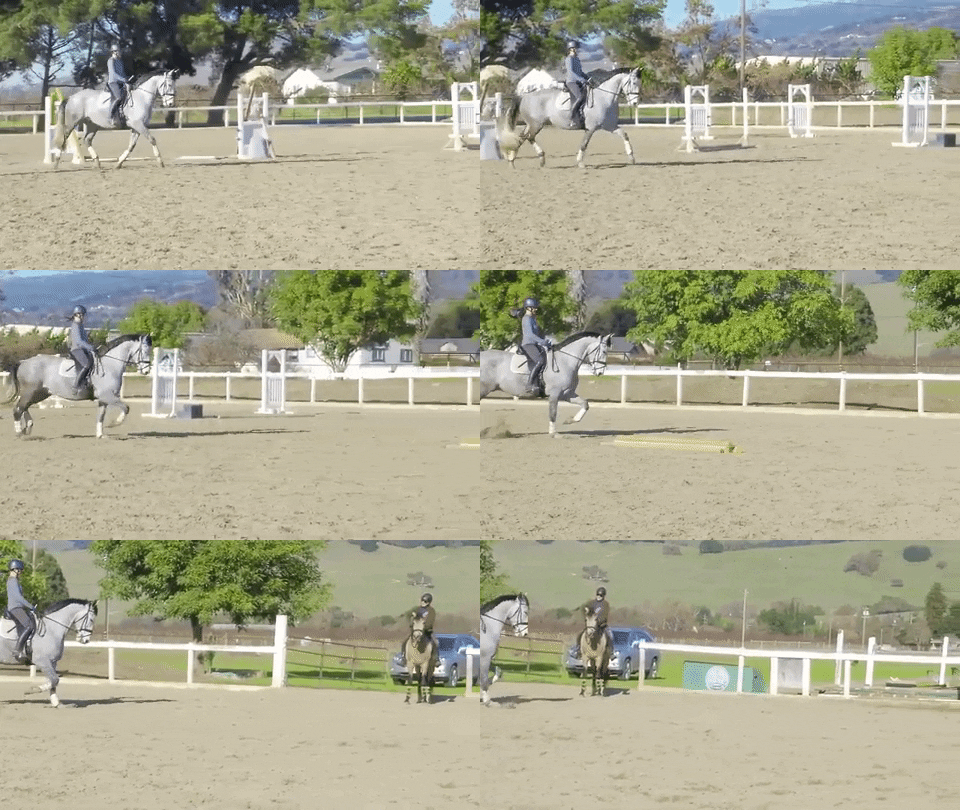
Way back in March 2005, Rico and I did our first ever show together and I have found video of it! This is a bit of the 2003 Training Level Test 3 test. 

It was a cool test, you came up centerline, turned left, and then the video picks up from there - you turned left at E, then at X did a figure 8. Then you picked up canter in the corner, rode a circle at A, then rode a half circle and trotted after crossing centerline at E. I assume after that there was some walk work and then cantering the other way. I don't think you did all that much more trotting. 

Anyway, enjoy! While resting assured that my riding got INFINITELY BETTER once I learned how to have any amount of stability in my body without resorting to rigidity. It'd take a while but now I have new problems. 


Wednesday, February 9, 2022

WW: Truly Insane Gaits

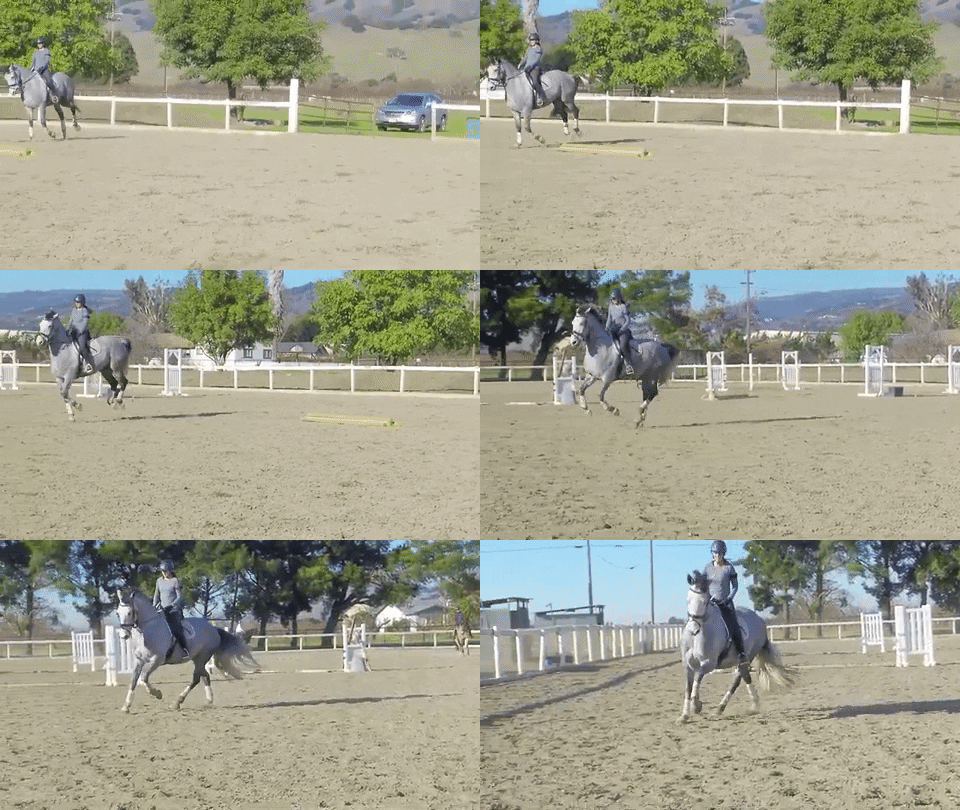
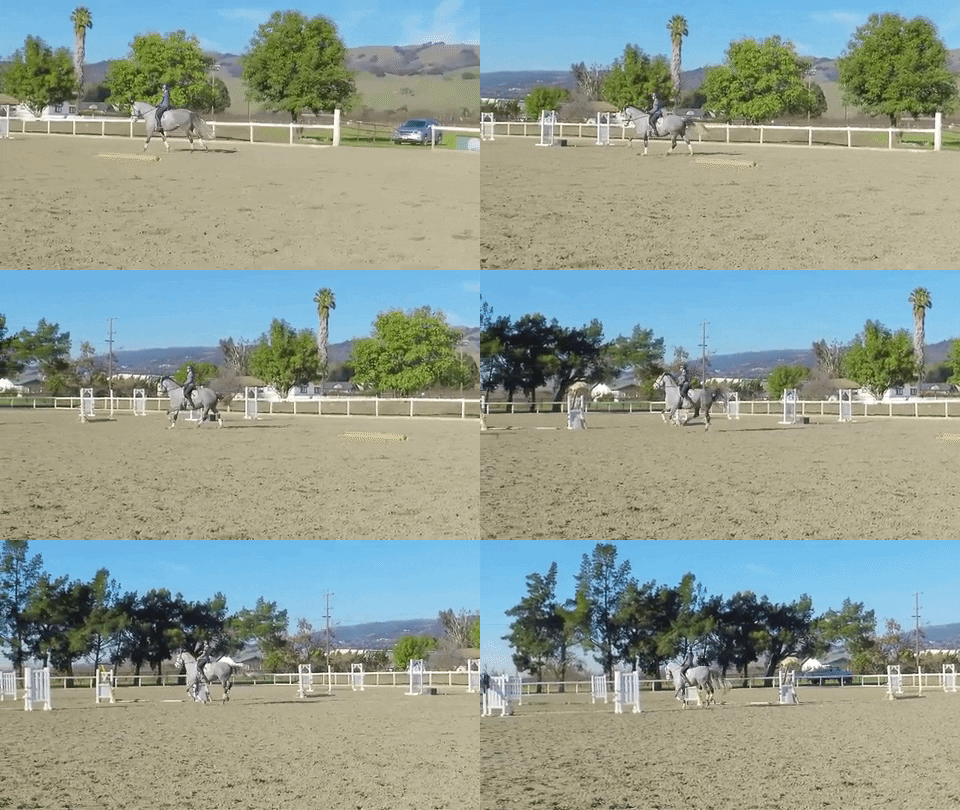
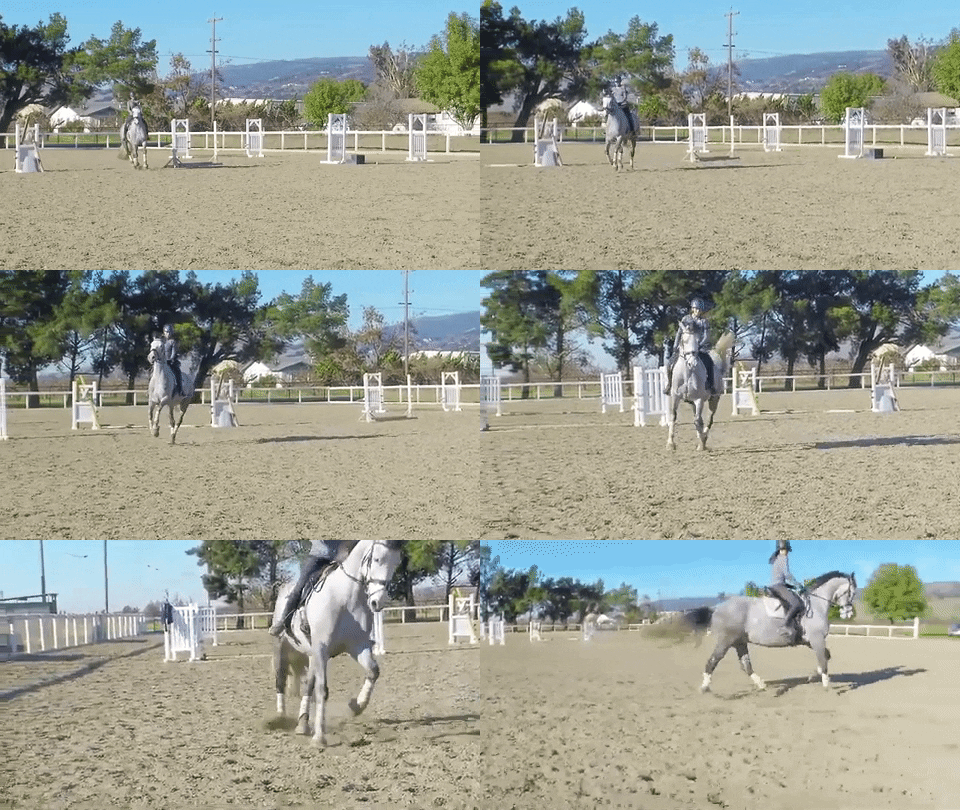
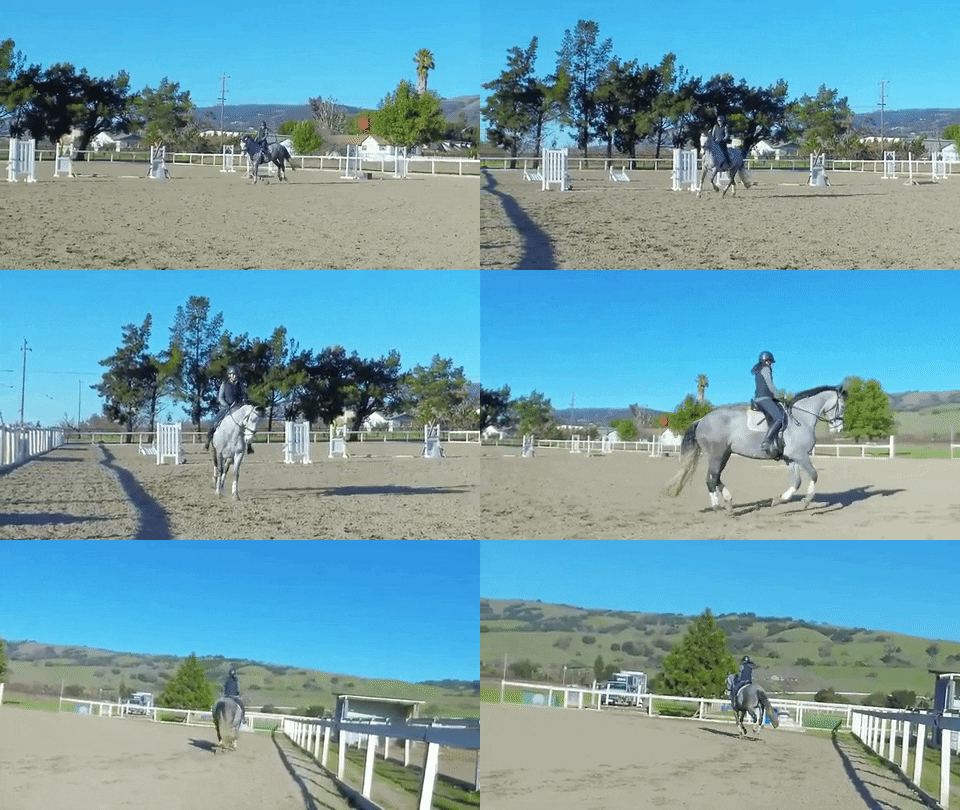
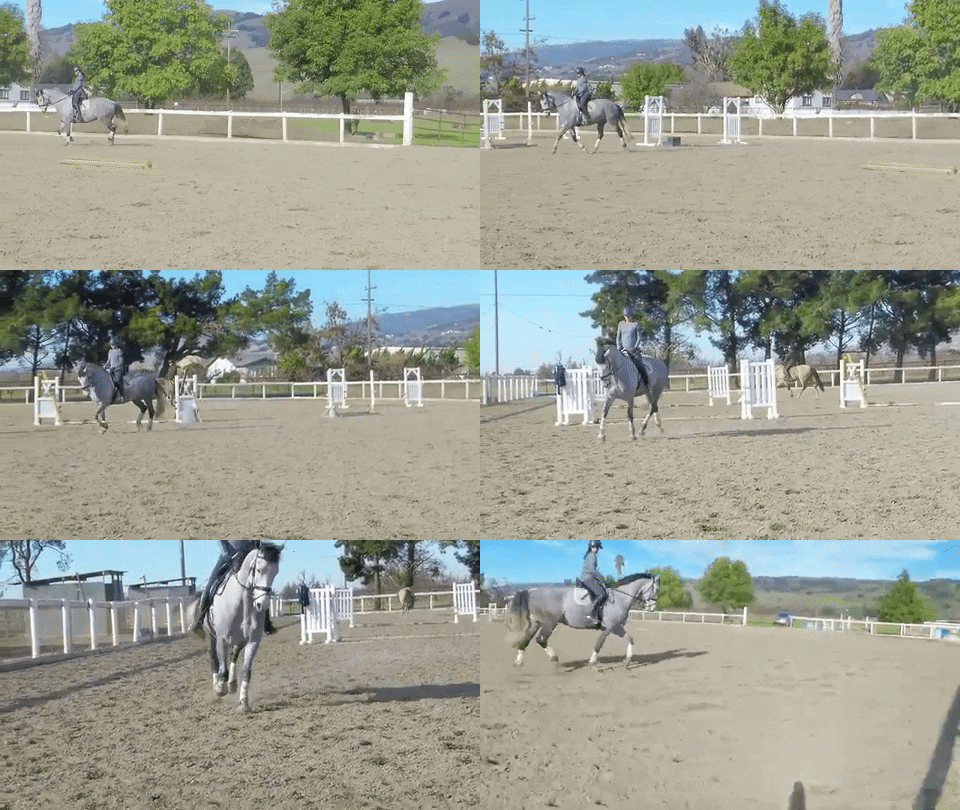
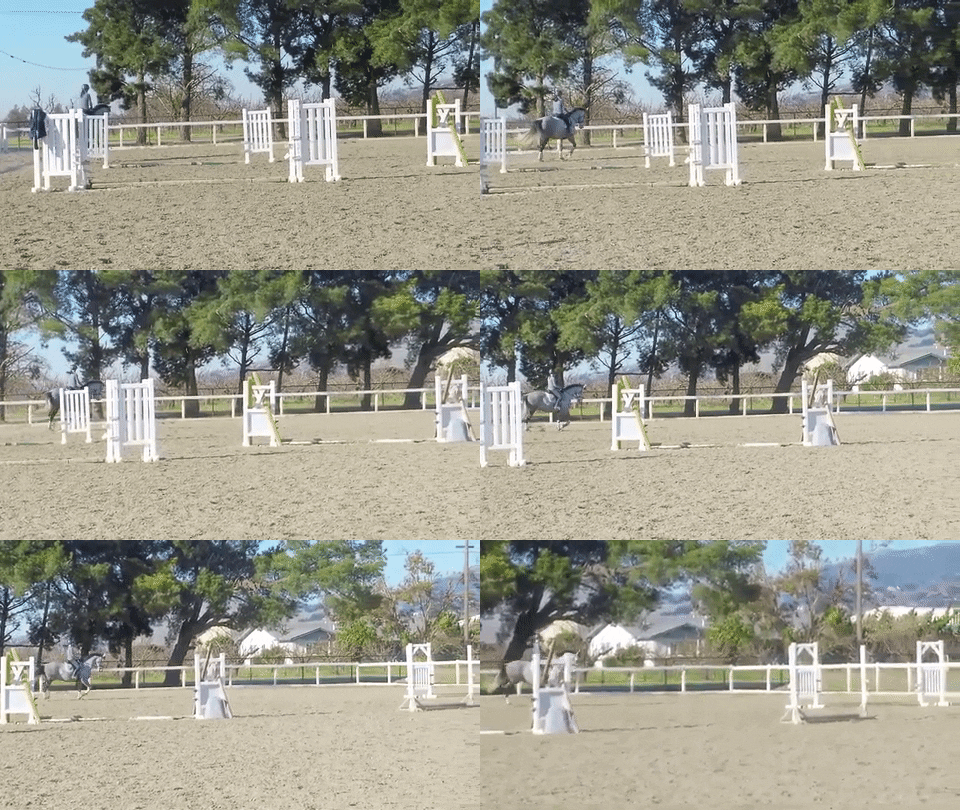
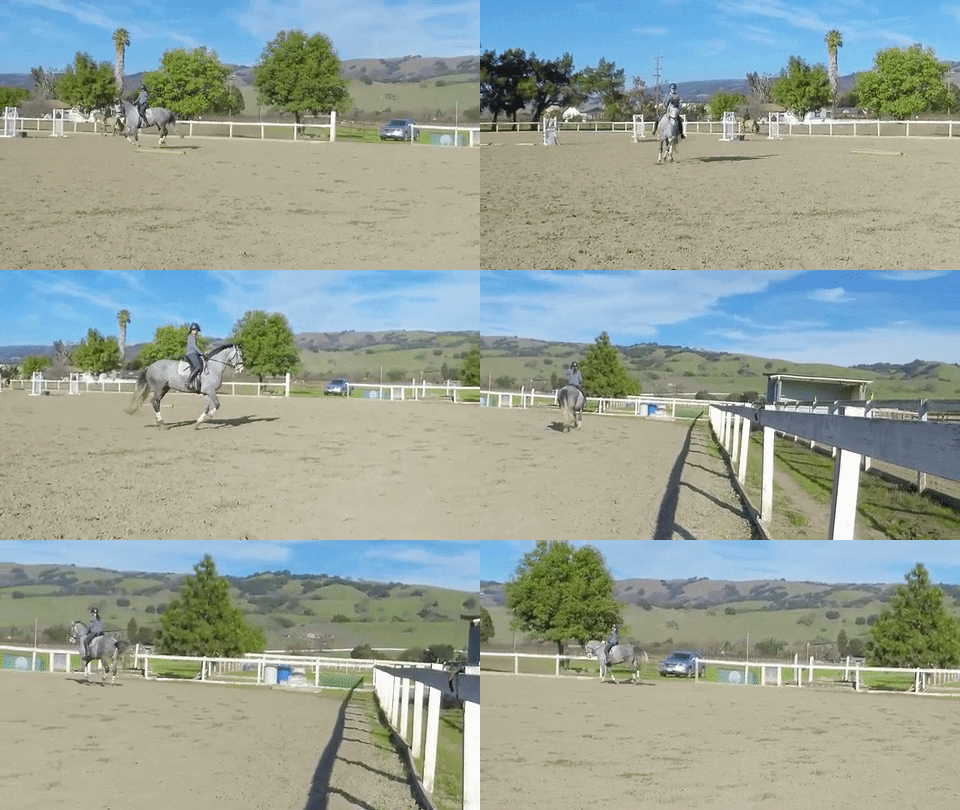
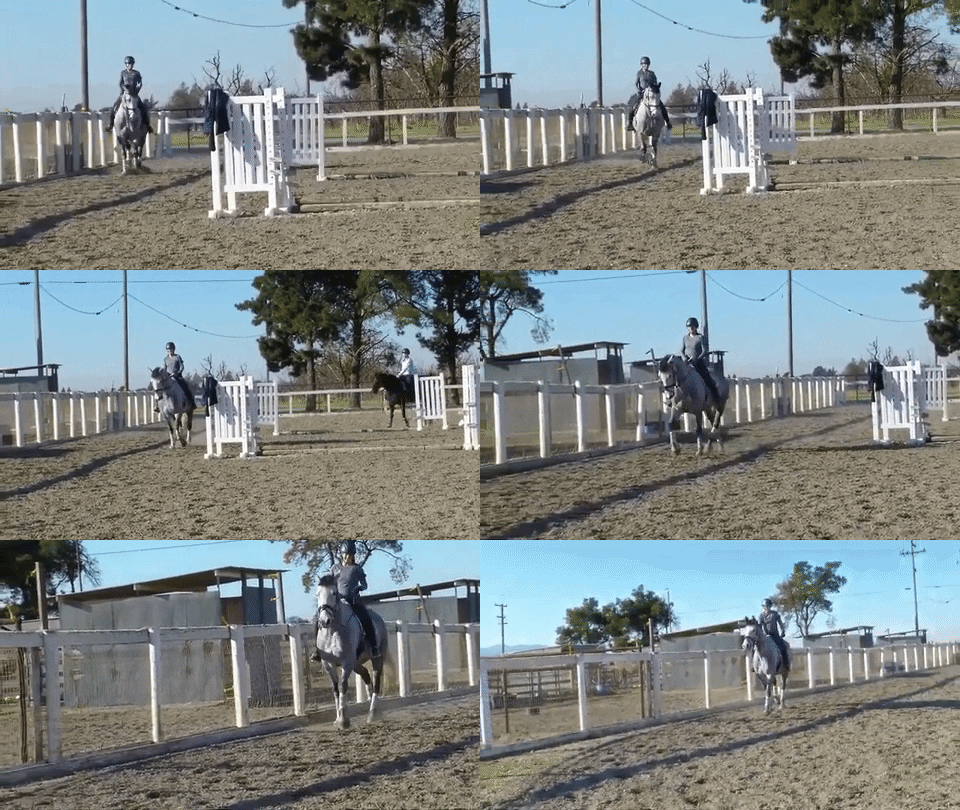
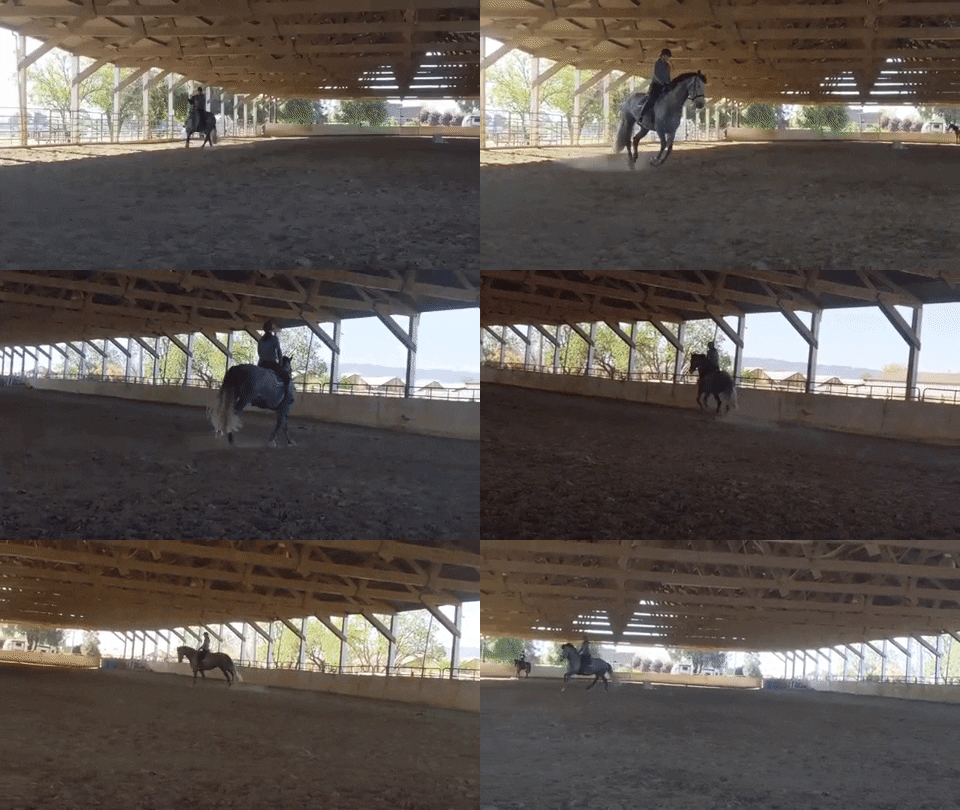
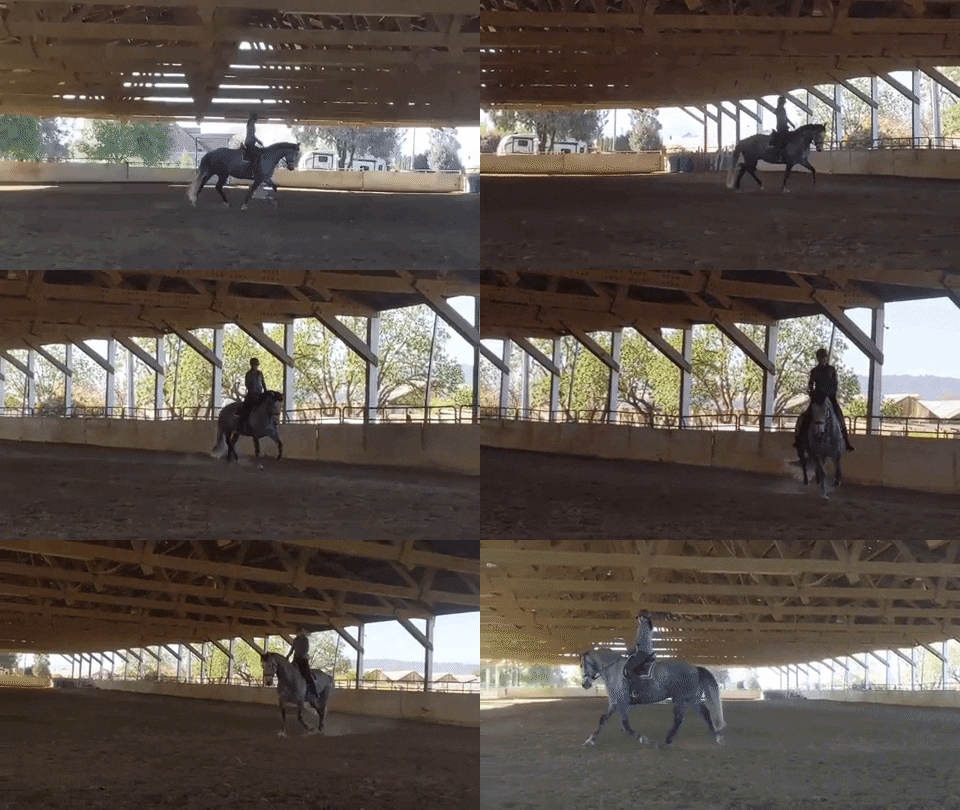
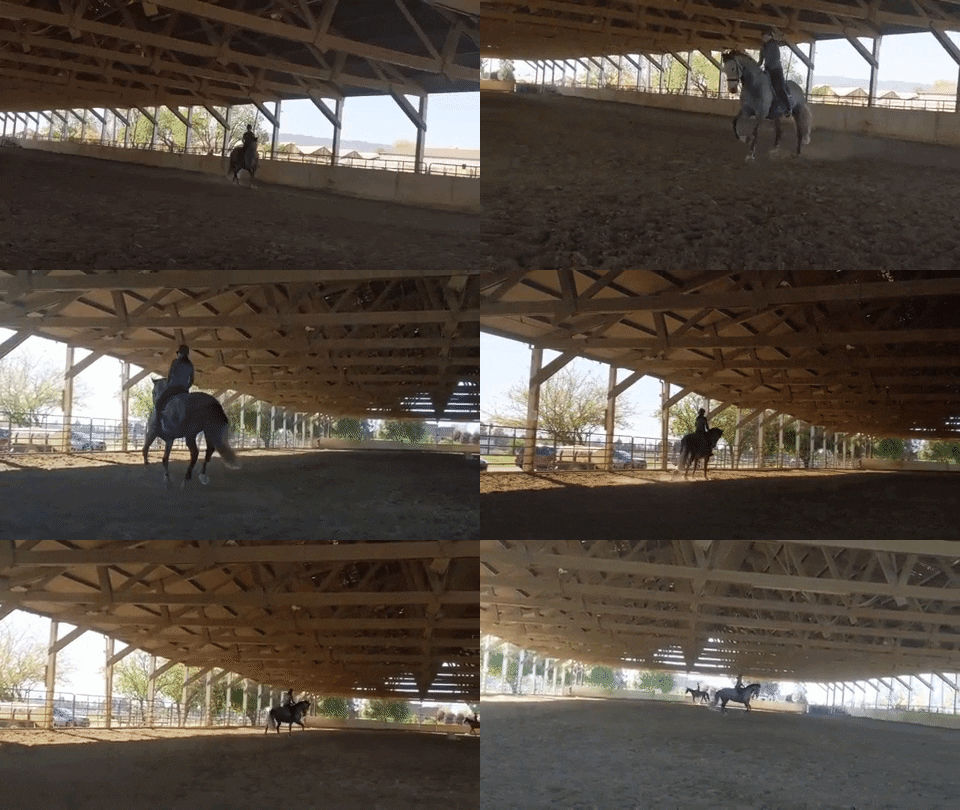
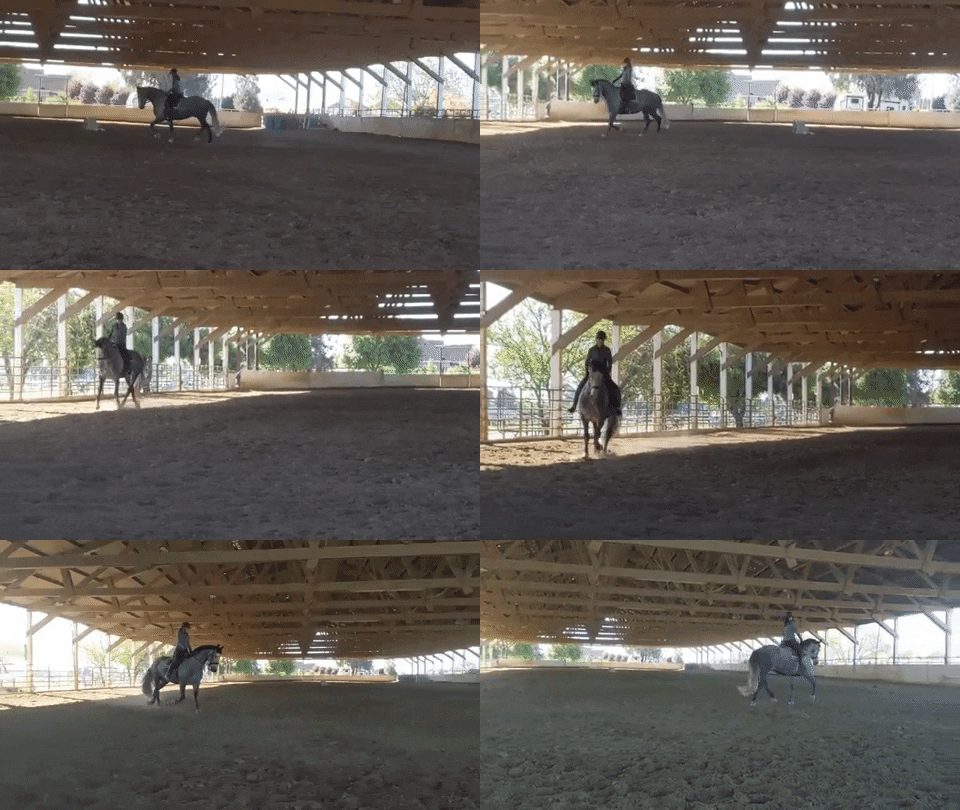
I finally put the videos of TC showing off his new gaits onto a YouTube video and here is the result. Keep in mind I’m still trying to figure out how to organize these gaits without shutting them down or crying or peeing my pants a little. The horse is amazing and I’m just along for the ride at this point! 


Saturday, August 1, 2020

Schooling Third Level Test 3

I took the time on Wednesday to run through Third Level Test 3. We have a show tomorrow, one that I've been mildly worrying about because it's a show facility he's never been to and a judge I have a lot of respect for, so I'm hoping that TC holds it together and that I don't disappoint him. 

At least I know our turns on the haunches will impress him
I'm really happy with how these have developed!
We've ridden Third Level Test 1 at home a lot because 1) the first several times we did it, he bolted after the canter extension, it's a very forward, flowing test and he thought that it needed to be more so, and 2) I was really convinced he wasn't ready for Third so I rode it a bunch to convince myself. I remember stopping after one of the tests and asking myself "how many times do I have to ride a clean test on TC before I start realizing I'm riding a Third level horse?"

So, Third Level Test 3, I've ridden three times now: once before our last show, once at our last show, and then this last Wednesday. That's more normal for my show prep, I don't believe in over schooling a test because I think it makes people crazy (case in point, riding the 3-1 a bunch has made me crazy). If the horse is rideable, the test will be fine. 

And the horse was rideable and the test was fine! 

Easy direction for canter half pass

To the hard change

Hard half pass direction
To the easy change
I was really impressed with how he was in the test. The last two times I've ridden it, I've felt like it was right at the edge of our abilities in the canter pattern. He stalls out a lot in the half passes, dislodging from my seat so then I have to basically pull him around the turn and then the change is tough. This time, he stayed way more on my seat in the half passes so I could actually ride some quality changes! 

There were bad moments, obviously. One is that I definitely forgot my test and couldn't look at my phone because it was recording me. So I skipped the halt and rein back (also he spooked there) and then I went to ride an extended trot at the end only to remember that I'd already ridden them, so I had to find my way up centerline. So, uh, I need to work that out in my mind. This test and the 4-1 have always plagued me memory-wise. 

TC also made some mistakes, the spooking is fine, whatever, he spooks sometimes. But he definitely thought that I was going to ask for changes on the rail the entire time during our medium canter. So you can see me in the video blocking each change and trying to kick him forward. 

TC: Change?? Me: No. TC: Now?? Me: No. TC: OKAY NOW
it's such an ugly "extension," my god

Both changes felt STELLAR that test and I wish I could just keep them like that forever. Right on my aids, much better throughness than before, and no theatrics. Just quality changes. I'm so excited to get tempi changes on this horse. But I need to wait, boo. 

I think my big desire for the show tomorrow is to get him more energetic and powerful throughout the test. I knew he was underpowered throughout when I could a) sit the trot just fine and b) didn't think I was going to pee my pants in the canter. If you can sit the trot and the canter doesn't terrify you, TC is not powerful enough. Literally Tanya has said these things to me. The horse has to scare me, that's when I know I've got it right. My next horse is going to be smaller. 

Harder trot half pass direction
Another interesting thing that came out this week was that TC has been downright heavy in the bridle after getting his teeth done. His teeth did need to be done, but they weren't so bad that the vet thought he'd change significantly in the bridle. TC begs to differ. Immediately he was way easier to get over the back and into the bridle, especially in trot. But jeez, he was borderline TOO heavy for me in canter. I had to actually half halt in a way to get him to back off a bit vs his normal half halt, which is to connect the hind legs to the bridle more. 

I think that led to me riding him a bit underpowered for the test, the fact that I didn't know if I could stop him if he got really powerful. I sat myself down and reminded myself that if I got him into a better posture, I could add power within that posture and keep him rideable. So a few half halts to back him off and then putting more power in him helped. 

Having to learn to ride a new horse right before a test is a bit rough, but I'm glad that even when he's a bit underpowered, the test rides very well. Fingers crossed it rides well tomorrow at a new facility! Either way, it'll be a good story. 

Thursday, July 30, 2020

An Abundance of Robot Cameras

I always said that I wish I had the money to pay someone to follow me around on my horse videoing me the whole time. And now that technology has caught up with this vision, I have a lot of robot cameras following me around.
Soloshot
I bought my Soloshot 3 in August 2018, it was on sale (it's like $800 now! I looked it up in my 2018 budget and I paid $427.93 for it, including tax and shipping) and much cheaper than the only other option at the time (the Pixio, especially because I don't/didn't have a video camera). I've gotten a lot out of it over the last two years and still really love using it. My main complaints are that it's a bit unreliable, it's hard to get videos onto my phone for IG, I can't do remote lessons with it, the battery isn't the best anymore, and I can't use it indoors despite them promising over and over again that they were going to get that done.

When I realized I wanted more lessons than one a month back in early April, I looked up what it was going to take. I could haul to Tanya's... it's probably a 2+ hour haul one way, meaning I'd have to go on a weekend only (and coordinate her show and clinic schedule with my show and clinic schedule) and probably stay overnight. Then the Pixem came out, and without needing the video camera, it was way more affordable, like, still expensive obviously, just not as bad as it was. But, all it'd take is a single clinic for me not to be able to do, plus the gas money and wear/tear on my rig, to make getting the Pixem worth it. So I ordered it. It was backordered, so I waited several months and it finally arrived in early July.

Pixem

I started seeing the Pivo everywhere and it looked really cute! I ended up buying it just on a whim before the Pixem arrived. Even if it didn't work at my busy barn, I'd love to have something super portable to have at the ranch when I'm riding horses there. And omg when my niece starts riding, it'll be so great to have while I'm teaching her.

So, that's how I ended up with three cameras. I feel really weirdly guilty about it, so I need to say this: I can't remember the last saddle pad I bought, I have only taken one lesson a month for YEARS until very recently, and I don't drink alcohol (so therefore never spend $8+ a drink at a bar) or go on vacations other than camping. I haven't even been out of the country as an adult. Different people spend money on different things, apparently robot cameras are my weakness. Okay, enough explanations.

Pivo

Here's my list of pros and cons for each.

Soloshot 3
Price: ~ $800 (I paid far less because apparently it was on a major sale)

Pros:
- doesn't take too long to set up
- only have to charge the one device
- can work on the edge of the arena
- lots of range, can follow you when you're very far away
- can work on hills (it will go up and down, not just side to side)

Cons:
- only works outside
- video quality isn't great
- tricky to get video onto my phone
- sometimes videos trees/loses you way easier than the Pixem
- takes a long time to charge
- doesn't hold a charge that well
- no ability to do live lessons
- terrible customer service

Soloshot
Pixem (I bought it here)
Price: ~ $900 including shipping (I got a discount, the SO works at a company that infuriatingly gives him a lot of discounts)

Pros:
- works inside and outside
- extremely accurate
- video is in phone (so therefore phone determines quality, and I have a decent phone)
- remote lessons are possible
- can work on the edge of the arena

Cons:
- takes a while to set up
- doesn't have a ton of range (fine for a dressage court though)
- everything needs to charge (beacons, watch, camera, phone)
- my phone isn't always charged all the way
- can't listen to music/etc while it is videoing
- remote lessons need either a ceecoach or a second phone

Pixem
Pivo Silver
Price: $150 shipped (I paid that amount)

Pros:
- super fast to set up
- great customer service
- way cheaper than everything
- video is in phone (so therefore phone determines quality, and I have a decent phone)
- works with software so it theoretically should get better over time (it already has been improved)
- quick charging, I can just charge it a bit at the barn each day (vs bringing it home)

Cons:
- struggles with multiple horses
- works best in the middle of the ring (disruptive)
- is definitely the worst at following you of the three
- not reliable enough for remote lessons
- my phone isn't always charged all the way
- can't listen to music/etc while it is videoing

FYI, none of them come with a tripod, so I picked one up at Best Buy. That one lives at the barn.

Pivo, I was right at the edge of the screen lol

So my thoughts are: if you just want something fun to snag some videos of you while you ride mostly on your own, grab the Pivo. If you want remote lessons or if you only ride indoors or if money isn't a big deal, get the Pixem. If you mostly ride outside and want something more accurate than the Pivo but without the price point of the Pixem (though man they're about the same price now), get the Soloshot.

As for now, I'm keeping all of mine. I know it's really overkill, but I have a good reason to hoard the cameras for now. The Pixem is great for remote lessons and for videoing accurately in the covered arena during the winter when we're stuck in there, but it takes a long time to set up and is just generally more of a pain in the ass to lug around, plus I fuck it up frequently unfortunately. The Pivo is super fast to set up and I get videos right on my phone that I can check as I'm riding (I LOVE that), but it sucks in group settings so I'm looking forward to using it when I barely have time in the mornings because it's fast and I'm basically guaranteed to be alone riding that early. I can also easily bring it to my parents' place to play with their horses with. The Soloshot doesn't work inside and doesn't do live video, but it's great for a quick setup in a busy outdoor arena where I don't want to take the time to set up beacons and when the Pivo is going to get confused.

Despite the overkill, neither the Pivo nor the Soloshot are worth enough to sell anyway right now, I think my plan is to keep them long enough to know which one(s) I find the most value in and then decide later.

But hopefully this post helps people figure out which one is best for them! Even if it makes me feel like I have a problem.

Monday, May 11, 2020

Clicker Training Undersaddle

On my webinar series, I did one on how I've used clicker training to work with TC. I figured I'd both link the video here and break down my speech (which I definitely mostly read from, what, I'm not being graded or anything) into sections if you prefer to read it. It's going to be long to read and lots of this information is stuff you guys already know about TC, so feel free to just skip ahead or listen to me ramble on and on. 

As an aside, if you ever wonder what it's like to take a lesson from me, this is it. I talk incessantly, don't give my riders a single moment to understand what I've said, and I do laugh at my own jokes. Sorry, not sorry. 

Link here if the below video doesn't work. 


TC's Background

Every rider has that one horse, the one that makes you question everything you thought you knew about riding horses. My current horse, TC, is that horse for me. He’s been an absolute blast to develop and he’s in a great place currently, but he was a very tricky young horse.

I began riding him in late 2014 after earning my Gold medal on my retired Grand Prix horse, Rico. I needed something fun to ride and TC was bred by a family friend who I reached out to in search of something fun to ride for free while I finished up graduate school. I had client horses to ride, but I enjoy having my own horse very much, so TC would be a surrogate until I found a horse to buy after I entered the workforce. 

Baby TC was a blast and I loved his personality and his work ethic. Sooo I bought him in the fall of 2015. And he promptly climbed up on his panel fence at his new barn, fell off of it, and ripped his suspensory out of the origin site. He went to a rehab facility until he was trotting for a good amount of time and then came back into my life. 

Rehabilitating a young, powerful horse is tough. TC had to stay in a small paddock so he wouldn’t run around, he couldn’t be turned out, and he had to stick with a small amount of work each day as he continued to heal. This led to a lot of undesirable behavior, the most undesirable of which was bolting. 

Baby TC had shown a desire to bolt, but his gangly body didn’t let him do anything really aggressive. Five year old TC was a different animal, add into it that he was cooped up and unable to let off any steam. There was no longeing him down or turning him out before riding. And winter was rapidly approaching too. 

I began clicker training him on the recommendation from a good friend who also uses clicker training in her program. I found that clicker training was incredibly helpful to get the bolting to stop. I also used it to reduce his spooking. As we went into winter, I realized that I had no way of exercising him effectively without riding him, he’s never taken to side reins very well, so I clicker trained him to reach for contact on the long lines. I moved on to teaching him to engage his hindquarters and lift his back while long lining. 

I’m using clicker training currently to continue to improve the connection, to put the piaffe on, and to reinstall the medium walk because all he wants to do is piaffe now. 

Baby TC being skeptical about sprinklers
The basis is conditioning and there are two types of conditioning, both of which are utilized in clicker training.

Classical Conditioning

Pavlovian conditioning, or classical conditioning, involves the pairing of a primary reinforcer with a secondary reinforcer. Pavlov actually was studying dog’s salivary glands. He fell into classical conditioning when he noticed that his dogs started to salivate not when they were given food, but prior to then when they knew they were given food. He called this psychic secretion and wanted to know why it happened. And that’s where the bell came in to the operation. Essentially he would ring the bell and then feed the dogs, them eventually associating the bell with the food, and would salivate to the bell. 

Now, dogs aren’t born thinking that bells sound delicious, but with enough pairing of the bell, a secondary reinforcer, to the food, a primary reinforcer, the dog then responds to the bell as they would respond to food, by salivating. 

To relate this back to clicker training, take the bell and replace it with a clicker, take the dogs and replace it with your horse, and take the food and replace it with a treat or some grain. Eventually the clicker means the same thing to the horse that the treat does. And the clicker is a much easier reinforcer for the rider to use to pinpoint the exact moment the horse does something correctly rather than trying to quickly run over and shove cookies in the horse’s mouth. 

Not spooky at this lol
Operant Conditioning

The other kind of conditioning is operant conditioning, which we all use every day with our horses. Operant conditioning was fleshed out by B.F. Skinner. Essentially operant conditioning is when a behavior is shaped by what follows it, but it’s more complicated than that. It’s a four part process, but I’m going to start with three parts because it’s easier to understand this way. 

The first part is the antecedent, but for our sport, let’s just change that to aid. The aid is a stimulus that indicates that you want the horse to perform a behavior, which is the second part. The behavior itself. Following the behavior, as we all know from growing up, we have consequences. Consequences can either reinforce a behavior or punish it. Reinforcing a behavior causes the behavior to occur more frequently and/or with greater strength. Punishing a behavior causes the behavior to occur less frequently and/or with a weaker strength. 

There are four types of consequences: positive reinforcement, negative reinforcement, positive punishment, and negative punishment. They can get confusing because the words positive and negative don’t refer to good and bad, they refer to whether you added or removed a stimulus. Reinforcement is anything you do that increases the frequency and/or strength of a behavior and punishment is anything you do that decreases the frequency and/or strength of a behavior. 

So positive reinforcement is the addition of an appetitive stimulus after a behavior has been performed that increases the frequency or strength of the behavior. Think of a horse finally nailing a clean flying change and getting a walk break and scratches on the wither. The addition of an appetitive stimulus, the scratches and break, after a behavior, the clean flying change, that you want to encourage to occur again. 

Negative reinforcement sounds bad or weird, but we see it everywhere as well. This is the removal (negative) of an aversive stimulus after a behavior has been performed that increases the frequency or strength of the behavior. Think of a rider who puts their spurs in their horse’s side, then when the horse moves forward (desirable behavior), the rider takes the spurs away from the horse’s side, the removal of an aversive stimulus that increases the likelihood that the horse will move forward. 

Positive punishment is another weird one, but it’s what you think of when you think of punishment. The addition (positive) of an aversive stimulus to decrease the likelihood of a behavior. For example, when TC crowds my space, I tap him with a whip on his chest. This is the addition of an aversive stimulus that will hopefully reduce his desire to crowd me. I can tell you that hasn’t worked all that well. 

Negative punishment is one we dont typically use with horses unless we’re eight years old and through tears tell our pony that just bucked us off that he is NOT getting any carrots later. It is the removal of an appetitive stimulus after a behavior that discourages the behavior. We use it rather infrequently with horses only because it’s tough to set it up where it actually discourages a specific behavior. TC isn’t going to think that I’m not giving him a cookie before I leave the barn because I was unhappy with something he did earlier in the day, horses just don’t think that way. 

Conditioning for Clicker Training

Now that we’re through conditioning, hopefully you can see how clicker training combines the two types of conditioning. We use classical conditioning to make the clicker an appetitive stimulus that you can then use as a consequence of a behavior in operant conditioning to make the behavior more likely to occur. 

To clicker train an animal, we first have to acknowledge what primary reinforcers are effective reinforcers. To classify a primary reinforcer, think of what can reinforce an animal without any conditioning history, or learning history. For example, I do my job in exchange for money, a reinforcer. But I had to be taught to value money, because children raised in a society without money will not see any inherent value in having it. Children raised in a society without food will… well they’ll die. That got dark. But children are born wanting food and water and shelter. So are horses, they aren’t born wanting praise or clicks, but they are born wanting this list, among other things. One thing to note on this list is the wither scratches. There have been studies that show that scratching a horse’s wither lowers their heart rate and therefore relaxes them, and that is also a primary reinforcer. I’ve used wither scratches as a reinforcer for horses I ride who I don’t use the clicker on, it’s a great reinforcer. 
Lots of exposure for this weirdo
Bridge Training

Our first task involves classical conditioning and it’s called bridge training. We are essentially creating a bridge between the clicker and the primary reinforcer we are using. I chose to use TC’s grain because I wanted to not worry about how many cookies he was eating in a day and I also don’t use clicker training every day, so didn’t want to have his diet changed so randomly. I can adjust the amount of grain he gets after his ride based on how much clicker training we did during the ride. 

One of the worries people have about clicker training is that it will cause the horse to mug you for food or to start biting, but the bridge training I used with TC helps eliminate that response while also bridging the clicker to the primary reinforcement of grain. 

I started with TC in his paddock and he saw that I had grain and was very interested in me. I didn’t let him come after the grain, just waited for him to get bored and realize I wasn’t going to give it to him. He was fairly rude, so it took some time. Eventually he heard a horse whinny and looked away. And that’s when I clicked and gave him a small handful of grain. He was suddenly really interested in me again, mugging me for more grain and getting in my space. I remained patient and he got bored again, looked away and then I clicked and gave him grain again. We did about five minutes a day for a few days and soon he had figured out that he only gets grain when he looks away, so he would see me coming with the clicker and my bag of grain and would not mug me, but rather look away because he knew that was how he got the grain. 

By teaching it this way, I’ve taught him to not be mouthy or mug me for grain but rather to give me space and wait for the click. [at this point I showed this video of Shawna using this bridging technique]

At this point I was finished with the classical conditioning part of the training, TC knew that a click meant grain and was happy to work for clicks because he knew grain would follow. 

Remember when he used to rear
himself calm at the trailer?
Eliminating TC's Bolting Behavior

Now, a lot of people start target training at this point, but I had a very specific goal in mind, so I didn’t go that route. I’ll eventually target train TC for fun, but I moved straight from the bridge training to addressing TC’s bolting behavior. 

I started to then begin to solidify the whoa aid to address TC’s undesirable bolting behavior. If you remember from Kate’s talk a few weeks ago, she went over Andrew McLean’s work on behavioral issues. He has an entire chapter on bolting and his main point was that bolting, at its root, is caused by the breakdown of the whoa aid leading to the horse no longer being under stimulus control, which is a fancy way of saying that I couldn’t stop him. Basically, the reinforcement he got from bolting, such as getting away from perceived danger, was way more effective than the reinforcement he got from not bolting, which at the time was just to not annoy me. 

So my goal was to increase the reinforcement history of the whoa aid so that it could override the reinforcement history that he had from bolting. Bolting is very self reinforcing, if the horse bolts and doesn’t get killed by the thing they were afraid of, no matter whether the thing actually posed a threat, the horse feels reinforced by the lack of death and that strengthens the bolting response. But TC likes food, sometimes more than he likes avoiding dangerous situations, so I began to reinforce the whoa aid. 

I worked with him on the ground first, using my aid, saying whoa and taking back on his halter, to produce a behavior, a halt, that I then reinforced with a click and some grain. When he stopped, he was not allowed to immediately climb in my lap for the grain, the whoa needed to be appropriate. At first, he didn’t get it easily, but after doing it every day for a while, he started to slam to a halt more aggressively, even offering it when I even touched his rope or when I said the word “no” because the whoa meant grain so he may as well do it as much as he could. 

From there, I schooled it on the longe line, getting it to the point where if I just shifted my weight a little or touched the line a little, he’d stop. Then I took it undersaddle, which I’ll talk about later. 

Tarp de-spooking unnecessary

Reducing TC's Spooking Behavior

TC’s bolting behavior was getting way better with the clicker training. I noticed two things about the bolting. First, I noticed that when he bolted, it was far less aggressive and easier for me to stop. He didn’t go nearly as fast and didn’t go nearly as far before I could stop him. Second, I noticed that the frequency went down, he didn’t bolt as often as he used to. For a long time, it seemed that he bolted out of the blue, without any warning. At this point it started to only happen if something scared him rather than just randomly. 

His spooking was a secondary issue, but when I noticed that his spookiness was what was keeping the bolting alive and well, I began clicker training for curiosity and relaxation. 

TC’s spooking has always been interesting to me. I took him to two bombproofing clinics and he loved them, wasn’t spooky at all. You can thwap him with plastic bags and pool noodles, ask him to walk across mattresses and water, he’s fine with all of that. He was even fine with the cats running across the front of him, dogs barking and running at him, strollers and bicycles passing him on the trail, and the resident chicken taking a dust bath in the arena. If there’s a clear reason for what is going on, he’s fine with it. But if the wind picks something up and it flys around, or if something has changes at the barn, or if a wheelbarrow is sitting by itself vs being handled by a barn worker, he is terrified of it. 

Because TC’s spooking was not just a startle and would always lead to him putting more space between him and the thing he was afraid of, which was naturally reinforcing to him because getting away from a scary object meant that the object would not attack him, I began to address it by trying to override that reinforcement history with clicker training. Now, he could choose between two reinforcers: the reinforcement that he got from running away from the object vs the reinforcement that I was going to provide to him for taking a step closer to the object. 

I started out by leading him around my barn waiting for him to become weary about something. I found a tarp that he didn’t like and made him stand still near it. Then I coaxed him forward and he took one step, so I clicked and gave him a treat. We worked on it until he was standing on the tarp and then we moved on. I did this technique for a while, until every time he saw something that made him nervous, he would approach it rather than run away from it. 

Once I got him to drag me toward things that previously scared him, I noticed that he still would stand stock still with his heart beating really hard, so I began to click for relaxation. It wasn’t good enough to stand near the object, he had to relax. It took a while at first, but soon he took a deep breath and I clicked for that. I noticed a huge decrease in his spooking once I started only clicking for both approaching the spooky object AND relaxing near it. He can still be spooky, he still hates wind, but he’s way easier to console now and definitely the spooking has both decreased in frequency and strength. He’ll startle or if it’s really bad, scoot, but gone are the moments where he’d get truly out of control. 

Happy to hang out in this tunnel
Improving the Connection on the Long Lines

I mentioned using it for long lining, and here’s the progression for that. TC has a very friesian neck, his tendency is to go the way he’s going in this first picture, with his neck retracted and his hind legs stepping short. He didn’t like long lining at first because he can be rather claustrophobic, so I had to clicker train him to reach to contact. I would aid him to bend a little more but most of this beginning work was a waiting game. He soon blew his nose, leading him to reach down a bit, so I clicked that. Then I got a lot of voluntary nose blowing, I clicked at first but soon waited until he stopped blowing but kept a bit of stretch to click. Slowly I shaped the behavior until he reached down all the time. 

I loved this because it meant that I could work him effectively in hand without having to ride him, very helpful when he would act up in the winter or when I was in a rush or when he stamped on my foot and I couldn’t ride him. I started clicking for all sorts of things, coming through with the whip meant he would flex his lumbosacral joint and step further under for a few steps and I clicked for that. I continued our work with the whoa aid there, all kinds of things. Just shaping his behavior on the long lines so I could continue developing him when I couldn’t ride him or just didn’t want to. 


Clicker Training Undersaddle

As I mentioned earlier, I’ve used it extensively undersaddle as well with TC. I started doing it with the bolting, reinforcing the whoa aid from my seat, rein, and voice. I then moved on to the spooking undersaddle, encouraging him to walk up to things. Then even did some work on reaching for contact, reinforcing any weight he put in the reins. 

Clicker training undersaddle can be tough to coordinate as a rider. I will often grab small cookies instead of a bag of grain because it’s just easier to carry around, as the grain sometimes finds its way out of the bag. Holding the clicker is tricky too, as is coordinating the click. But once the coordination is there, it’s incredibly useful. What it does for TC is provide him with a discriminative stimulus, something I wanted to throw in here at some point. 

A discriminative stimulus is an indicator to an individual that a reinforcer is available. Think of it this way, you’re walking down the street and you’re hungry, you see a restaurant, that restaurant is reinforcing to you because it means you’re about to get food, it’s the bell the dogs salivated to. But then you see that the restaurant is closed and it becomes far less reinforcing, you’re still hungry but food is not available to you. But if you see the sign is flipped to open, the restaurant immediately becomes reinforcing. The open sign is a signal to you that the reinforcer, food, is available. 

Think of a horse who acts up in the show ring because he’s figured out that his rider doesn’t have as much ability to correct him. The show ring becomes a discriminative stimulus for bad behavior, the horse can quote get away with bad behavior in there. 

What I noticed when I would grab the clicker and ride with it is that TC would be more likely to offer me things that he’s been reinforced for with clicks. Me holding onto the clicker became a discriminative stimulus. So even though I hadn’t done much work undersaddle with the clicker, he saw that I had it and knew that clicks were available, so he worked harder for them. I didn’t have to click very often undersaddle to keep him working hard for clicks. 

We’re nearing the end so I wanted to share two videos of things I’m doing with clicker training right now. Here is a video of me teaching TC to piaffe with the clicker. 

Hilarious, definitely doing more bombproofing
clinics in the future with future horses and with
TC just for funzies


Changing my Philosophy

Lastly, I wanted to talk about how this has changed my training philosophy. I’ve ridden with trainers in the past who emphasized that when a horse is doing something bad, they are meaning to be bad. There’s a lot of language used that just isn’t correct: my horse is an asshole, he knows what I want but he just doesn’t want to do it, he’s not actually afraid of that thing he just wants to get out of working. 

Clicker training for me put everything in a different perspective. TC didn’t bolt to be an asshole, TC bolted because bolting had a stronger reinforcement history than not bolting. TC didn’t spook because he was trying to get out of work, TC spooked because spooking had a stronger reinforcement history than working. TC didn’t refuse to stretch to contact because he didn’t feel like doing it, he refused to stretch to contact because there was no reinforcement history for it. 

With clicker training, TC has become an incredibly easy horse to train for me, he’s only been doing the piaffe for two months and it’s already a higher quality than my Grand Prix horse’s. He’s not got the conformation to reach to contact easily but he does it becuase he’s been reinforced for doing it. 

And I notice a difference in him too. He is very playful undersaddle, excited to work every day. He knows that I’m going to be fair to him, that if he gets an answer wrong, my first thought will never be that he is being deliberately bad. 


The End! 

I've been meaning to write this post for a long time and I know this is a bit different than my normal posts because I literally just posted my webinar in words. But it was so fun! Make sure you check out the Facebook page to find out when the other webinars are happening and look at the playlist of all the ones we've done so far on youtube. 

Monday, January 13, 2020

Lead Change Progress

TC is a little more than two months into his lead change education and I'm fairly pleased. There's a LOT to not like about them right now, but the fact that they're on, they're clean, he's continuing to canter afterward, he's not anticipating, he's doing it on my aid, we're doing them in different patterns/locations, and they're mostly straight is really exciting. The only thing we're really missing is the roundness factor, and that will come with more strength. 

This way he gets a bit croup high, which is new, so that's
unfortunate
He's still learning to canter on after the changes
First change in that location, he's starting to be able to generalize!
TC, you have to keep going! 
When the only thing I don't like is that he's off the bit, I am very
happy! 

I'm so incredibly pleased with him! The jump to Second and getting the lead changes on for Third can make or break a mid-level dressage horse. 

Mini rant: I do NOT like unclean changes. I hate them. It's one of my biggest fears in training horses. I will not put them on unclean and clean them up later, it makes riding tempi changes impossible, it's a pain in the ass, it's a waste of time. If they don't come on clean, I don't do them. I just can't emphasize this enough.

So I'm ecstatic that they're this far along. They have so far to go still, I want them to be bigger and more uphill, I want him to jump through them more, obviously I want to get his neck out of my face. But I'm beyond excited. 

He's handling the pressure of doing them way better than I expected too! I think it's because I a) won't let him do them when he's being an anticipatory dick about them, b) praise the everloving shit out of him when he does them right, and c) don't ever ever EVER punish him for doing them badly. The only time I go to my whip or spur is to keep him going afterward.

I'm incredibly proud of how far he's come this winter. I think riding Alexis' horse was a major turning point. I'm excited to ride with her again in March! 

Thursday, January 9, 2020

Teaching Myself

I haven't been able to get on the schedule to see my trainer since November. I just haven't had a weekend where I'm available, she's available, and the weather isn't terrible. This month I'm just biting the bullet and riding with the trainer I rode with in Sacramento, she's down once a month and I got into her clinic today, phew! It's a bit pricier than Tracey, but it's a lesson and I need one. 

To combat my lack of lessons, this last weekend I decided to use my soloshot. It was actually warm and sunny and the footing in the only open outdoor was good.

Unfortunately I only got video of our warm up. There was a catastrophic injury at my barn that required a helicopter to come in. I opted to just put TC away because I was really shaken by seeing the firetruck and the ambulance and then hearing there'd be a helicopter. That's all I'll say for privacy's sake. Wear your helmets, guys (this rider always does, but it's always a good reminder).

I got to see how low tone and disconnected he is in warm up though, and that's not great:

This was when the ambulance was coming in, so a bit fussy

He's getting much more upright this way, this is the way that
he wants to lean in like crazy

My reins got too long here, oops

Too chillaxed

Seeing those videos made me feel kinda bummed. In so many ways he's so much better, but he feels so nice in the bridle when he goes like this and he doesn't look so great, he's super low in his thoracic sling. I am fairly pleased with my biomechanics. My hands occasionally get crazy and my seat in the canter STILL needs to be improved, but I'm really happy with how I've progressed as a rider this year.

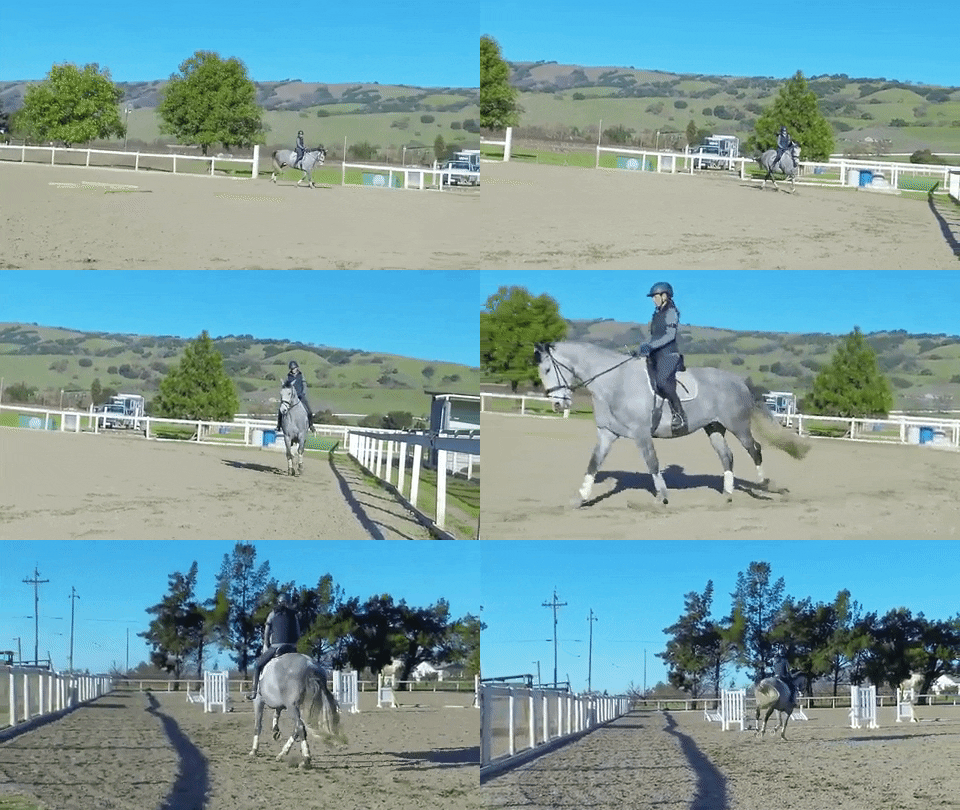
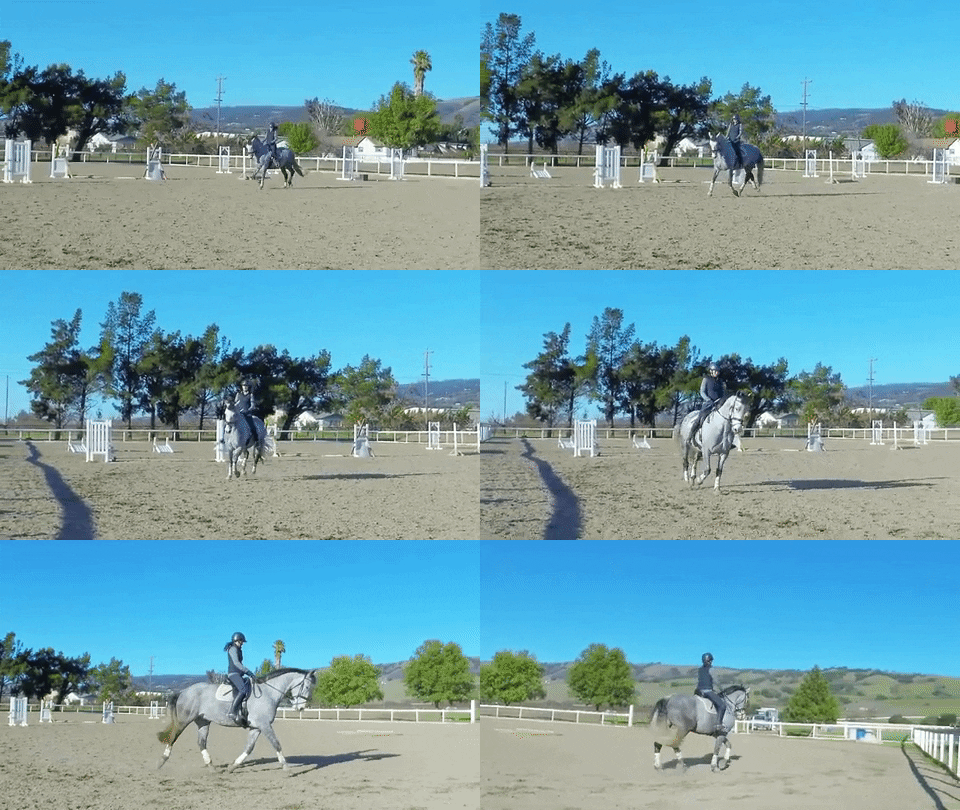
I came out the next day and tried to get more video and failed to get the camera recording (oops), but I made some major changes to the way I was riding him and we got SUCH great work. I finally came out again on Tuesday and had a less good ride but DID get video (although Jesus, Soloshot was having trouble finding me a LOT of the time ugh), here's the difference:

Better place for warm up I think, still wants to drop his wither
but less so than the original videos

Trotting! Pretty pleased with my biomechanics during this ride

Soloshot had some issues this day

Oh man soloshot saw those hind legs and decided to hide them
from my view lol
A very drunk half pass zig zag, this was the first time I have
ever asked for one, he looks so proud of himself when I stopped
and pet him afterward!

I'm way happier with that! And so was he I think, he was way more pumped up and ready to work. I did get a few lead changes on camera but I'll save those for a lead change post next week, I'm excited to share how far he's come with them.

Nothing helps more than taking lessons with my trainer because she has an eye like no other. But the second best is being able to use this camera! Luckily I have a lesson today, I'm hoping to work on quality of the gaits and the connection, so it'll be a bit boring, but it's good for us because the Second level movements are confirmed and the Third level movements just need higher quality gaits to support them. Hopefully by the end of the year, I'll have a Third level horse and the beginning of a pirouette for our Fourth level or maybe PSG dreams by the end of 2021.

Saturday, November 30, 2019

TC at Liberty

I've never had a horse so in tune with me than TC. Sometimes it sucks because I will do something without thinking and then he gives me some random response that he thinks I'm asking for.

Most of the time though, he's super fun!

I put him out in turnout on Monday this week and then went home to get some things done. I came back out an hour and a bit later to bring him in and ride him. He hadn't been ridden in two days because of the L program and it was quite windy, so he was AMPED. I came in to get him and he didn't want to be haltered.

He wanted to play. I know he wants to play when he shakes his head, smiles at me, and then follows me around like a creepy weirdo. I noticed that when I pointed somewhere, he'd follow my finger, so I decided to play with him a bit at liberty.


Funnily enough, there's a very similar video of TC's sire out there doing some liberty work too. Guess it runs in the family!

Thursday, August 8, 2019

Canter Quality Check In

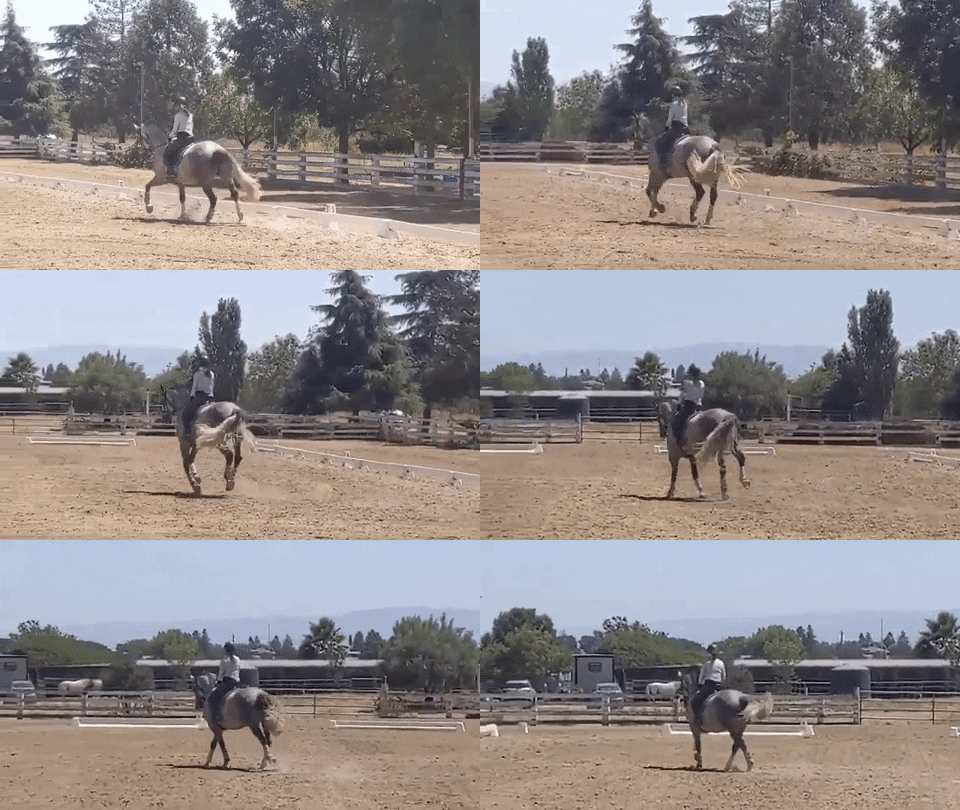
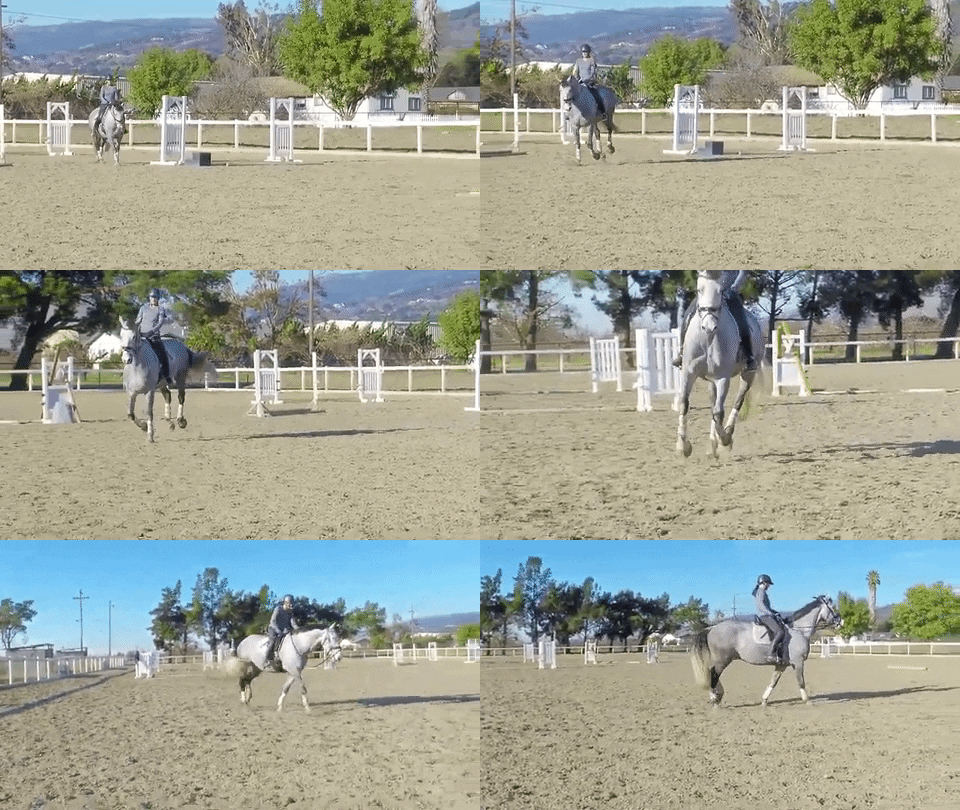
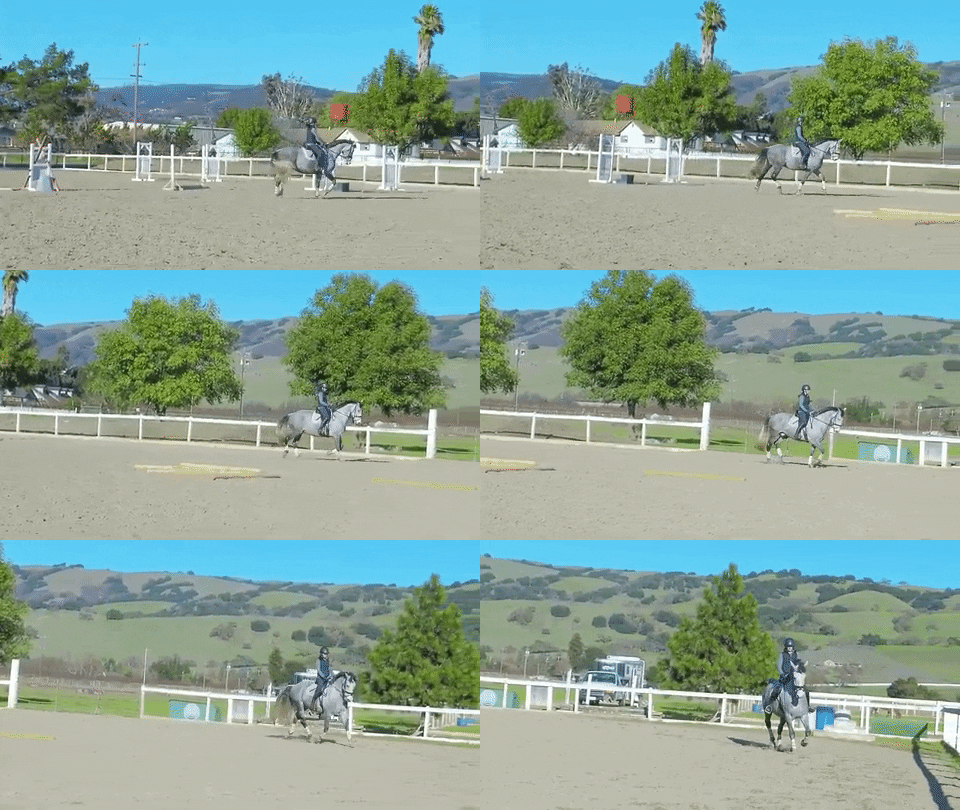
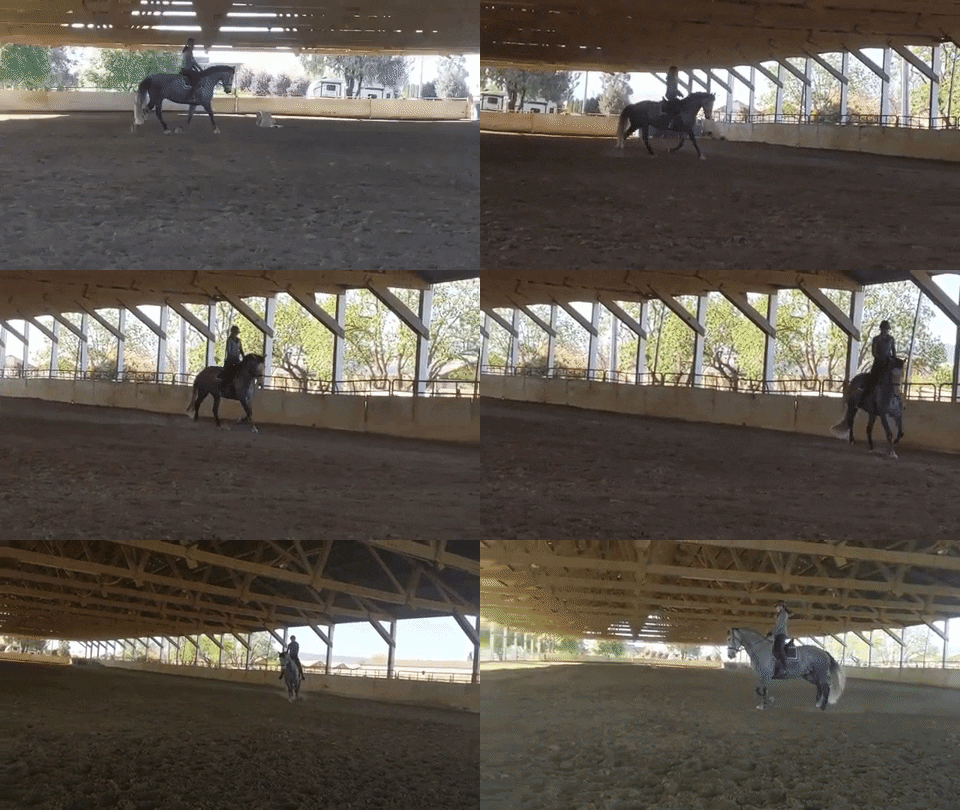
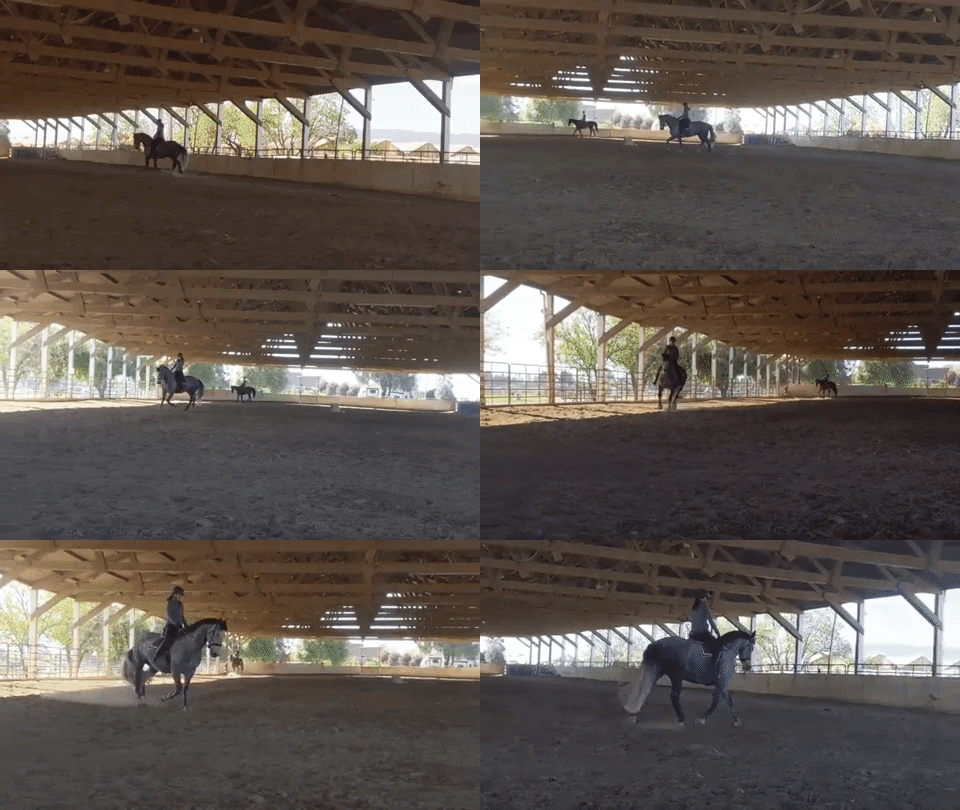
TC has been feeling great since my last lesson where we tore apart my way of riding to get him more through on a shorter step. I managed to find a gif maker that could handle longer videos (soloshot videos come out at about 19 minutes and the maker I used in the past wanted them at 12 minutes or shorter). So yay video!

I wanted to really take a look at how his canter is developing now that he's feeling better in it, so I took a couple of gifs of each lead, just us cantering on a circle, so I could dig into it. This gait is so hard for us and it needs to be a strength. Pretty much between Third and Intermediare I, the only thing that gets significantly harder is the canter work (obviously the quality of the trot needs to be better and the patterns get harder and the lateral work gets steeper, but there's no new movements is what I mean).

Left lead canter 

Alright, already I can see that he's still not at an optimal amount of collection, his outside front leg is picked up beyond vertical. But for where he's been at, I'm really liking the balance he's showing here. I want him more collected for Second and beyond, but he's figuring it out.

His left hind is staying under him nicely for the most part, but this has been a tricky part of riding this horse, he wants to go together behind rather than maintaining a good split. I think this is the absolute minimum for hind leg split that I want, which tells me that I need to maintain at this level of short stridedness and push him for more jump and engagement rather than go for even shorter of a stride, which could make him get quite together behind.

Connection-wise, he's looking way better than he ever has in this direction. At the beginning of the gif, he looks quite stretched over his topline and steady, but right after M, he starts to lose it. You can see that his first instinct is to duck behind the contact, so I push him forward and then he kind of surges with his front legs to pull himself out of collection so he can connect better. The connection recovers as we near H, but it's clearly very hard for him.

My own mechanic looks okay. I like how my lower leg is staying very still, though Tracey wants my outside leg to stay more forward. Thigh looks okay, though I'm sure could have more suction. Hips are fine, but I could engage my hip flexor more to get him to rock back (though when I do, he breaks so that will be a work in progress). Hands are actually up and together, but you can see how hard this is for me, I want to get my hands quite low.

As the gif goes on, you can see my shoulders swaying and pumping a bit more. I feel like I started out so well and then as he struggles, I start to override him. Typical. I need to just close my leg and stay supportive with my upper body rather than throw myself into him like that.  

Right lead canter

Shockingly, the right lead, which has been the easiest one, is rather weak in comparison. I think it's partially due to him getting distracted right as we approach C. He was okay coming by H and then you can see the tiniest bit of landau. BUT he's way more balanced on his own here, the left lead may be the better quality throughness, but this is the better quality gait - he doesn't struggle as much to get his right hind to split from his left and he stays way more upright on his outside front leg.

He struggles to stay stretched over his topline at all times, giving me a moment or two of good stretch right at H and at M but the push back is strong in this one and he retracts to find his balance. I'm not helping matters by keeping him cranked on the right side. I can say, since I was in the lesson, that Tracey was trying to get me to find a better connection on the left rein so I was encouraged to push that elbow forward. So forward that I then snatched the right. Cool, cool.

My mechanic is way stronger this way, although you can see that I'm crowding him with my left leg like crazy, that leg needs to stay down and away from his side and I need to use my thigh. Other than that, Im way stronger in my upper body and have a way better sling shot. It feels that way undersaddle too, I can just sit there and ride the right lead, while to the left I feel like I'm being dragged into the mechanic too much.

Compare to a screenshot of our last lesson, this lesson really
got his left lead looking so much better!

Overall I'm STOKED on his canter work, but it's good to see where things need to go. For now, we're holding steady like this, occasionally adding a bit more collection so he can learn to jump through it and remain stretched to the contact.

I think getting the canter work under control is key with this horse, we can fudge our way through the trot work all we want, but his canter has always been so far behind the canter.

Me on the other hand... I need to sit the trot way way more. The move got me all messed up and then he was so tense and I had mono, its now time to buckle back down. 

Thursday, June 13, 2019

Good Days Ahead

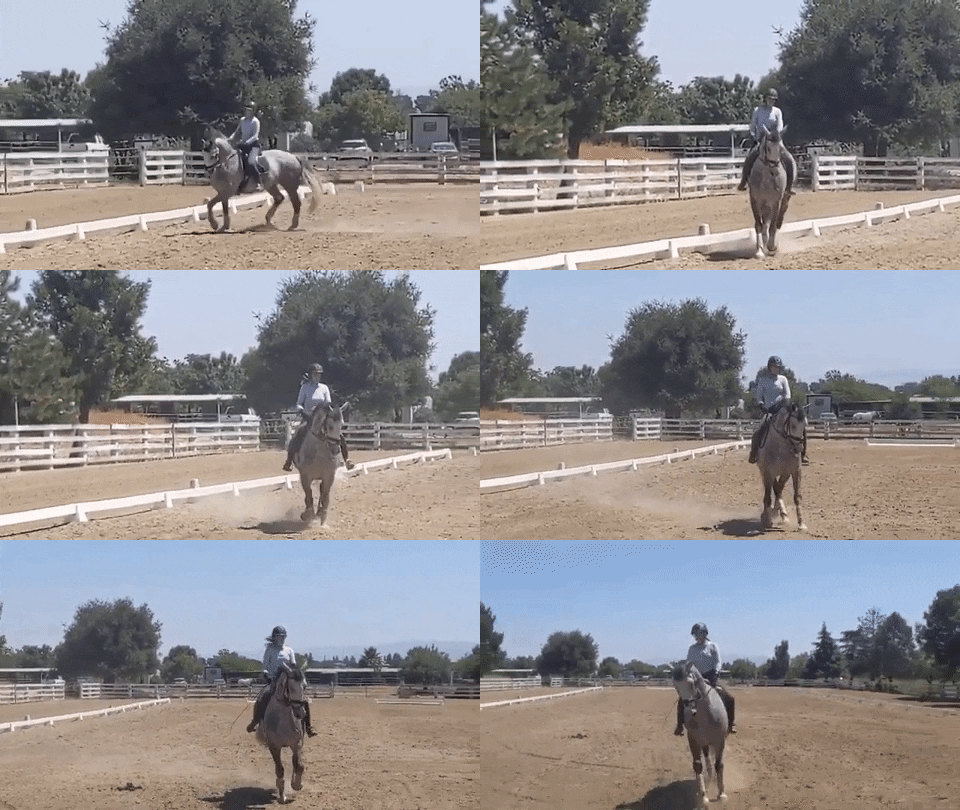
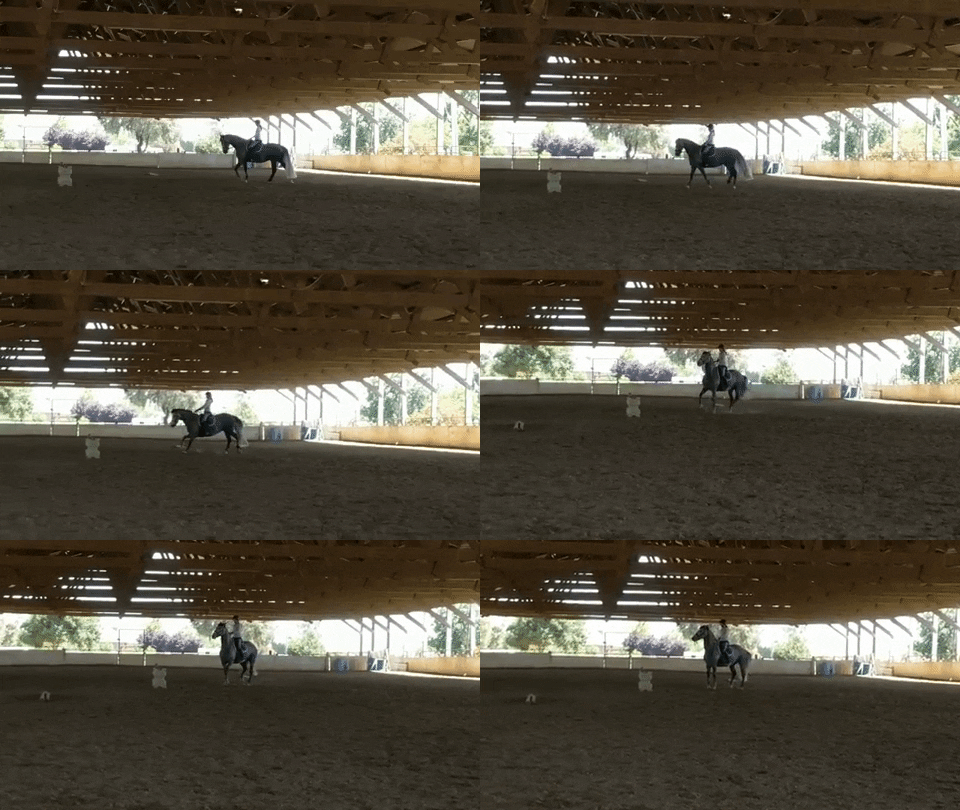
Nicole grabbed some video of TC and I riding on our first day back to work! I was surprised at how good TC looks even after three weeks off and with a wobbly rider on him. He wasn't the most perfect, but this is after three weeks off!

I was losing it right at the end but there's a lot that I like
despite that!
He's been a bit falling back into old habits, which made me dramatically exclaim "he goes better when I'm not riding him, am I ruining him?!?!" at Nicole while she was filming and then to myself as things started to go downhill again.

The lessons (I take one today!) are going to be super helpful even just to rule out some things. Both trainers are biomechanics experts, both have loads of experience with horses like TC (friesian crosses and tricky horses in the contact), and at least one of them should be able to get on him. If it's ruled out that it's me OR that it's him, that will help me move forward with whatever lessons I need.

He's such a freakishly cool horse and when things feel right, they feel AMAZING. I've never felt a canter like his, never felt this much power under me. But when things feel wrong, I have zero influence and all the things I love about him become a bit unnerving.

The right lead is feeling super straight!

My current thought is that he's just not strong enough to hold himself up and instead of breaking, he just leans into me. This would explain why he's okay early on in the rides but gets worse as time goes on, why he's better when I don't ride him (muscle soreness), and why we haven't had this issue in the past (I've mostly kept him fitter than he is now AND he's moving up toward Second level collection now).

With this in mind, he got a short workout on Tuesday on the long lines focusing on keeping him balanced, praising him when he didn't bust through the aids. I then implemented shorter work sets on Wednesday which made everything SO MUCH BETTER.

The left lead is way harder for both of us, but I was happy
that I had some steering!

He was really excellent that day. He steered beautifully, I only lost influence a couple of times, and he felt really balanced. Shorter work sets helped keep him from fatiguing physically and lots of praise kept both of our mental games strong.

In addition, I focused on my bear down, getting my collarbones over my hips at the canter, and turning my lats on. For him, my thought is that he feels like he's running when his hind legs aren't under him enough, regardless of stride length. Then my corrections to slow him down don't help, which would make sense, if I'm treating the symptoms (running) and not the cause (haunches not engaged). We started with some reining back and turns on the forehand to activate the haunches and set him back a bit, then I deliberately rode him more over the ground in the beginning while he was stretching. It ended up being our best ride in months!

Today he doesn't get ridden until 4 for my lesson, but I think I'm going to get up early today to work on his butt a bit (his glutes are definitely a little sore) and take him on a nice long walk. I don't really want him sitting from his early ride on Wednesday to our later ride today.

Hahaha he saw a bird or something
Even though a random three week break from riding didn't fix our issues, I am feeling like we're right on the brink of figuring out what is going on!

Wednesday, April 17, 2019

WW: Current Progress

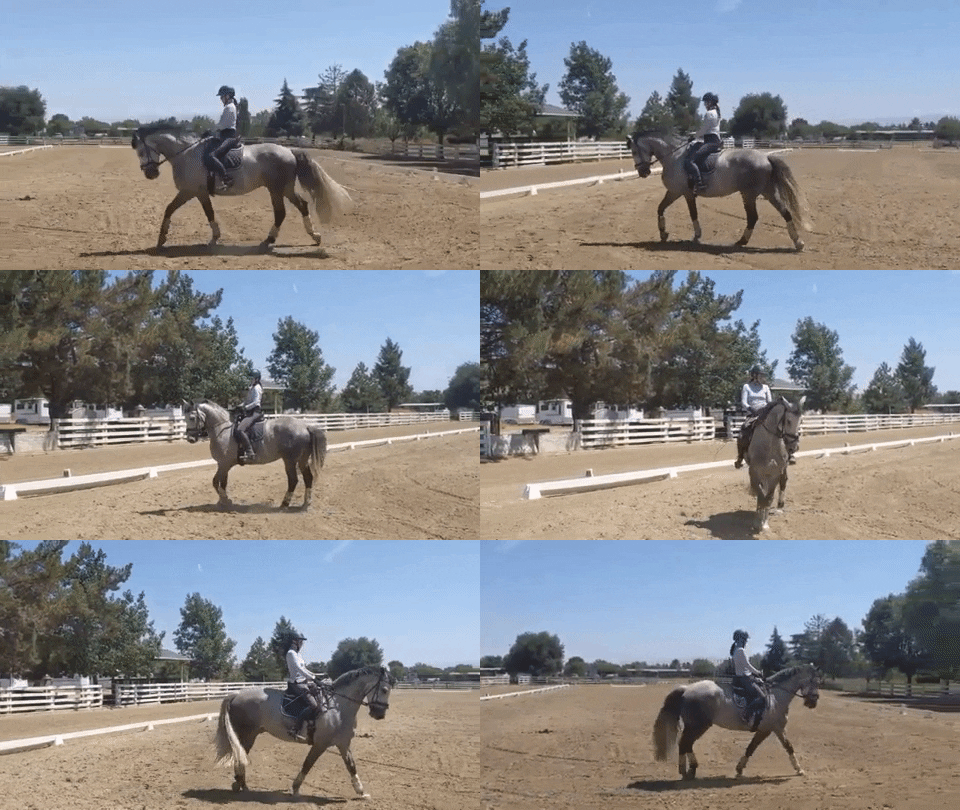
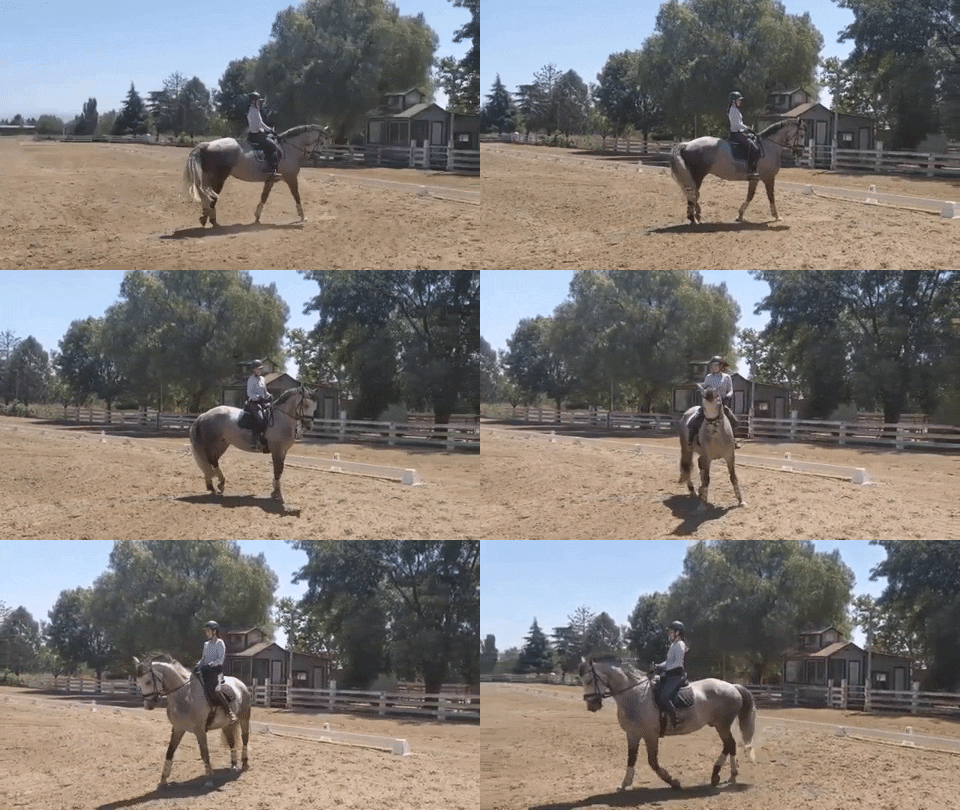
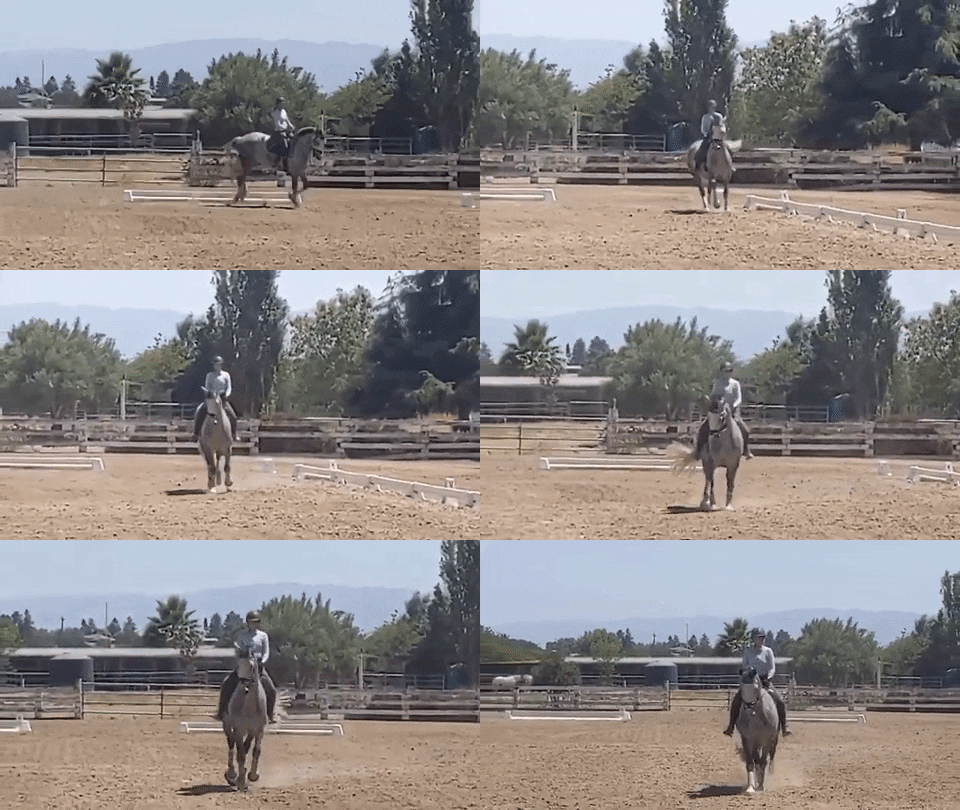
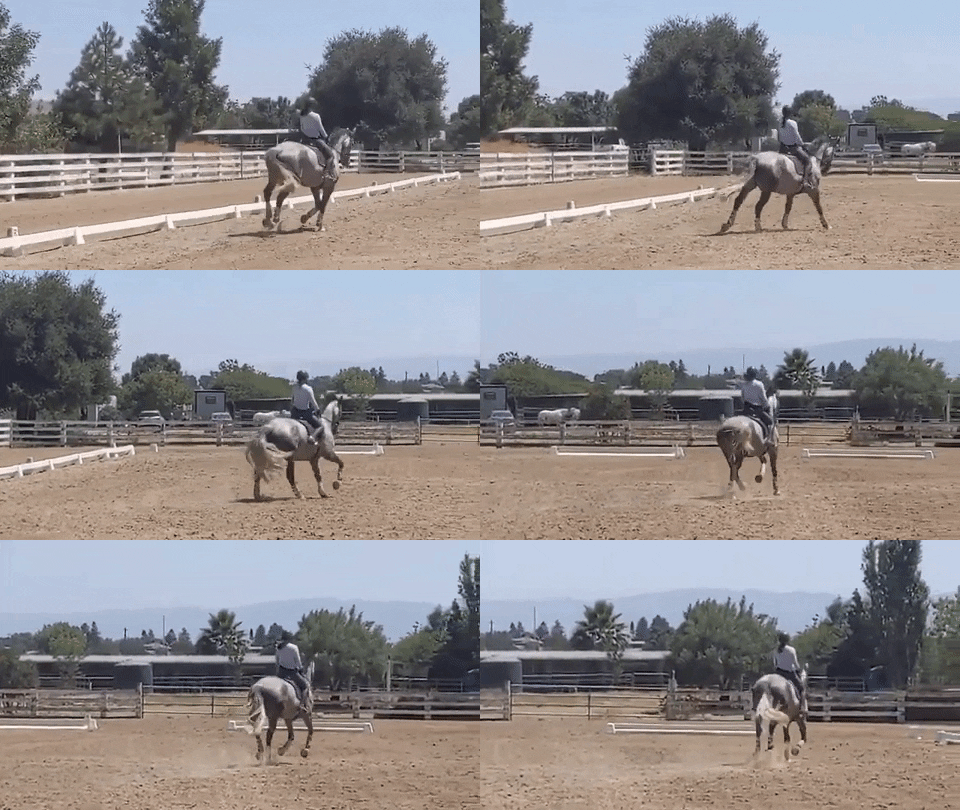
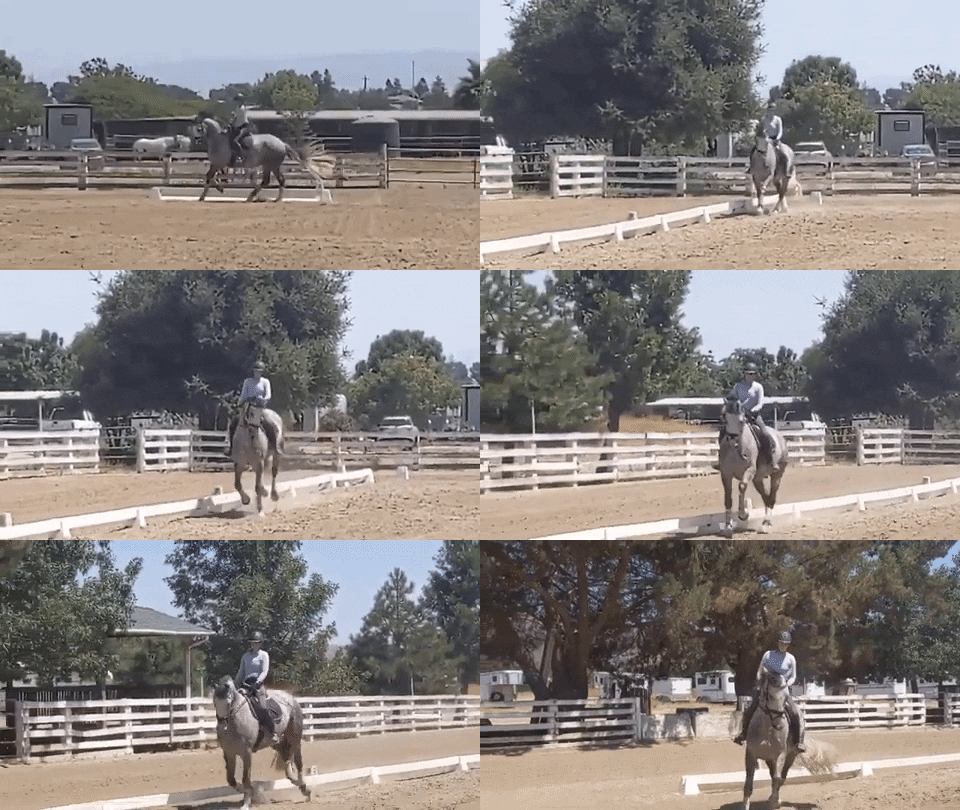
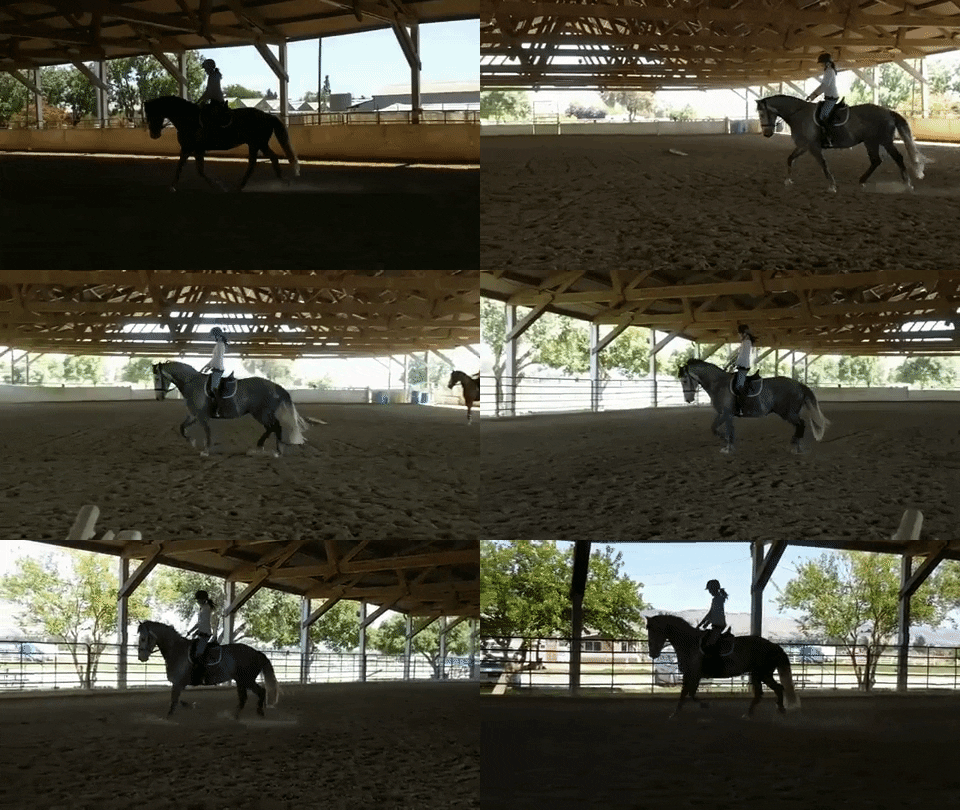
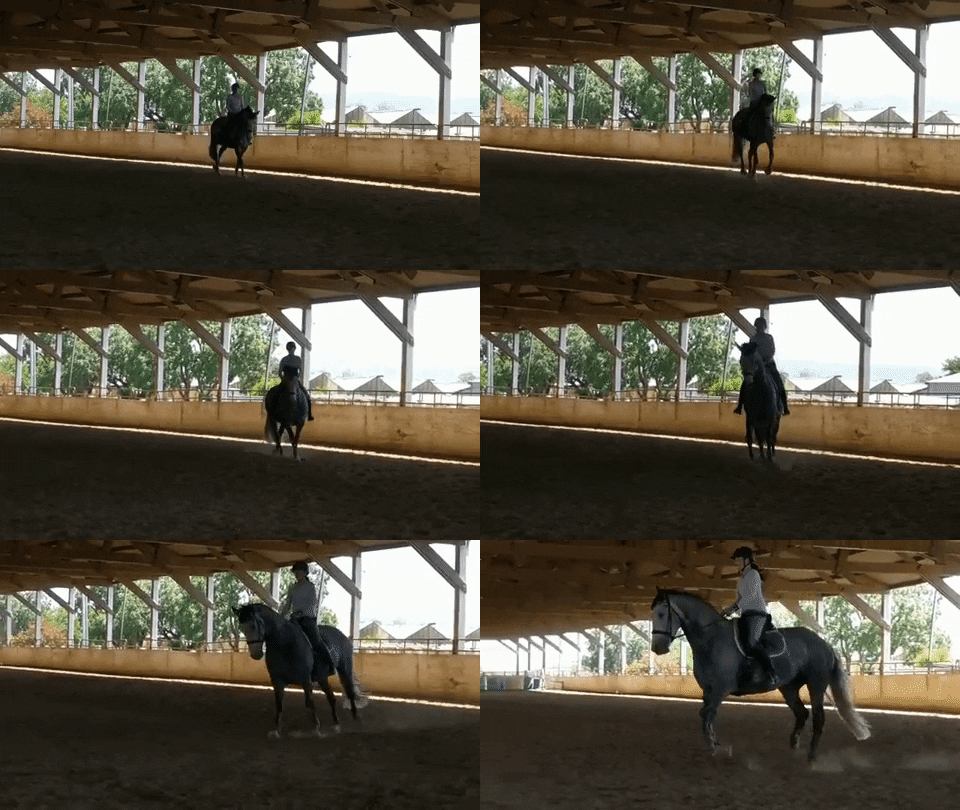
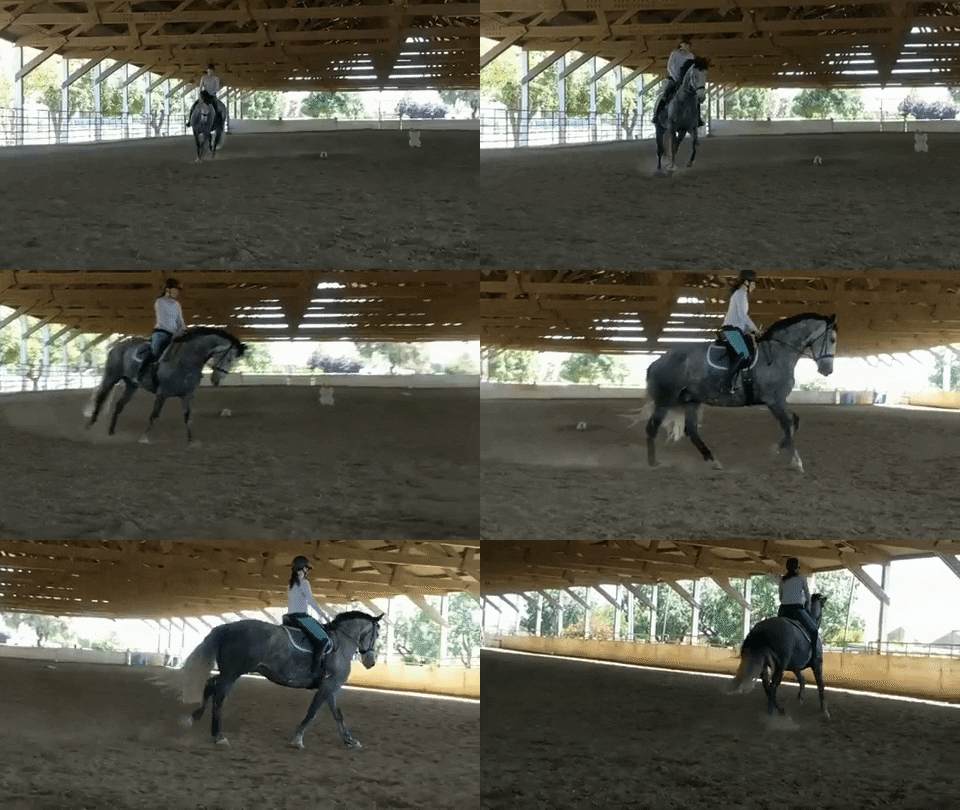
Kate was so nice to video a ton of my lesson on Saturday! It took me a second, but here are a bunch of gifs. I think for not being ridden in a while, he looks pretty good. I've got plenty to work on myself but I'm not unhappy with the way we look! 

Trot work early on


Definitely haven't sat enough trot recently, yikes

Canter left was only a bit unsteerable

He was such a good boy in the bridle this lesson

Mildly out of control to the right at the canter

I just felt so rusty, but I like how soft he is (both dressage-wise
and non-dressage-wise)