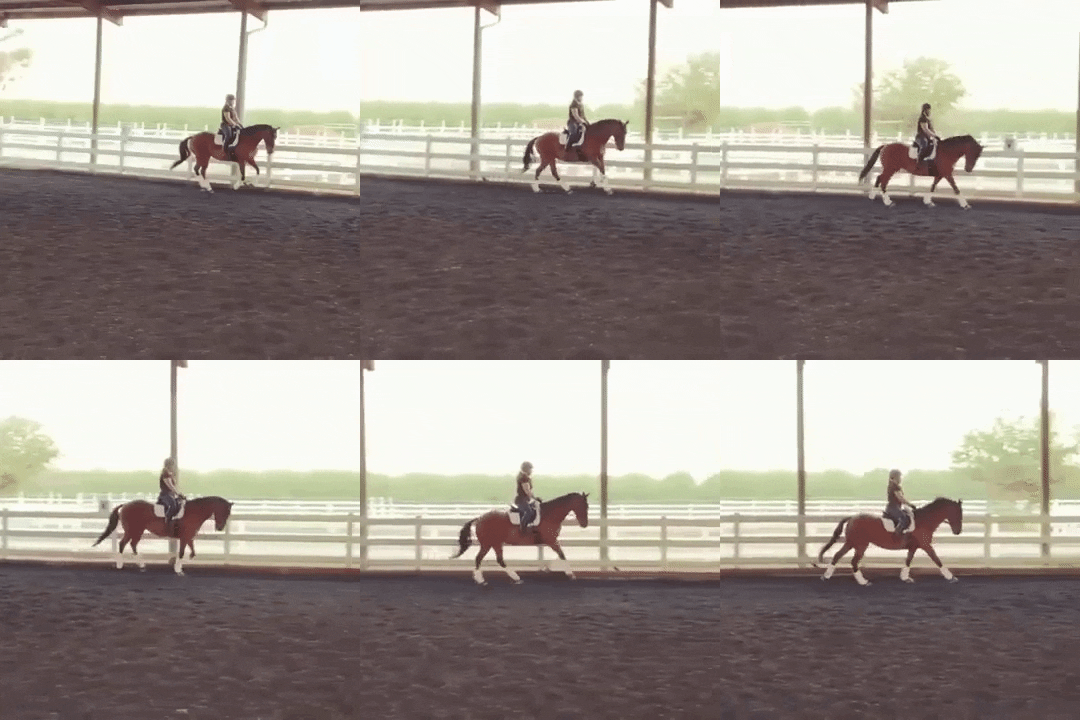
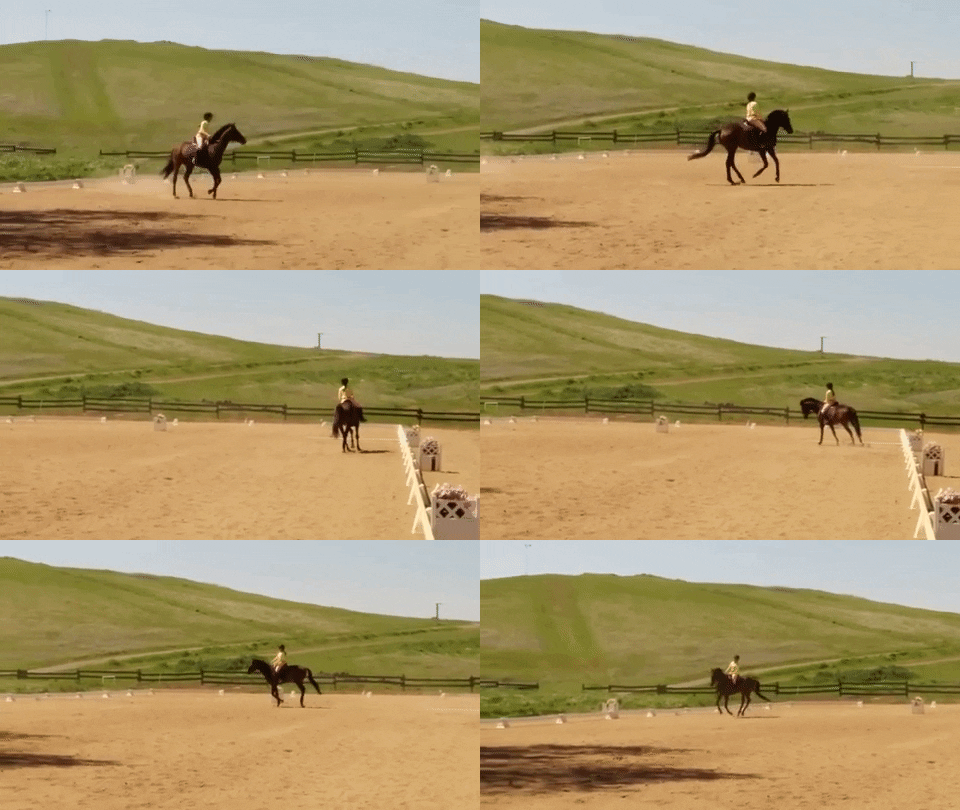
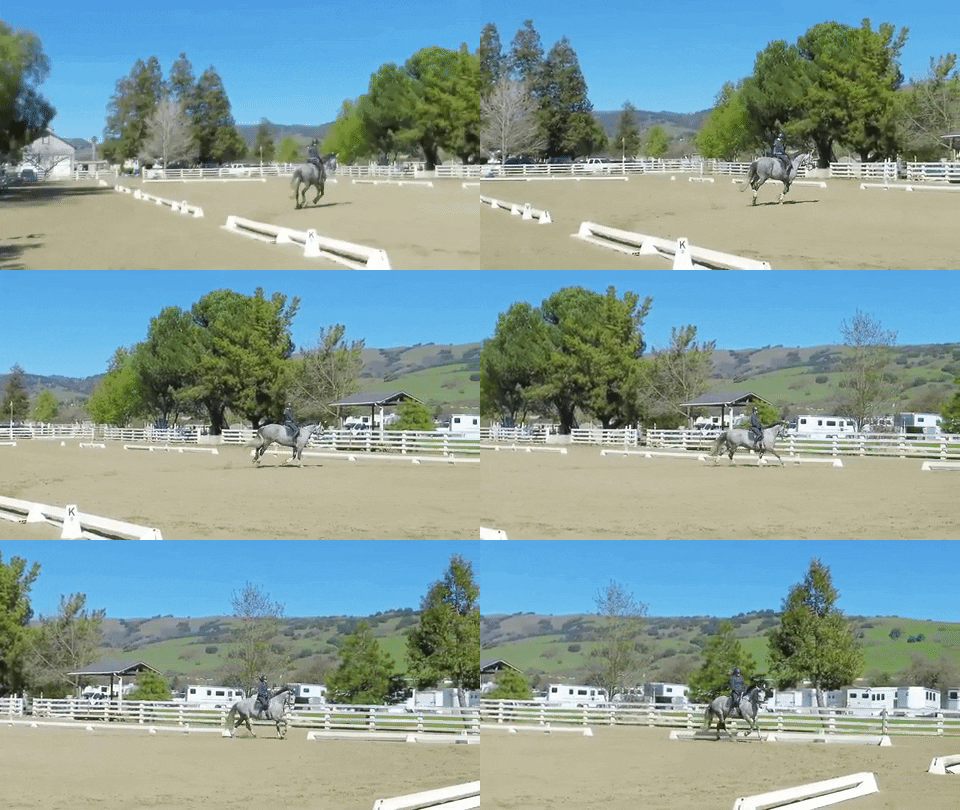
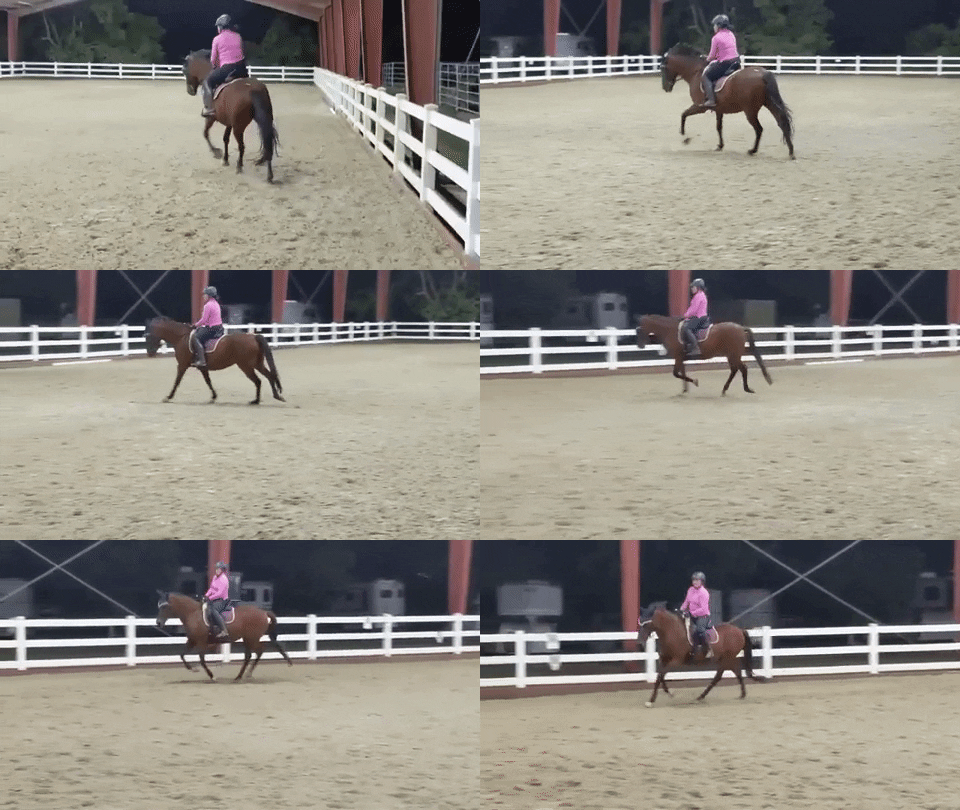
Friday, February 28, 2020

TC's Training Plan

Now that TC is closing in on being a solid mid-level dressage horse, I have been putting in a lot of thought to what we are working on.

In the past, TC has been rather unpredictable, so I've kind of just schooled whatever I could in a given day with my sights on having him ready for the next level. It was hard to have an actual training plan, because he was so different every day. Some days he was very quiet and downright lazy, others he was super hot but ready to work, others he was spooky and wanted to bolt. It was hard to pin down a full plan because I had no way of sticking to it.

"Fake news" - TC

TC has gotten way more predictable and could totally get himself on a training plan, but I've been reluctant to figure one out. I don't like feeling like I *have* to do anything when I get on and ride. I always do, but it's always in response to how he's feeling and what I can do to better him in that moment.

But what that inevitably does is stall us. I don't have a firm timeline on putting the canter pirouettes on... what kind of a progression am I going to use? I don't have a good enough schedule of when he does his most collected work and when we do more lateral work (like I did with Rico) so that I don't make him sore. I don't vary exercises enough, preferring to default to test movements.

But now, I'm looking at wanting to end 2021 at Prix St George. I super want to wear that damn shadbelly, I want him to be an FEI horse sooner rather than later, and I'm excited to do it in a snaffle too! Because of that goal looming (because when you look at his record, he's only got one 2-1 score on it so far) and me accidentally burning him out this last week (woops), I figured that it was time to put together some kind of training plan.

TC and I really feel this


I want it to be flexible though! So I came up with a five-day-a-week plan:

Day 1: Canter collection
Day 2: Trot lateral work
Day 3: Canter lateral work
Day 4: Trot collection
Day 5: Basics and/or trail ride

I tend to give him two days off per week and then sometimes I go on trail rides too, so this is not going to be set in stone by any means. But I like this order because it varies between trot and canter focus and it varies between collection and lateral work. Rico thrived on this kind of a schedule because it took different muscles to work on each day, so I was able to keep him on a pretty rigorous schedule without burning him out, exhausting him, or making him sore.

Even though the work varies each day, there will be stuff I do every day. The flying changes will be one of them, although I will probably do them only on his trot days to save time for other canter exercises on his canter days. The other thing is the extended walk, which I do every day, and obviously his warm up.

What we'd like to do every day
From there, I have chosen some exercises to pick from for each day, here are the ones I have off the top of my head but there are a ton more:

Canter Collection
- simple changes
- counter canter to flying changes
- canter squares

Trot Lateral Work
- shoulder-in to half pass staircase
- half pass to leg yield zig zag
- shoulder-in to renvers
- haunches-in on a circle

Canter Lateral Work
- half pass staircase
- shoulder-in to 10m circle
- haunches-in on a circle

Trot Collection
- shoulder-in to medium trot transitions
- half steps
- mediums within shoulder-in
- walk trot transitions within shoulder-in

Basics
- halt transitions
- corners
- walk pirouettes
- my own biomechanics


Like continuing to not learn from my past that I will be nailed
for having a horse who merely stops instead of halts

I also put some thought into what exercises and movements I'd like to get him schooling this year. I think the piaffe, passage, and pirouettes are a given. I want him essentially started on all the movements through the Grand Prix level by this fall. Then develop them for the next couple of years before we actually start thinking about the FEI levels. But there's also other minor things that are going to count big later: the tempi changes, the zig zag.

So getting his changes solid is a massive goal for this year so we can get him comfortable doing tempi changes in the show ring next year (and start ones next year, I am NOT waiting so late like I did with Rico, this horse will have fifteen ones and he will LIKE IT, I do actually think he will). The zig zag requires his changes to be more solid and the half pass, so the staircase and further strengthening him in the haunches-in will help a lot.

I'm sure I'll tweak the schedule a lot, but I'm excited to get more serious with this horse and put in some solid work toward turning him into an FEI horse!

Wednesday, February 26, 2020

Warm Up Routines

There was a post going around facebook about how important walking is for horses' joints. It recommended 15 minutes of walking prior to work because that's how long it takes to warm up the synovial fluid in joints, which I and I feel like most people do. But it made me think about how I warm TC up and why I choose to do it this way.

TC and I start with 10-15 minutes of wandering around the ranch. I'm a big believer in walking on hard ground being necessary for horses. Their circulation depends on the compression of their feet, so I always think of my 10-15 minute walks around the ranch as checking that box. When it's raining, I can't do this work, but I have been known to hand walk in the barn aisles sometimes.

It takes a bit of time to get to this place
Our walking around the ranch is on a loose rein. He's a really good boy about it, so I almost never have to pick up the reins. I pick up the reins when I go into the arena and then we do another at least 5 minutes of working on his medium and extended walk. TC likes to jig in the walk, so I try to do 10-15 minutes of arena walking throughout our workout to really drive that home. I want to be able to add energy in the show ring without always getting jigging.

After that, we go into a stretching trot and canter. I don't warm TC off the bit or on a loose rein. Why? Because I think the point of warm up is to warm up the muscles I want him to use in his workout, and that means his topline muscles. Warming him up off the bit defeats the purpose, it just warms up muscles I don't want him to use so he can... use them better? So that's a no for us. But I do warm him up his working gaits, lower in the poll and longer in the neck (and TC always asks if he can be BTV so a lot of my warm up is me saying no, get your nose out lol).

I haven't tracked how long we stretch for, but it's probably 10 or so minutes. Just a quick trot and canter with a short walk in between. The walk again is a medium walk, on the aids, marching. If I'm in the covered with mirrors, I look for overtrack and frame lengthening. If I'm out in the court, I can see a small amount in the reflection of one of the boxes so I can kind of keep an eye on that too.

I need to take more pictures of him before he goes completely
white! 
I basically go through the training scale for warm up. TC's tempo and energy are always pretty good, but the first trot steps are where I address that, don't get too quick (his tendency) and don't get behind the leg. Then we begin suppleness and bend with large figures. Then I evaluate the connection, is he willing to reach (if he had his way, he'd live behind the vertical). Then we move into impulsion, his tendency is to not swing enough through his back, so the stretching part of the warm up includes that. We save straightness and collection for real work, because that is our main focus right now.

My main goals in warm up are to address any issues that can be addressed in his working gaits. Right now the level of straightness I'm asking from him requires a bit of collection, he has to maintain more mobility in his forehand so that I can put him straight and work on movements like shoulder-in and renvers to help him develop the strength for straightness. But if I've got a tempo issue or a suppleness issue or a connection issue or he's not using his back well, I can address those in the working gaits before bringing him up into collection. The working gaits are less hard on him physically, so that's a plus, less wear and tear.
We also do a lot of walking on the trails
After warm up, I go right into my ride! I am trying to put together a little bit more comprehensive a training plan for TC. I have a pretty firm schedule on what I'd like him to be able to do each quarter or so, but our week-to-week training is very lax. This was by design when he was a young horse, he'd sometimes come out offering things and I'd just roll with it, or he'd be kind of a nut so planning out rides was a waste of time if I get on and the entire ride was me trying to keep a lid on him.

He's more predictable now, so I'm hoping to put together better programming for him, let's call it. The purpose would be to not overschool movements that he already knows well, not exhaust him by doing too many days in a row working on a singular thing, and keep track of all the goddamn movements we're going to have to do in the future. It's easy to school all the First level movements in a ride, but beyond that, it's just not fair to ask him to do every single movement from Third, plus the stuff we're beginning to school in Fourth, and the half steps, and all the Second level stuff he needs to keep refreshed for showing that level this spring/summer. It's getting complicated!

So more on that in another post!


Tuesday, February 25, 2020

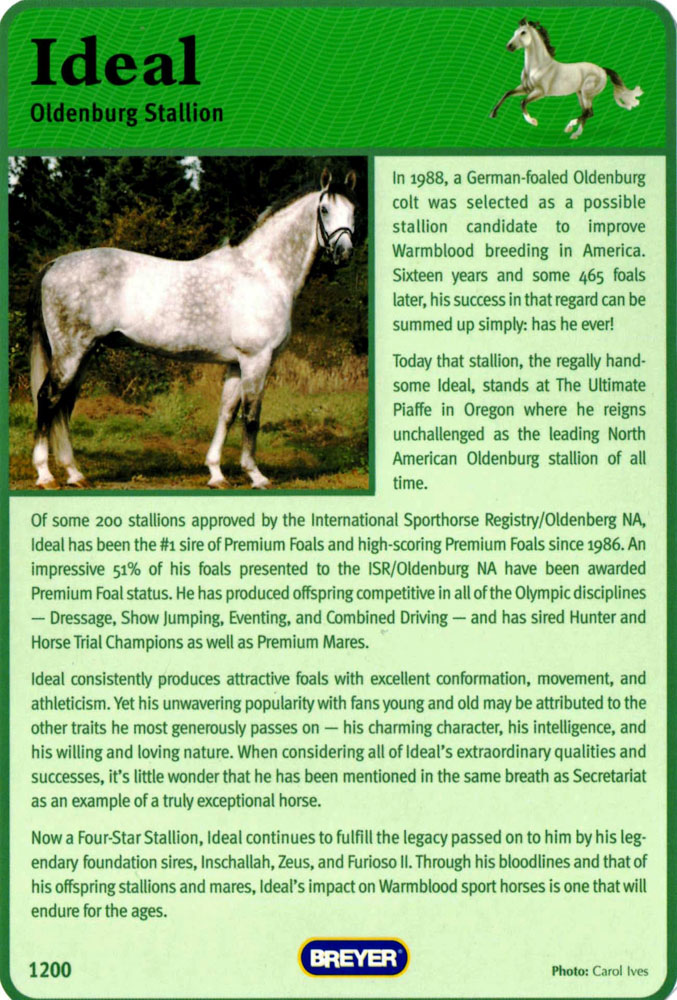
Ideal the Breyer

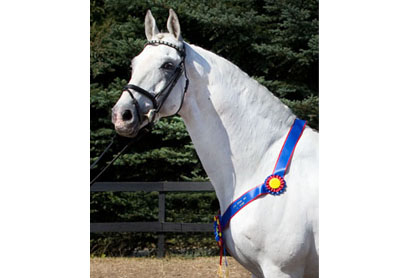
I see a lot of similarities between TC and his sire, Ideal: they're both gray, they both love working at liberty, and they both give the below look with their ears all smooshed forward.

Ideal

TC
I fucking love that look, it's probably my favorite TC facial expression aside from this one:

I just love it, I'm going to put together an entire post of
skeptical faces from TC
Anyway, one of the coolest things about Ideal HAS to be that he was made into a breyer. I've wanted it since I learned that it existed! But the thing about discontinued breyer horses is that they are worth a lot of money.

The idea of spending nearly a hundred dollars to get a... toy... seemed silly. I'd occasionally scour eBay for him, but they were always these pristine in-the-box horses. I didn't care about the box or even if he had some wear and tear. Honestly, I figured it'd make me feel better if it was boxless and a bit questionable because I didn't want to be the one to reduce its value or anything.

I gave up for a long while and then when perusing eBay for something else, found myself typing in the familiar phrase to get the Ideal breyer (do you know how many "ideal breyer horses" there are because people want to say that this is an ideal purchase for someone hahaha). I bid on a few but they kept going above what I was willing to spend. And then one came up for sale! While I was paying attention! And I bought him, finally. He came, boxless and with a few little rub marks, but he's perfect for what I want.

So I finally have Ideal in my tack room!

Hanging out in his possibly temporary home in my tack room

The card that it comes with, mine didn't
have it but I don't care, I can always
print it out or something
I don't know how much of TC's essence they really captured in the breyer, but I do like that he's galloping because TC assumes that position on the semi-regular.

Now I just need a friesian mare breyer so TC has his two parents in his tack room. I don't know why this is at all important to me, but I smile every time I see him now and that counts for something!

Thursday, February 20, 2020

Installing Canter Half Pass

Now that he has changes (although lol I broke the RL recently, I'll expand on that later, it's all good), TC has all the movements for Third Level Test 1. We've run through it once and it rode well, it's a fairly easy test though.

My thought for shows this year is that I want to get his changes solid enough to do tempi changes before doing them in the show ring. I just don't like going in a show not feeling confident in the movements. Tanya said that changes normally take a year to get solid, and we started in October, so I'm thinking that August would be our first Third level tests.

I'd love to be able to do 3-1 and 3-3 in the same show though, maybe even snag the five All Breeds scores I need just for funzies (gotta make up for not doing it last year, right?) in a few shows. But 3-3 is a MUCH harder test. And it involves... canter half pass.

Unimpressed with me telling him to not itch
his fancy bridle on his boots
We've done a bit of lateral work at the canter, but mostly shoulder-in and just a small amount of haunches-in and half pass. I've been really obsessing over getting TC's canter more rideable, I really want to get the pirouettes on him next winter so this year is all about preparations for that. That also involves canter half pass. So basically, it's time to get a canter half pass on this horse.

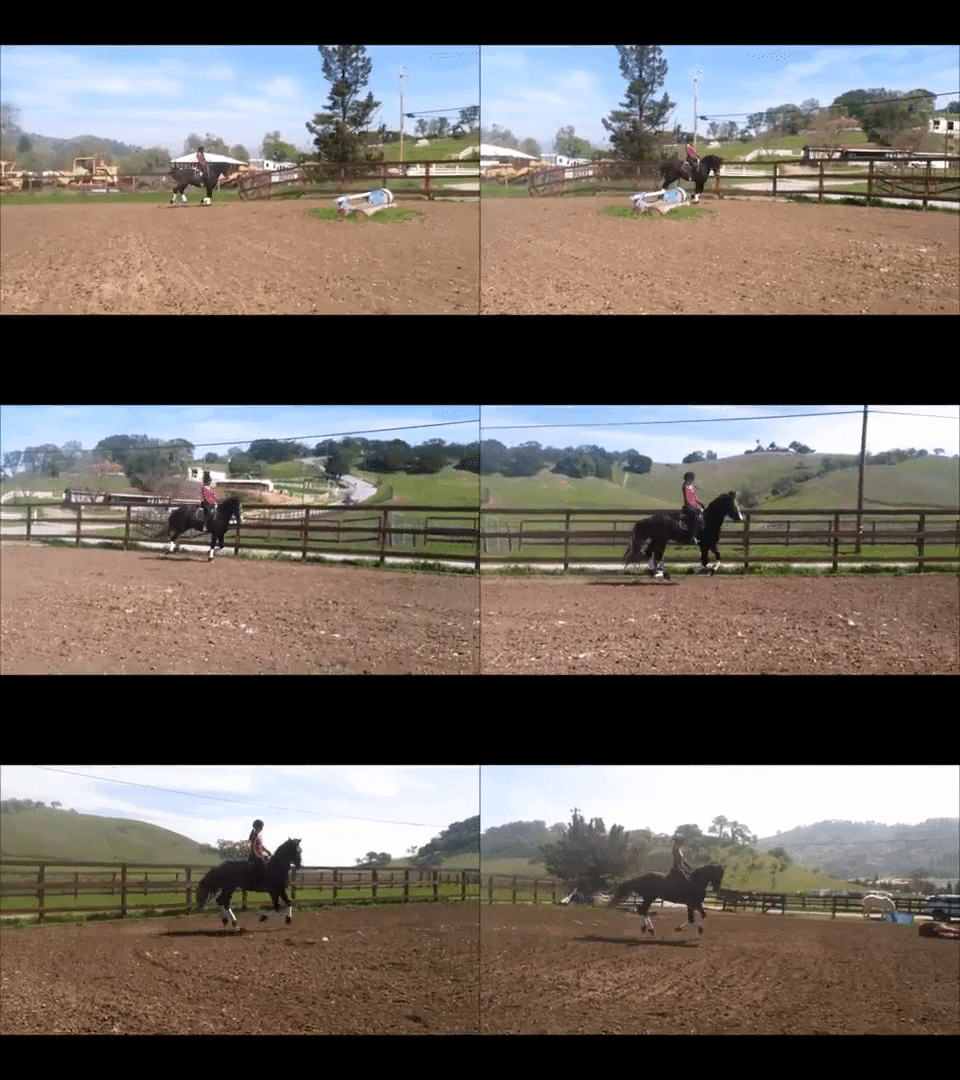
Tuesday I discovered that it turns out that when you have a good quality canter and a horse who is committed to being in front of the leg and responsive to the leg, you have a canter half pass. So we just... did canter half pass and he was really good about it. It also helps that it's one of my strongest movements (canter half pass, the changes, and the walk pirouettes are the easiest movements for me historically) even though the trot half pass is one of my weaker ones. Why is dressage so weird?

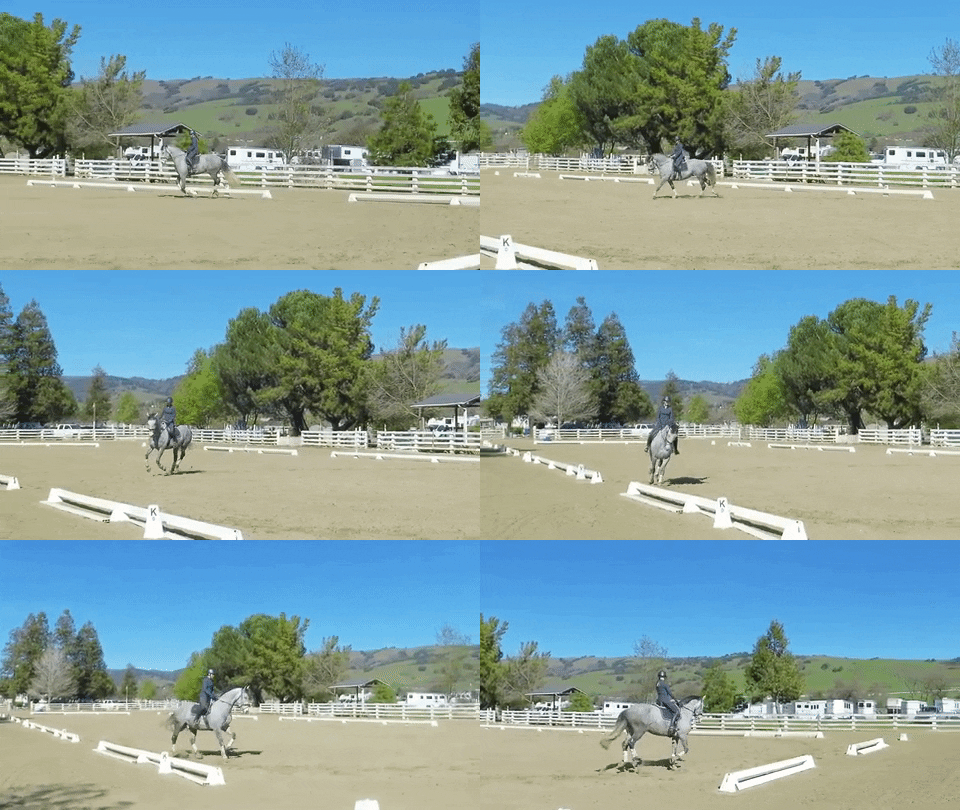
It's not a perfect half pass, and I did it in the covered arena so I didn't know how steep it really is. Wednesday, I decided to find out, so I headed out to the dressage court to see what it was like to set him up and ride it out of the corner, which would give me an idea of steepness depending on where I landed on centerline.
Thinking about the many ways he might try
to jump out of the court this year
So Wednesday, I discovered how mostly decent the canter half pass is! His left one is stellar, like, showable. The right one is fine, he just needs to get more comfortable with it. To the left, I can put him on a line and easily keep him on it but the right he staggers a little bit on the line. Nothing else is really wrong with it, it's just clearly harder for him to get his legs to do the thing.

Aside from the canter half pass, we had an awesome ride! TC thinks that the fancy trot is really fun, so he keeps offering it and he gets really excited to pick it up to the point where most of our walk work after warming up involves a lot of squealing and the high pitched "eeeeeeeeee" that he's loved making since he was a baby. Then when I do ask him to trot, he bombs around without giving a shit about me, it's my job to stay on him basically. But everything is there, you just shift your weight and he does lateral work, he's figured out that diagonals are mediums so he gets himself all pumped up in the corners just in case. He's just ridiculous.

But yes, canter half pass, it's a really good start! I can't wait to teach him the zig zag, I think he'll love it!

Tuesday, February 18, 2020

Valentine's Day on the Trails

On Friday I went on a trail ride! My trailer is going in at the end of the month for a check up, so I'm only hauling short distances until then just to be safe. Luckily for me, my favorite trail facility is about fifteen minutes down the road from my barn.

TC is the best trail horse, so we had an absolute blast. We saw hikers, bikes, cows, strollers, dogs, and even a little kid on a little motorized bike. The only thing he spooked at was a new bench on the trail. And with some coaxing, he walked up to it and sniffed it, then was fine.

At the trailer afterwards (he wouldn't put up
with me taking pictures before the ride, he was
very eager)

Happy pony

It looks colder in the pictures than it was, it was nice and warm

Most terrifying bench

Love this picture

Cows!

Friday, February 14, 2020

DOMS

Poor little TC worked his butt off this last weekend and when I went to get him out on Monday, he had DOMS, delayed onset muscle soreness. Well, it could have happened on Sunday, but I didn't go down to the barn, I had the guys walk and feed him instead.

Monday, I had him do a nice stretching ride and then palpated his back, it was a bit tight so on Tuesday, I gave him a nice long massage and then we did a mostly stretchy ride aside from some fancy trot that he offered.

Then Wednesday, he had another day off and by Thursday he felt back to normal undersaddle and actually gave me some one tempis while flat out ignoring me when I unreasonably asked him to stay on the same lead throughout our work. Today we go on a trail ride and then this weekend he's getting hand walked while I spend a rare weekend off with the SO (still in winter horse trainer mode when I'm not so busy I want to cry). So, kind of a light week after our fabulous rides, but it was needed after how sore he was Monday I think. I like to take things slow with him when he's cranky because of how hard he tries the rest of the time.

So chonky
I'm not too worried about the DOMS. It's unfortunately par for the course with this horse. He hasn't been diagnosed with any kind of muscle disorder or anything, but he's a very low tone horse who is half of a heavy breed. He worked his ASS off for me on Saturday and gave me everything I asked for and way more. It's definitely tempting to keep going and going with that before I lose the feeling, but TC of course comes first so he needed a light week.

To combat his semi-frequently sore muscles, he gets a muscle builder and some alfalfa pellets every day, plus a flake of alfalfa too. It helps make sure that he has enough nutrients coming in for him to build muscle, because we need all the muscle we can get on this flabby horse!
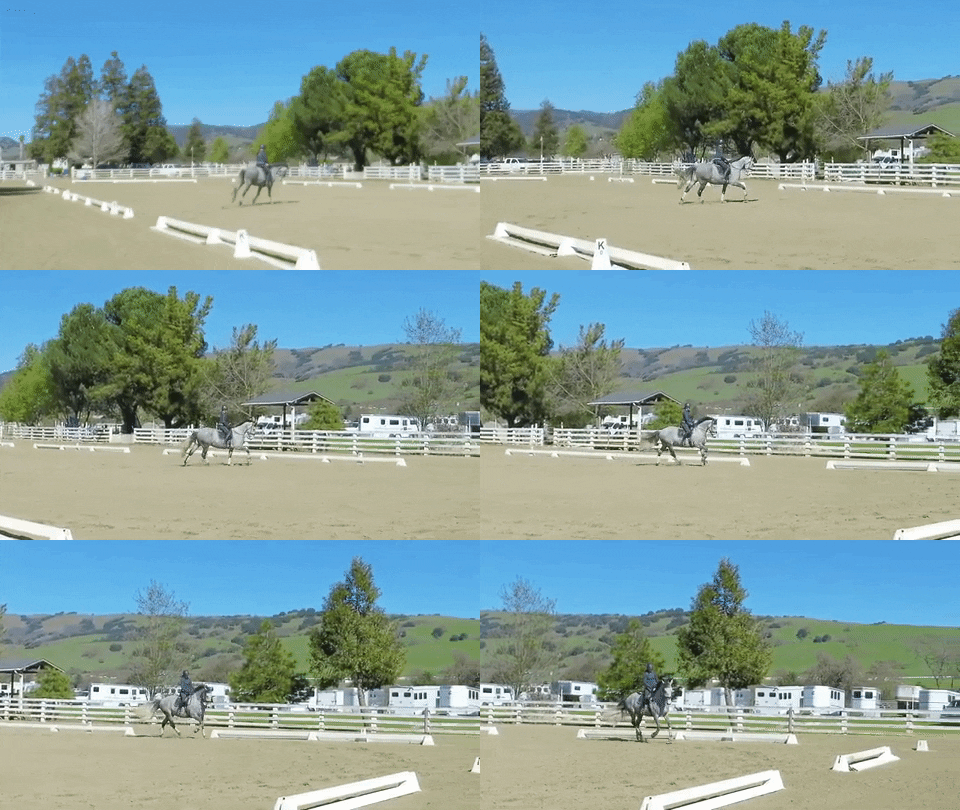
Not svelte 
This year is going to be a huge year for his development, we began the year just schooling a bit of Third level with the changes and a month and a half in, he's nearly confirmed ready to show Third level. I'm hoping to put a piaffe and passage on him this year AND get him ready for the 4-1 by the end of the year and that's a lot to ask of his body. So I'm going to revamp his conditioning schedule and focus on strength. More trail rides when we can for hill work and shifting the baseline for collection over so that there is not such a discrepancy in what I ask for on a regular basis and what he does in lessons.

I'm so excited to see how he does this year, it'll take some management (not to mention that at some point, I need to get another set of x-rays of his hocks and see when he wants those injected, don't know very many horses schooling pirouettes who don't want hock injections), but he's made sure that I know how worth it he is.

Thursday, February 13, 2020

Mary Wanless Workshop: The Canter Mechanic

The main theme of the workshop this year was the canter mechanic. I was really glad for that, I think it's one of the hardest things both to see and to learn for a rider. And I think that a lot of trainers (myself included) struggle to get their riders to do it properly.

To set up this post, I wanted to go over the horse's canter mechanic first, which should be a review for everyone, but I want to emphasize a few main things about how we ideally want the canter to look that I'll later tie in with what Mary says.

From my most recent lesson, love this pony!
The Horse's Canter Mechanic 

The canter is a gait with three beats and one moment of suspension. On the left lead, the horse begins on the right hind leg (backswing/upswing) and rolls their weight forward onto the left hind leg and right front leg (diagonal pair), then onto the left front leg (downbeat/downswing), before jumping into the moment of suspension and landing back on the coiled right hind leg.

The head and neck of the horse are at the highest and shortest moment in the upswing and at their lowest and most stretched out in the downbeat.

Purity of rhythm is very important in dressage. The purpose of dressage is to enhance the horse's natural gaits, so having an impure gait is grounds for a 4 (insufficient). The canter can become impure by getting lateral or by losing the moment of suspension.

Baby TC shows several types of faulty oscillation, from nodding (at the
beginning, when it looks like he's pressing his forehead downward
into the ground) to not oscillating at all (frozen headset when he picks his
head up after deciding he didn't want to face plant)
TC these days, we're being all casual like because he was tired from our lessons, but you can
still see how reluctant he is to oscillate! It's improved so much, but he's not a natural back mover
at the canter unfortunately. 
To properly ride the canter, the rider must first learn to stay out of the horse's way at the canter, and this means not blocking the natural oscillation of the neck and staying "plugged in" to the saddle so that the horse doesn't tighten his/her back in response to a rider who is bouncing in the tack.

As young riders, many of us were taught to "polish" the saddle with our seats or "scoop" with the seat to be able to sit the canter. This is incorrect, so with that in mind, let's dive into what a correct following mechanic looks like in a rider.

--------------------------------------------------------------------------------------------------------------------

I want to separate out this post into two large sections: one about the actual sitting of the canter, the second about how to influence the canter in a positive way.

Force Absorption

The goal in perfecting the canter mechanic is to be more in sync with the horse and to have correct following mechanics, which directly relates to the rider position score. A faulty canter mechanic will squash the horse's gaits, make it harder for them to perform movements, and make it difficult for rider and horse to climb the levels while preserving the horse's gaits. You see it everywhere, a horse who at birth was a gorgeous mover and as they move through the levels, they get tighter in the back, lose their moment of suspension, and the canter rhythm breaks down.

Hey look, it's Rico. This is LITERALLY his school canter from
when we did the 4-1, he's put his right hind down before picking
his left hind up because I'm restricting him so much. Wow. Is it
normal to feel attacked by your own blog post???
Allowance of Oscillation

One of the first things to address with riders is to get them to allow the horse to oscillate their head and neck. Many riders will feel like they are because they open and close their elbows by rocking their shoulder forward and back, but this is incorrect. You need to see the riders' hands move. Forward toward the bit when the horse is in the downbeat, up and back (elbows swing backward past the rider's hip) in the backswing.

Very clearly not going to allow him to go down here
Many riders do the opposite, and probably because they feel the horse's head, neck, and forehand lowering and they try to prevent it in fear of the horse being "downhill," but every horse, no matter how nicely built uphill they are, will have a downhill moment in the canter. It's important to let the horse do this. By preventing the down part of the canter mechanic, the rider blocks the horse from using their neck, neck muscles connect into back muscles, so the horse tightens the back to prevent themselves from being pulled on by the rider. Without a supple back, impulsion is lost because the horse's pelvis is unable to flex at the lumbosacral joint (because the lumbar is frozen). And so the moment of suspension is lost. Again, see above.


The Cheese Wedge

I think one of the most common things we see in the canter mechanic is the cheese wedge. This is essentially the rider's seat making a wedge of space behind their butt.

See the space under my butt?
The reason why this happens is frozen hip joints. If you watch the saddle on the horse while the horse is longeing, the saddle drops downward as the horse goes into the moment of suspension and drops their hips to load their hind legs for the first phase of the gait. During this phase, the rider needs to flex their hips to drop their seat down to follow the saddle. When the rider doesn't do this effectively, they get that cheese wedge under their butt like I have in the photo above. 

Peony used to be really good at a cheese wedge, she and I are
also cheese goblins who shovel hoards of shredded cheese into
our mouths late at night, our faces lit only by the light of the
refrigerator, so it makes sense that we're both excellent at
the cheese wedge
Up and Back as Much as Down and Forward

Along these same lines, we tend to emphasize the forward and down motion of the canter. How often have we been told to scoop with our seats or polish the saddle with our butts? But what goes down must go back up, and Mary wants us to emphasize the up and back-ness of the canter mechanic to balance out how much we naturally want to follow the saddle forward and downward. 

Nicole used to be so good at polishing a saddle with her butt,probably because Murray wanted
 to murder her all the time, but if there's one thing we know about people I'm friends with, it's
that they're VERY STICKY PEOPLE. But you can see that there's a lot more emphasis on down
and forward in this video than up and back.
The Carousel Pole

This is actually something I've been teaching for a while, because of this video that was posted of Mary Wanless working with someone at the walk to keep themselves in a good balance. In the canter, the rider's upper body should appear to be a carousel pole. At all phases, they should land on their feet.

Would land on my butt, you can see me basically shoving his
saddle into his withers/shoulders here
Look how much I'm leaning back here, yikes
Shamelessly stolen from Nicole's recent blog post
The typical way this goes wrong is when the rider is rocking their shoulders backward in the downbeat of the canter. When this happens, gravity pushes the rider's weight forward and downward into the saddle and it rocks the saddle forward into the horse's shoulder. The horse is forced onto the forehand as the downbeat is emphasized.

Instead, the rider should make sure their shoulders stay over their hips even in the downbeat of the canter. This is HARD and most riders think it feels like they're leaning forward.

I did my damn best, you can see how much I'm (trying to) moving my shoulders
and how much the downbeat is emphasized in poor TC who thinks I've had a stroke,
compare how on the forehand he is here vs in the other gifs, it's amazing

--------------------------------------------------------------------------------------------------------------------

Force Transmission

Once the rider has correct following mechanics, they can begin to affect the canter in a positive way.

Half Halt Timing

The half halt should occur in every stride at the top of the mechanic (the backswing/upswing), where the rider should essentially say to the horse "hang out here for a bit longer" and then the half halt should be released in the downbeat, the horse should be encouraged to quicken the downbeat and get their haunches back underneath them as quickly as they can. This means the half halt is FAST. It's a split second. Then you HAVE to let go.

I always tell my students the half halt at the canter is a seat aid, not a hand aid. Sure, your hands can half halt during the upswing, but ONLY in the upswing and after that, it's on your seat to hold the horse's balance within the mechanic. The hand just assists the seat in that one moment of the canter.

Slingshot

The slingshot is a great way to balance the canter and emphasize CANada versus mozamBIQUE. This is another fun chair exercise from Mary. Sit in ideally a hard chair with both feet on the ground. Feel your seatbones against the seat of the chair. Now see if you can engage your hip flexors and pull your seatbones backward across your flesh. That's your slingshot.

On the back of the horse, this needs to happen in the upswing of the canter, the outside hind hits the ground and you are holding your hips backward, having shifted your seatbones across your flesh backward toward the cantle during the moment of suspension. This encourages the horse to stay in that upswing for as long as possible as you are holding them there with your seat and thigh. This has been a GAME CHANGER for TC's canter, which is his worst gait.

Can we talk about how unfair it is that this is the same rider (Peony) from above? While before
she was showing an excellent cheese wedge, she's showing shit for cheese but she's showing
an excellent slingshot! See how much she's emphasizing the up and back-ness of the canter
mechanic AND how much she's following with her hands AND how she's a carousel pole??
Just fabulous 
Down Up

In addition to the slingshot to keep the horse on the hind end for longer, the rider also must emphasize the "sit" in that moment too. Anne had a great visual for this, she imagines falling back into an intertube during the slingshot moment to emphasize the down part of the mechanic. The horse must be DOWN on the outside hind leg, then as they shift their weight forward to the front legs, they must be UP. So as a rider, you must emphasize the down on the outside hind leg and then emphasize the up on the inside hind leg. Nicole wrote about this first hand and it's a really great read.

It's hard to keep all these straight, I believe this is me trying to ride properly. I'm nowhere
near perfect, but you can see a) minimal cheese wedge, b) not much shoulder rocking, c) my
hands are mostly following his neck (esp at the end, then I really get it right) 

Overall


The canter mechanic is probably one of the hardest things to learn, at least in my opinion. Also the connection. I feel like 80% of the lessons I teach are about the canter mechanic and the connection at this point. But it's an absolute game changer to get these things right.

I've done my best here in this post, but it's really hard to explain. It takes a lot of hands on work with a rider and a lot of lessons. I've had one rider get it in maybe three lessons. That rider has other problems, don't worry (it's not Peony, she worked hard like the rest of us). I still can't sit the canter properly. It's just so damn hard.

Major shout out to TC for being the best demo horse even though he wouldn't let me ride completely bat shit crazy because he kept stopping to check on whether he needed to take me to the hospital. Also big thanks to my wonderful friends for letting me steal their canter mechanics and put them on the spot. 

Wednesday, February 12, 2020

Twenty Four

Today is Rico's twenty-fourth birthday and I'm the worst owner because I nearly forgot. This is also a huge year because it's now been fifteen years and one month since he came into my life.

I don't get to hang out with him much anymore because I'm so busy and am not down in that area as much, but he still means the world to me, of course.

Best horse in the world
Rico is enjoying his retirement so much, he frequently sasses my parents and the other horses, runs around in his pasture, and has been enjoying all the fresh grass recently. He isn't ridden much anymore because he only wants to be ridden on brand new trails and gets cranky if he's taken out to do anything that doesn't involve a trailer ride.

I really hope he's got another howevermany years left enjoying his big beautiful green pasture and bothering everyone who mildly annoys him. What a freaking horse.

Monday, February 10, 2020

Put a Piaffe on That Horse

I don't normally take two lessons in a row, but this time, I felt like I needed all the help I could get! It was a really good idea because we got to build even more on the concepts we went over on Thursday and introduced some new things too. I was worried that we might have to take the same lesson twice, but that didn't happen at all! 10/10 will do two lessons in a row again.

We began warming up and TC was on it. Even though he had a day off on Friday while I worked, he felt like we'd been working on those concepts for weeks. I started out in my own warm up with some renvers and haunches-in, working on getting him to flex right and shift his weight onto his left shoulder. TC responded well and I let him hang out for a while, waiting for our lesson to begin.

Tanya had some nice things to say about our previous lesson, she was impressed how "tall" we got him, which basically means that we got him narrower so he appeared less like a chunky monkey (I swear you can feel his ribs, they're right there) and more like a toned dressage horse. I told her we hadn't worked on anything the day before, but that he was feeling really good that day.

Some fancy trot work!


We started in trot with some warm up lateral work, riding some shoulder-in, renvers, and steep leg yields. TC isn't the best at steep leg yields, so I know what we'll be doing in warm up from now on. His shoulder-in and renvers were on point though, the horse learns SO FAST and I guess I'm up there learning too. He started out way more between my aids than he did on Thursday and it was so much fun.

We then headed into canter and did some work on his collected canter. Tanya had an interesting observation that TC gets a lot of air time in the canter, but mostly in his hind legs. She wanted him to commit to the collection more than he'd like to and had me really put my mechanic on it to make it happen. My inner thighs were quite sore that night!

But TC is an actual genius, so he sat right down and was such a good boy about working that hard. We switched directions with a flying change after riding some 10 meter canter circles. Tanya had me do it on the short diagonal and wanted me to wait until B, but I didn't because TC offered and I went with it. It was a great flying change but "that's nowhere near B, Megan" and thus began a discussion of where TC is in his flying change training.

Tanya thinks TC is way more confirmed than I do, but she says she sees it in him, he's confident and knows exactly what I'm asking for and will do it. Now is the time (even though we're literally 3.5 months into flying change training!) to begin having him wait for my aid.


Counter canter exercise to the left


With that, we went right into our next exercise. Tanya had me track large and do trot to canter transitions between counter canter and true canter. Get TC really in tune with canter, trot, switch flexion/shift weight, counter canter, trot, switch flexion/shift weight, canter, and so on. Then when I was in counter canter, set him up and do a change the same way I've been switching flexion/shifting weight. TC was quite good at this from right to left. He gave a very quiet flying change that was on my aids. There was a tiny bit of falling left as he changed, so Tanya suggested we play with that over time, but generally for the first time in this exercise, very good.

The other way, tracking right (and therefore the left to right change), was TOUGH. TC did not want to pick up the counter canter, then when we actually tried the change, he jumped sideways out of the arena, tripping and landing with the arena fence in between his legs. That taught him though, and the next one we did was FABULOUS. Tanya was so excited! So was I.

More fancy trot work


It was right then in the lesson that I realized how much fun TC was having. He was grinning ear to ear. Even Tanya started to mention how much he seemed to be enjoying his work. I told her that ever since starting the changes, the horse has been so confident and has been having so much fun in his work! He is really coming into his own as a dressage horse.

Sure enough, she had me do some walk trot transitions for a bit and he got more and more amped with every right answer and every neck pet and good boy I gave him. He puffed himself up more and more as we did some shoulder-in to medium trot work. Tanya told me that the medium was actually quite good, even though I've thought it wasn't very good.

By the end of our ride (which ended with two amazing half passes that my soloshot decided to cut off our legs during), TC was bombing around like an FEI horse, still with his big stupid grin and his perked little ears. Tanya said literally those words "there's your FEI horse" while we were going. I was smiling a lot as well.

Counter canter exercise to the right, he was very
confused by this so you can see him struggling and
then he eats shit at 2:30, keep watching to see his
best LR change ever!

At the end of the lesson, we stopped to chat. Tanya told me about a horse she knew who was like TC, really not super fancy from the get go and definitely the wrong breeding, but who somehow (and no one knows how) just thrived in the dressage. The horse went to Kentucky at the I1 last year. Tanya told me to get a piaffe on my horse ASAP and keep perfecting all of this work for Third level and beyond.

I was in complete shock. And then I saw the videos and like... is this really my horse? There's still so much to improve, but he literally gave me a feeling I've never had before. I've taken two horses to Grand Prix and schooled several others at that level. Never felt this in a horse before. It was more than just fancy movement or collection or connection. There was something about the harmony and how much fun we were both having that made it truly spectacular.

I think this might be my next Grand Prix horse, guys. And I think he's going to want to show in front of some real crowds one day. I think it's safe to say that we've re-positioned our aim into the stars.

Friday, February 7, 2020

Ironing It All Out

We interrupt this Mary Wanless week of posts to talk about TC because he's a GODDAMN GENIUS of a horse and we had a great lesson last night. Also, my last Mary post is about the canter mechanic and I need to compile a TON of videos, so that's my Sunday project this weekend. Keep an eye on my instagram to get a sneak peek, I'm sure I'll be sharing there first.

Thursday afternoon, I headed back over to ride with Tanya! Her homework last time was basically to address the issue with TC's accelerator and also to work on his suppleness. We came out guns-a-blazing and she had to tell me to freaking half halt before I bombed around in medium trot the entire ride. Excellent.

I was a little concerned about my SI recovery, so I warned her that I felt wobbly and that I might need some help with that. But the entire ride, it didn't bother me at all, I was occasionally unsteady, but that's what bearing down is for. So I'm super pleased, I will hopefully have another PT appointment next week so we'll keep working on it all.

Being so cute after the lesson
We started out talking about some of the stuff that Mary had said. The biggest thing Tanya took away was tucking her boards into her horse's shoulders. If you're unfamiliar with Mary's boards, here's how she describes them: a sophisticated way of working with asymmetries. Instead of dividing the body into halves, we divide it into thirds, taking lines which follow the line of braces but which continue right down to the bottom of the torso. It is as if a board joined the rider's front to her back along each of these lines. Keeping her spine vertical is very much easier when those boards are firm.

Okay so you take your boards, and you ask yourself, if I can extend those forward, would they be tucked in behind the horse's shoulder blade, or are you losing a board outward? I definitely lose my right board outward away from TC's right shoulder.

And thus began an entire lesson on straightness!

Happy pony
TC has always wanted to duck out his right shoulder, which is where I leave a door open anyway, so he's honestly well within his right to do that. When that happens, his haunches fling themselves left and his nose gets pulled left too (erm, to clarify, I pull his nose left). Tanya pointed out that when I go to straighten him, he often just flings his entire body left, so it discourages me from riding him straight because then I can't keep him on the rail. She put us in renvers to the left and had me make sure that he kept his haunches on the rail while I pushed his withers into the left rein.

We also played a bit with riding shoulder-in in each direction. To the left, I needed to essentially ride more renvers to get him to stay stepping into the left rein and to actually bring his withers to the left (vs his favorite, a neck-in). To the right, she wanted him to flex more right. He's very happy to bend his neck and body right, but he stays a bit stuck in his poll and doesn't really come through. That's caused by him, again, not stepping into the left rein. I sense a theme.

Hi, do not want to connect to left rein, no thanx
In canter, Tanya was happy to see him actually really forward. She had me get on his case about the connection, getting him more INTO the bridle to the right. She wanted him to stand more upright, which she had me address by getting a better feeling from my right leg to my left rein and insisting that he not only bend right, but he shift his weight left. When he did this, he felt so much BIGGER and way more upright, almost narrower. Like everything squished together and got taller. Tanya said it looked like he dropped some weight (he isn't fat, but he is big boned, literally, you can feel his ribs, his knee joint is the size of my head).

To the left, we rode a diamond, which one of the other long term Mary participants had Tanya do on her horse at the workshop. It was really fascinating, and very hard for both of us. I essentially rode him in renvers again, pushing his withers to my left hand and not backing off the contact. Tanya was on my case about that, she said that her guess would be that he's a bit too light. Understatement of the century, Tanya.

Once again, his canter TRANSFORMED. I've never felt him like this. It was amazing, I had him completely underneath me and he gave me so much access.

At the end of our canter work, Tanya wanted to see the changes! With this new, more upright TC, he was ON IT and showed her the two best changes (one in each direction) that he's legit ever done in his life. She seemed excited about them. I told her he was super easy to put them on but that he was still green, of course. She said there was a lot to like - they're clean, they're uphill, they're on my aid, and he doesn't dick around in them. She wants me to hone in on being able to keep him straighter so I can just shift his weight and change (right now it's a lot more of a change-the-bend, so they jump a bit sideways, not too much, but I certainly am not on the exact same line), as that is going to be key for tempi changes. But that for where he's at in his training, she's very happy! YAY!

I need to take more pictures of this animal so I don't constantly
reuse them for this blog. 
At the end of the lesson, we talked a little about TC as a whole. TC scored very well at Training and First but we chatted about how he's just really flow-y and I'm not in his way and the high scores came from what a nice picture we gave. He was a VERY good First level horse and I know how to ride a good First level test. But a good First level horse doesn't make a good Second level+ horse. And that's what we're after now. I did point blank ask Tanya if she thought he could do the upper levels, she said yes, that she wouldn't give up now. I had an inkling he could do the upper levels, but it's nice to hear from my trainer that I shouldn't sell him as a lower level horse and get something more talented.

But TC needs to give me more access now and he's a little bit unsure of that, especially in canter, it's a lot of effort on his part. In addition, when he gets to the place he needs to be, he feels like he's about to launch me. I've spoken about this before, so it's just more of that, I need to ride him in a way that's on the edge of my comfort zone. That's excellent! But it's hard.

Overall, it was an absolutely fabulous lesson. I love how he's feeling these days with Tanya's training plan. And it was great to see how much access my new wobbly SI joint gave me. I need to work harder in my riding than I have in the past, but I can actually do everything Tanya is asking now! Hopefully tomorrow we continue to build on these concepts, I'm so glad I signed up for two lessons this month.

Thursday, February 6, 2020

Mary Wanless Workshop: Applications for TC

There were two things that made me go "huh, that's what TC does" in the Mary Wanless Workshop and they both happened when my trainer, Tanya, was riding her horse.

While her horse is very different than TC, they have two major similarities: the desire to get short in the neck and the desire to get down and forward with the chest.

This is a very friesian thing to do (though Tanya's horse is a warmblood), and something I've been aware of for a long time. Trying to get TC to lift through his pecs, thoracic sling, and withers while reaching to the bit has been tough. His body is made to pull a cart, not carry himself in any sort of productive way.

Baby TC says "this here is nice" 
This was super cool to watch, Tanya has been riding with Mary for... a long time (not about to date her!). As you get more and more in tune with your body, the more weird stuff can be said to you and you can find a way to do it. I have a kid who is naturally very kinesthetic, I can tell her "can you sit the trot as if you're trotting backwards" to get her horse to sit down, I can also tell her "imagine a crane is going to come in and pick your horse up from the withers" and she'll get the horse more uphill. If you ask her what she's doing, she says something completely unrelated (her language doesn't connect very well to her body just yet).

So Mary gave Tanya two things to think about and I was really excited to see how those things would translate to me on TC.

Breastplate

To get the horse to pull his chest backward, Mary said to imagine that there is a metal plate across the horse's chest, like a breastplate for humans (not horses). TC and Tanya's TC Twin like to press the top two corners of the breastplate forward and downward, drawing the bottom two corners of it backward with their hind legs.

Mary wanted the rider to imagine two strings attached to the top of the breastplate and the rider was to bring those two strings backward while pushing the bottom of the breastplate forward. Tanya said that she imagined that she was riding with a rope around the horse's neck that she could draw back on with her core.

Two Pack 

The rider's two pack is the upper part of their abs right under their ribs. There are eight pairs of segments of muscle in the abdomen and the two pack is the very top pair. Mine stick out and are fairly defined (everything below that shows how much I like food lol), so it was easy to find them, but basically think of it as your diaphragm.

From there, draw a line backward and about two inches upward to your upper back. This was what Mary called the two pack line.

To address the shortness in the neck, Mary wanted Tanya to take the two pack line and extend it forward on top of the first several cervical vertebrae of the horse and under the last several cervical vertebrae, out to the skull of the horse. She wanted Tanya to use this line to support the horse's skull as she allowed more room for the neck to stretch.

Getting even this much stretch into the bridle is hard
I'm super interested to see how these two images work with TC and I, and I'm especially excited that I have a lesson with Tanya both today and Saturday so I can ask more about this!

Wednesday, February 5, 2020

Mary Wanless Workshop: Connecting the Dots with My SI Injury

Nine years ago, right around this time, I had an accident. It wasn't even a real accident, I didn't come off. I don't come off nearly enough, so many of my injuries have occurred when I wish I'd come off but I didn't.

This injury in particular occurred when I was working at the event barn I worked at. Winter is tough and I went to get on a particularly rude horse (looking back, he probably was in pain) and thought he'd been longed the day before. Turned out he hadn't been out in a week. He went to buck me off and twisted while pulling downward.

I was a tiny person, about 15-20lbs lighter than I am now, and weak. He yanked my back and I was in instant pain.

At the time, I had no health insurance and was quickly skating around debt, desperately riding horses for people for as little as $15 just to pay my bills and survive the winter. So the last thing I wanted to do was go to the doctor.

You can see me falling left here
Fast forward nine years and I am out of pain, been out of pain for a while now. Occasionally I'll piss off the joint by doing something weird, get some crazy sciatica or just have a lot of pressure on the right side of my SI joint, but it goes away with a lot of walking and rest. For the most part though, it's been fine!

I've long thought that my right side weakness in riding has something to do with this injury. I've been told by instructors that I pop off that seat bone, have had every horse I ride go through the right side of their body. But I can manage it, I got through the Grand Prix with it, and when I sit in front of the mirror, my body is even, I can feel both seat bones and everything.

So I figured it's fine, I'll just keep strengthening the right side and that'll help both my riding and to support this weakness that's been there for so long.

Definitely love the left side
At the Mary workshop, we had a lab session where we sat on saddles and got realigned. I didn't necessarily want to take up a bunch of time being realigned, because I'm fairly happy with where I'm at and I've also found that sitting on a fake horse makes me sit weird, so it's not the most helpful. But Agi was playing with bands with Nicole, finding out where her weaknesses were in her stability, and I wanted to play too.

We briefly chatted about my desire to twist left, so I wanted her to try to twist me each way and see where my weakness was. When she went to do that, she saw something weird. Just sitting still on the saddle, both seat bones were weighted the same, I always thought it was interesting that trainers said I popped off of the right one because I honestly feel that one on the saddle all the time. BUT when Agi went to shift me, apply forces to my body, my right glute immediately popped my right seat bone up and forward, away from the saddle... protecting my injury. She put bands on and the same thing. When I go to resist being jostled, my body goes into protection mode.

She talked me through keeping my right seat bone on the saddle while I was resisting her push/pull/twist and I was in immediate pain. INTERESTING. Sounds like whenever I'm having to absorb/transmit forces from/onto TC, my first priority is to protect the injury. But then when I stop and work on my position, I sit just fine.

Me as a child, I could not lean right like this now!
Anne, who puts on these clinics, is a physical therapist and dressage trainer extraordinaire. She worked on Nicole the day before, just briefly, and I saw the difference she made. I wanted to talk to her about this injury because she specifically understands dressage. A regular doctor or physical therapist would probably think that because I'm not in pain, whatever. I figured Anne would understand why I wanted to address it and how to help me both on and off the horse.

Luckily, she had time to set up an appointment for Tuesday, yesterday! So I audited some of Mary's riding clinic (my work from home days are excellent, I got some good work in AND learned a ton) and then headed into Anne's office.

The first thing we did was put me through some of Anne's tests. She pushed lightly downward on my shoulders while I was standing and was able to feel a lack of mobility in my... left SI. Turns out that the frozen part is the problem, not the painful part! More tests revealed that my SI as a whole has almost no flexibility in it. She asked me several questions that were really on point, things I've just kind of minorly struggled with for the last ten years or so. Nothing enough to even think about but when she mentioned it, I was like "huh, yah that describes me" and such.

Hyper-mobile right SI causing my seat bone to come off the
saddle and shoving my right leg back
The PT itself didn't feel like very much. She first pushed on my pelvis (lightly in comparison to a chiro) in all different directions, finding that my left SI was stuck frozen upward, she said I essentially dislocated the joint at one point and now it was stuck. It had a lot of mobility going up but no ability to be pushed downward. Meanwhile, my right SI was all over the place, making up for the frozen left side. The way I understood it, and I'm sure my interpretation is off, is that the pain in my right SI is a strain caused by my left SI having no ability to move.

She basically just loosened up my left SI and then worked on my vascular system to calm the area down again. During this work, the hurting part of my injury felt like garbage at times and wonderful at others. I had everything from intense pressure in the original place to sciatica all the way down my leg, to a tingling feeling, to a totally relaxed feeling.

At the end, she had me stand again and felt my shoulders. I could feel the pressure down to my feet (so essentially, I was able to be in neutral spine for once), which was a huge change from earlier in the day. She then told me that I would feel weird, that I should take it easy physically (no climbing, no lifting, no sitting trot, minimal riding) for 48 hours as my body relearns how to operate after nine years of being totally frozen.

How cute is baby TC? Also look at my right side unable to get
into flexion pattern
As time went on over the few hours afterward, I felt WEIRD AS SHIT. I couldn't balance on uneven ground, I felt like I couldn't stabilize my pelvis, I could actually activate my glutes in an insanely different way - it felt like I had way more ability to turn them on (maybe that's been my issue in my squat over the last few years!), and I could stand on my right leg really easily, but couldn't stand on my left leg anymore.

Anne gave me permission to ride lightly, so I did. TC was foot perfect and so many weird things happened. When I first got on, I felt completely off balance. I sat more on the right side than I ever have before and low key felt like I might fall off to the right, but also felt safe there? That doesn't make sense, oh well. I struggled with my stability in posting trot, unable to put my butt back in the same print that it left seconds earlier. I could feel my right stirrup for the first time, possibly ever, I don't know if I've ever actually felt it before. TC felt amazing, super soft over his back and very willing to stay into the bridle, more so than usual. That could easily be the training plan we've shifted to, but at least I wasn't messing him up. He was such a good boy, Anne warned me about how horses sometimes respond to PT and I told her that TC was wonderful and he absolutely was, god I love this horse.

I'm still too early on to know how well it worked, but I do feel different and way more able to move around! I still have a bit of pain on the right side (as of Tuesday night), so I'm treating it like an injury (like I should have in the first place) and resting it a bit. I ride with Tanya on Thursday and Saturday, so we'll see how much I can do. Then I hope to get another PT session soon and also ride with Anne to work through some of this weird stuff on TC! Nine long years, I cannot wait to have this worked out so I can continue down the pathway toward my intimidating goals.