Showing posts with label biomechanics. Show all posts

Friday, December 12, 2025

Unwinding Ridden Work

As I mentioned yesterday, I bought a saddle and rode TC in it! Actually, I've ridden him in it twice now and I'm genuinely looking forward to riding him in it today. 

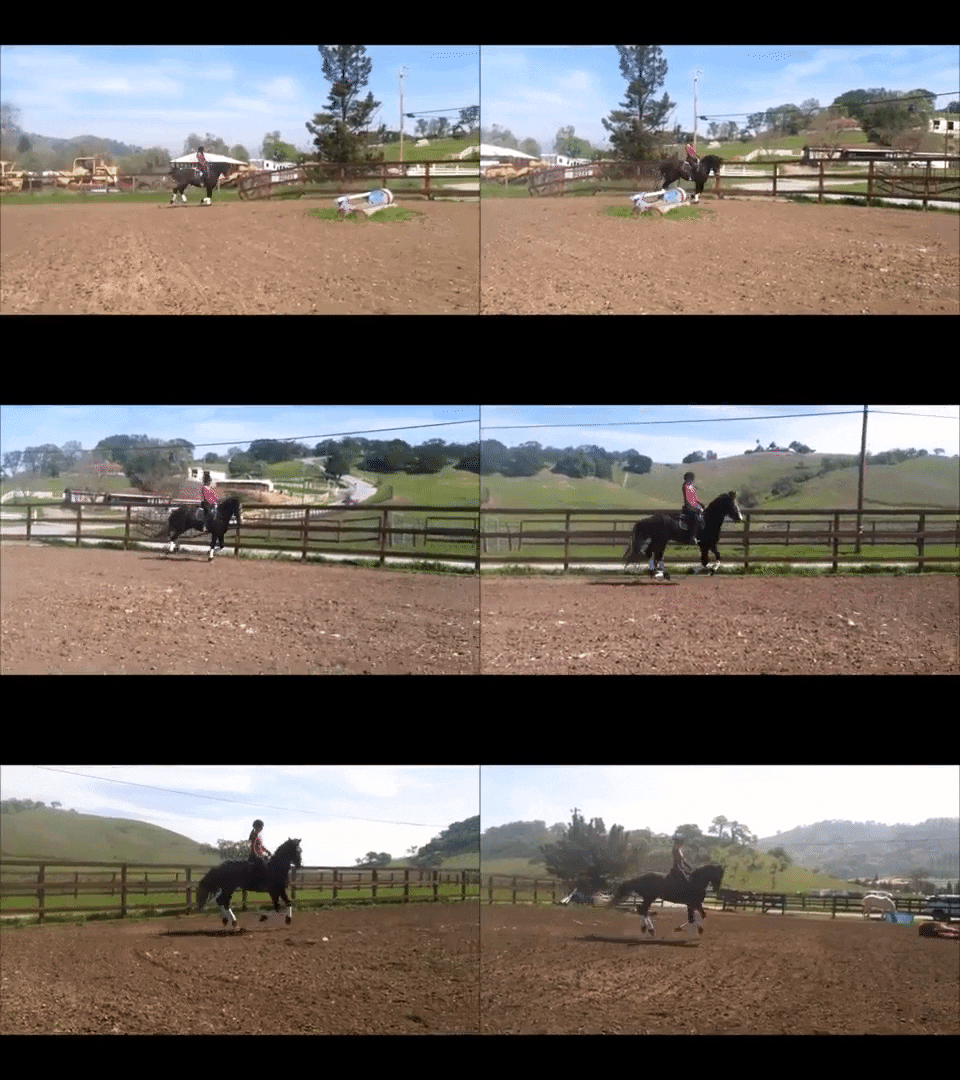
I was glad that on the first day, I was able to grab some video. And I was also grateful to be able to send those videos to Kate and get her opinion on them. It's really hard to see my own horse with fresh eyes and I am really struggling with looking at this situation objectively. It's been a mix of emotions where I feel really horrible that we got to this place, and really frustrated (both with me and with him a little), and because of that, I can't really break things down as easily just watching the video by myself.

I have no horse photos but I took a day off on
Tuesday to both go birding by the coast and to go
to TC's breeder's Celebration of Life

The few things I noticed were:
- We are both really defensive of each other, it's like I'm preparing for him to balk and he's preparing for me to stuff him forward. I look very hesitant in my riding, but in the same way you're hesitant when you're super frustrated but trying to remain calm. Like there's a hardness living inside of my hesitation. 
- He's not letting me in, I feel like I'm sitting outside of him and if I try to sit into him at all, he gives me a warning about balking. I described it as when I'm helping someone write code who doesn't have a basic understanding of the language, so I'm like, half asking them to write it and half literally spelling it out for them. And then I see what they've written and I'm like... I mean technically that will run but that's... just weird. 

Kate saw all of that as well, but also pointed out a mechanic he's fallen into with his hind end, where his right hind sweeps under his body but not in a carrying way, it stiffens straight and then his left hind kind of pole vaults over it. That was a really huge realization and I think will change things for us. But I've got to give it more thought and try to feel it a bit better before I write about it. 

His breeder was quite the character,
I will really miss her, I've had a few
losses recently and while this one
was not completely unexpected, it was
still a loss of a very influential person
in my (and TC's) life <3

There were good things too - for the most part, he had a pretty pleasant expression on his face! He looks sound and happy enough to do his work. And he hasn't been bolting or balking much. 

And while I've got some weird stuff going on in my pelvis, I still maintained quite a good mechanic! It's funny, I think the pelvis thing is the fact that I rehabbed my hip injury all this year. I feel great, I did physical therapy and now I work with a personal trainer who helped me come up with a very effective program that has allowed me to avoid surgery! But now my hips are quite a lot looser. Stronger yes, but much looser. And I think a lot of my riding mechanic depended on my hips being a little tight. So now there's this slightly odd twisty thing I'm doing with my hips in my posting mechanic. 

I see my trainer for a private session (I normally do groups with my gym buddies since it's more affordable and more fun that way!) soon, so I need to really take inventory of what is going on so that we can talk about it and get me a bit better stabilized for riding. But it's progress! Even if I'm a bit wonky right now, my hip hasn't hurt at all while riding and I'm really not as unfit as I thought I'd be.

It was a nice day to just wander along the coast
with friends and family, and then go celebrate her

On the second day, armed with some of Kate's exercises (who I am very thankful for, since I seem incapable of doing any critical thinking about the horse right now), I decided that I wanted to try to improve the connection. This is the purpose of me riding him - because I have more influence over it, so if I can't get him well connected, we may as well go back to long lining. 

Back in the day, this horse had the dreamiest connection, he was tough to get there, but once there it was like I could draw him into the work I wanted him to do. We lost that along the way, and I think I'd really like to get him back to that place. Especially since showing is not really a huge goal of mine (like obviously I will show him a little if he comes back since he loves it, but it's not the primary driver), so we can take things slow and we don't have to stick within the confines of a test. I do think that's what happened, slowly but surely he had to do a thing NOW and my trainers were in my ears making that very clear. I don't think that's bad, I just think that it caused a loss of trust. But now I get to do it my way!

Meanwhile Christmas exploded at my
workplace and I sat next to this festive
pillow the next morning for breakfast

The first half of the ride was me battling with the frustration of his warm up - he just takes longer these days and I'm trying to figure out what the right balance is between hustling him a little bit forward during it, and leaving him completely alone (which feels like reinforcing him being behind my leg). I do think it's probably better if I longe him through it, but I've been skipping that because I'm greedy and want to ride. 

Side bar- this reminds me of a client I had whose horse would take exactly twenty minutes to warm up, regardless of what you did. When I rode her, I'd get up in my half seat and just do trot sets, then she'd be ready to work. But my client would come to me each week with a new theory that if she just does X exercise (which took her twenty minutes to discover) it worked super well. Then she'd start with that exercise and wouldn't you know it, the horse wouldn't immediately warm up and the client would be frustrated. 

Then, the middle part of the ride was me fighting the urge to just put him on the damn bit. He was floating above and away from me and would give me his nose, tucked nicely like the little faker his friesian breeding encourages him to be, but I had zero access to his back or the base of his neck. I resorted to pulling on the face since that's a tried and true method (that doesn't work but it FEELS like it works. It's like using an AI assistant at work, feels like progress but at the end of the day, it just produces spaghetti code that sure, you've tested a lot, but still doesn't work - lots of work metaphors today). During this part, I was working on some shallow loops, and we were absolutely all over the place. 

And then finally I took a moment to use my brain (very hard right now) and decided to go back to something Tracey used to make me do - hold onto the tab on my saddle pad to give me an idea of how steady my hands are (or are not). I did it enough when TC was younger that it kind of puts us both in a better place. And I'm also so unbelievably out of riding shape and practice that the moment I did it, it made me realize how loose in the tack I had gotten over time, and with this new flexi-hip. 

We also had our year-end social and
they had this random candy bar

Slowly, over the course of a few trot sets, he started to really come onto the bit properly, not just faking it, but I could feel and see in his neck/back that he was much better connected. And I finally got that same feeling I'd had years and years ago, that I could just draw him through the exercises. We rode our shallow loops without them feeling so drunk, and I could feel him start to tune in like "oh this is interesting" for the first time at the very least since last winter, if not longer. And, when we went back to the barn, he had a little hypertrophy in his trapezius (both cervical, and I could convince myself thoracic too), which has only really happened on trail rides so far. 

I kind of couldn't believe it? Our second ride back and by the end of it, we got to a place where I'd be super happy to stay indefinitely? 

Anyway, we have a LONG way to go, this could have just been a fluke, we could still see the same pattern happen next summer where he begins to feel terrible again, I could just be making this up as I careen into the end of the year after a really stressful half... but I'm relishing in the fact that this is the first time I'm genuinely looking forward to riding my horse in quite a long time. 

Thursday, May 19, 2022

Jumping Update

I figure, given that a week from today I'll be showing over fences for the first time in a long time, I should probably provide a jumping update. 

I love his nose in this one, trying so hard


Flounder continues to be the coolest little horse. He's so much fun and gives such a good feeling over fences. For this first year or two that I'm coming back into jumping, he's provided such a nice safe space to do that in without just packing me around. 

Kate is obviously amazing for bringing Flounder into my life, but she's also an amazing instructor. I am having so much fun learning from someone so much more technical than the trainers I had in my youth. There's too much to post about, honestly, but some of the themes have been:

- using my slingshot to improve the way Flounder jumps through a grid
- timing the aid for a lead while in the air and not getting in the way of him responding
- timing my breathing to optimize the way he jumps
- dealing with my right hip and the myriad of issues it's been causing
- addressing my tendency to freeze a bit (and stop breathing) when coming up to a fence I can't see a distance too
- going over the specific mechanics of going from my neutral position into my jumping position without jamming my foot down in the stirrup

And most recently, trying to figure out my mental game as we prepare for this horse show next week!


Is he not the CUTEST

Unimpressed by this one

I'm really excited for the show, but my brain is a little apprehensive. I'd say for the 2 or so years before I quit jumping, show jumping became a problem that I never got to address. 

See, being an assistant trainer at an event barn meant that it was my job to ride babies who had never jumped before and also any horses who didn't jump safely for their owners. This meant that I rode a ton of stoppers, horses who bolted after they landed off of combinations, horses who bucked after jumps, and horses who wouldn't jump fill or spreads or banks or ditches. 

For some reason, this manifested in me being very anxious about showing over show jumps. Cross country? No problem. No idea why, those jumps don't come down!!! Should I not be more afraid out there? Somehow I am not afraid on cross country. And honestly I'm not even afraid over the show jumps, it's hard to explain. My brain just... stops working. 

So adorable

So while I am feeling pretty good in the schooling ring at home, I am wondering how the show will go. But luckily my goals for the show are primarily to gather information. See how deep the issues run, see what it feels like when they kick in, and see how I respond to it. This will allow Kate to dig into it at home and then we'll go to another show this fall to see how I've improved!

I love this plan because I don't really want to sign up for an event only to get to the second day (let's be real, I'll be doing BN or below so I'll be doing cross country last) and have my brain freeze up so I get eliminated. Once I'm an old pro in the arena over fences, THEN I can sign up for an event. 

Wish us luck at the show! We leave on Wednesday, but I'm not taking the days off of work so we'll see what I can do those first few days. But the weekend should be super fun! 

Monday, March 28, 2022

Fixing Myself

On Wednesday of last week, I had a lesson! It was my first (dressage) one in a long time and it was amazing. 

No pictures due to using the pivo for the lesson, but
I have some from a recent trail ride

The focus on the lesson was biomechanics, which I desperately need. I haven't really had anyone pick at my position since last August when I rode with an in person trainer who had a background with the Mary stuff. And my position falls apart easily without anyone's help, especially now that I've been at a barn without mirrors for a year. 

This trainer was a little different from Mary, but everything she found really aligned with everything my Mary trainers have found and that Kate has found. Essentially, while I sit in correct alignment with correct posture, I find my balance through rigidity. That's my interpretation at least. And this tracks through my riding career, when in doubt, add tone. Sometimes in places that it shouldn't be. 

This guy has been developing so well

My biggest takeaways were...


Breathing

It turns out, as Kate has pointed out on numerous occasions, that I only breathe enough to keep me from passing out while I'm riding. And I can confirm that I keep this breathing pattern up throughout my life except in weight lifting (since bracing was drilled so hard into me by my late coach, RIP).

We did some breathing exercises and TC REALLY enjoyed them, he was licking and chewing the entire time I was breathing like a normal human. I feel bad for him, he's probably had to get used to feeling like my body is in flight/fight mode all the time. Oh, that's just my human, she's bad at breathing and it makes me feel like she thinks we're both going to die

I'm going to really work on this, I'm not sure exactly how though since it's so engrained to not breathe while I'm riding. Should I listen to a breathing app while I'm riding?? Perhaps. 

He's the best trail horse

Left Hand

If you've followed this blog for any length of time, you know that I'm a big fan of using my left hand to solve all of my problems. Horse acting up? Pull on the left rein. Canter got too big? Pull on the left rein. Horse trips? Left rein. Owe money on taxes? Cut off my left hand and mail it to the government. 

She had me do some arm circles and noted that my left elbow liked to bend slightly when I had my left hand at the very back of the circle. I forced it straight and got some interesting shooting pains and numbness in my fingers. Turns out I've got a little nerve impingement there! It's a chicken and egg situation, did my nerve impingement mean that my left arm likes to hold itself bent and therefore it's easier to pull on that rein? Or do I carry my left arm more bent in my daily life (driving, working, I carry things on the left side and use my right hand to open doors, pulling on the left rein), which caused the nerve impingement? 

Who knows, but the answer is to switch it around. I am currently going through my life, noticing times where my left arm is bent and my right arm is not and trying to swap what the arms are doing to balance them out. I'm also doing a lot of arm circles on both sides. 


Thoracic Spine

My thoracic spine is a bit rigid, causing me to carry my head a bit forward. I know this from Tracey yelling at me not to be a vulture. Luckily because of work, I'm getting to go to the chiropractor as much as I want and only paying a $4 copay for it, so I'm definitely working on fixing my t-spine. But I also got some great exercises from the biomechanics trainer to help with this. It really comes down to me holding tension in my thoracic area and some computer stuff shortening my pectorals. I'm not the only one who needs to widen their chest and open up their shoulders! 


Such a beautiful place, it should stay green for a
bit longer, it's going to rain today

Right Hip

So as a background, almost three weeks ago I was squatting and suddenly had a massive amount of pain in my right hip to the point where I could barely walk on it for a couple of days. I saw the chiropractor who basically said that my psoas and hip flexor were tight. It's been fine since then, but just fine. I took my deadlift day off, just did upper body on my bench day, and then by the next squat day, was able to squat some light weight. I haven't gotten anywhere near the weight I was squatting that day. 

Anyway, this was incredibly obvious to my biomechanics trainer. I think it was the first thing she said actually. 

She agrees that my psoas is the issue, that my body was coping with it until I put it under weight. She wants me to get that worked on, so I think I'll be keeping it light with the squatting until I can get someone to fix it. My job has a lot of healthcare perks (such as acupuncture/chiro with a very small copay) so I'll see if they offer anything that can deal with my psoas too! We used to have massages on campus actually, but the pandemic shut that down, maybe they will happen again soon though!

TC says: would you like me to just
bite this leg right off? Would that help?

Okay, so we've established that my right hip sucks, what effect is it causing in TC? 

As we were tracking left, I was told to try to breathe out while my left seat bone came back and to really let it follow the saddle. This was fairly easy and actually focusing on that moment made it way easier to turn TC to the left, which has long been his tricky side. 

To the right, I was basically unable to let my right seat bone follow the saddle. Rude. We found that my right hip wanted to be the stable one doing all the work, so it got rigid and my left hip was free to do whatever it wanted, which it does in a chaotic way. 

I was taught to engage my inner thigh on my left side to help bring my right hip forward and immediately my body was not having it. 

We cut new trails into the hills! I love
this one, it's so beautiful!

TC's Response

I'm so excited for how TC responded. He's very in tune with me (I'll write about it more later, but I just read Susan Fay's book and it's amazing how WITH me TC is at all times, I almost find it a bit unnerving, but luckily he's the sweetest) and when I can get my body in the right position, he feels downright giddy. 

I think with Celeste's work, TC has been helped SO much, but I'm still locked in these previous patterns and I think that's holding him back a bit at this point. 

Hopefully my new saddle will be here soon and it'll be easier to find a better balance without having to be more rigid. And with a deeper seat and bigger blocks, it will allow me to be more permissive with TC's movement. Right now I'm sure my rigidity to keep my balance slows his roll a bit. 

I will never get tired of riding this horse in these
hills!

I wish I had the money to take weekly lessons with her (boo adulting, most of my raise in salary between jobs is maxing my 401k and FSA and a few other adult things like that), but I think I'll stick with once a month or every other week if I can swing it! Kate can work with me on the same things when I see her for my jumping lessons, so I'll definitely have eyes on these issues between lessons. 

Finding Celeste and her work has been so life changing, not only because of the work she's done with TC and I, but through finding other professionals in her network. So many trainers put "classical" or "biomechanics" on their websites and then I find out that those words have different meanings to different people and I end up a bit disappointed. Or at worse, stuck using some of my lesson budget to pay for a lesson I didn't get much out of. I know that anyone I ride with who is part of this network of trainers is going to, at the very least, do no harm to TC's mechanics, and that's huge for us!

Friday, December 10, 2021

Biomechanics Lesson

Yesterday I had my first biomechanics lesson in a while. With both horses going so well and Kate lending me her butterfly saddle and the weather being good (cold, but not raining), I figured it was high time to get some lessons in. 

I decided to ride the pony because TC is on his clicker training and mostly walking/trotting protocol. That ended up being a good thing because as per usual in biomechanics lessons, there was a lot of starting and stopping. I think TC would have been weird about that. 

Such a cute pony

Unfortunately the pony didn't feel great. I took his temp but it was normal, if a little low. Everything else was normal, he was just a bit quieter than usual, who knows why. Maybe I was being paranoid, he is normally pretty chill in the cross ties so maybe I was just nervous about having a lesson. I let the instructor know that he was a little iffy. The ride wasn't hard on him at all (mostly standing and walking) so it was okay. Plus, spoiler alert, he was fine.

The two big things I wanted to deal with were: I wanted to figure out my twisty thing that causes me to *occasionally* feel like I'm falling off the side of horses (I think I just need to catch this on video since it didn't happen yesterday so it was hard to explain) and I wanted to deal with me losing a lot of my organization when horses get behind my leg. 

We didn't quite get to those things necessarily, but I still got some good things to take away. 

So cute

The realignment went well! She said that I had nice internal rotation, tone, and alignment. She only had to change my pelvis a little bit because I was slightly hollow backed. Apparently based on watching me ride, she couldn't tell I was hollow backed until she got her hands on my seat bones. I think I tend to be more hollow backed on the pony than TC, but either way, my core was not engaged enough to hold my pelvis in the correct alignment.

From there, we worked on my bear down. It definitely needs some work so I relayed that to her, but she said that pretty much all riders need to work on their bear down. She put her hands on my stomach and really had me work on it and she was very picky. She said that I tended to push down instead of out. This was brand new for me so I want to think about this more.  

She also said that my breathing wasn't very good. I know this but it's always good to have a reminder! I could NOT make the noises she wanted me to make. She thought I might be shy or resistant to shouting, but I pointed out that we were all alone in the little valley and that I've always had problems projecting my voice. I started to think a little bit more about that. Could it be that these were all related? I'll explore that later. 

He's gotten so fancy

From there, we played with my leg alignment. Again, the internal rotation was not an issue, which was good to hear! I have always been told that I had a bit of a "hunter jumper leg" with my toe out. I've been working hard on that. The biggest issue was that I struggled to engage my abductors, necessary for suction. She had me hold my lower leg away from his side and then resist her push to push them back in. My left side was weak but my right side downright HURT me. So that's something I need to work on! Interesting that TC's harder abduction side is mine too... damn those mirror neurons! 

Other than that, my leg was pretty good I guess! The resistances for keeping my toe up and my lower leg back were quite easy for me. 

We did some riding and worked a bit on my fencing lunge for steering. She thought this might be my issue when it came to me falling off a bit to the side. I'm not sure how much it's going to help me with my falling off feeling, but I'm going to run with it and see what happens!

Glad he was feeling better

Overall I felt like the biomechanics help was great! I got some really specific things to work on in the gym and a few things to think about while riding. My day was all biomechanics all the time because we got word that Mary is potentially coming in February!!!! First time in two years! I'm so excited. I'm definitely going to do the workshop again and might end up doing the clinic with Mary. I'm not sure what horse I'd ride, but that's a problem for future Megan. 

The pony was totally normal by dinner time last night. He was apparently "perky and demanding dinner" according to my mom. Either way, both horses are going to get some time off next week. They each get tomorrow off and then it's going to start raining on Monday and not stop for a while (boo, but we need the rain). 

Thursday, February 13, 2020

Mary Wanless Workshop: The Canter Mechanic

The main theme of the workshop this year was the canter mechanic. I was really glad for that, I think it's one of the hardest things both to see and to learn for a rider. And I think that a lot of trainers (myself included) struggle to get their riders to do it properly.

To set up this post, I wanted to go over the horse's canter mechanic first, which should be a review for everyone, but I want to emphasize a few main things about how we ideally want the canter to look that I'll later tie in with what Mary says.

From my most recent lesson, love this pony!
The Horse's Canter Mechanic 

The canter is a gait with three beats and one moment of suspension. On the left lead, the horse begins on the right hind leg (backswing/upswing) and rolls their weight forward onto the left hind leg and right front leg (diagonal pair), then onto the left front leg (downbeat/downswing), before jumping into the moment of suspension and landing back on the coiled right hind leg.

The head and neck of the horse are at the highest and shortest moment in the upswing and at their lowest and most stretched out in the downbeat.

Purity of rhythm is very important in dressage. The purpose of dressage is to enhance the horse's natural gaits, so having an impure gait is grounds for a 4 (insufficient). The canter can become impure by getting lateral or by losing the moment of suspension.

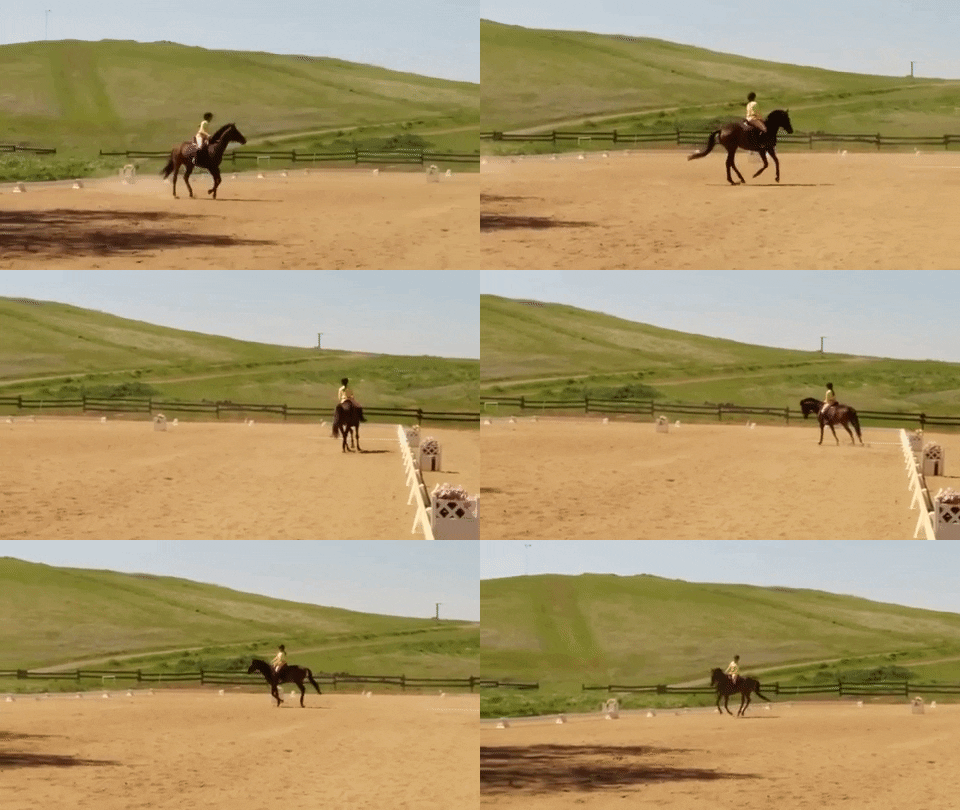
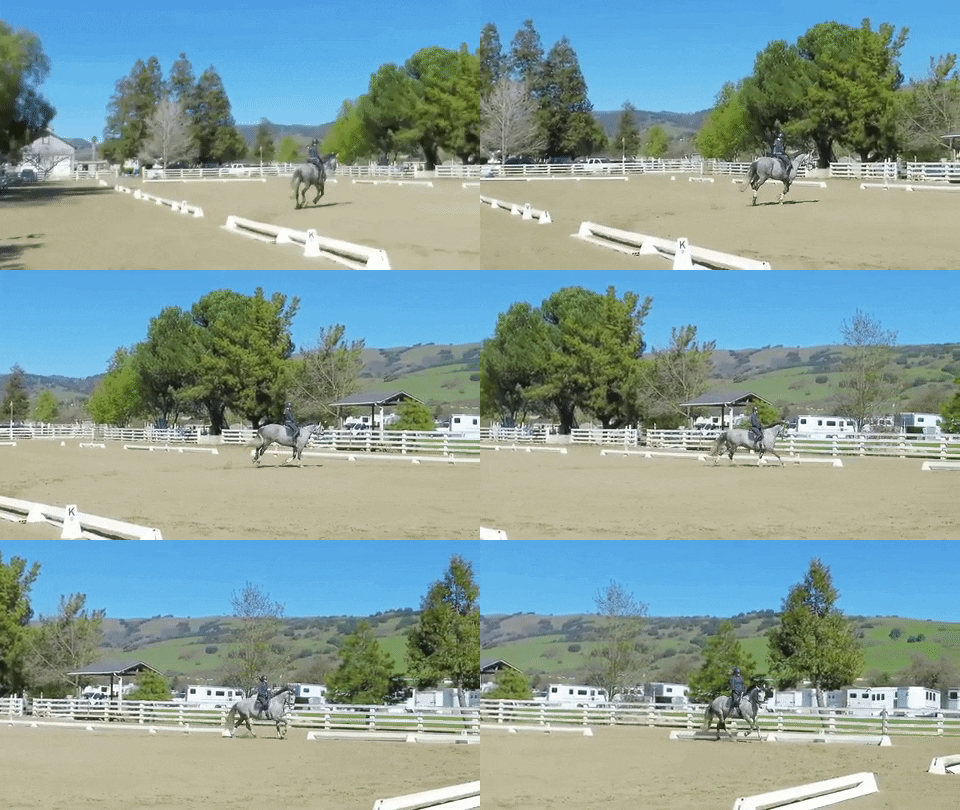
Baby TC shows several types of faulty oscillation, from nodding (at the
beginning, when it looks like he's pressing his forehead downward
into the ground) to not oscillating at all (frozen headset when he picks his
head up after deciding he didn't want to face plant)
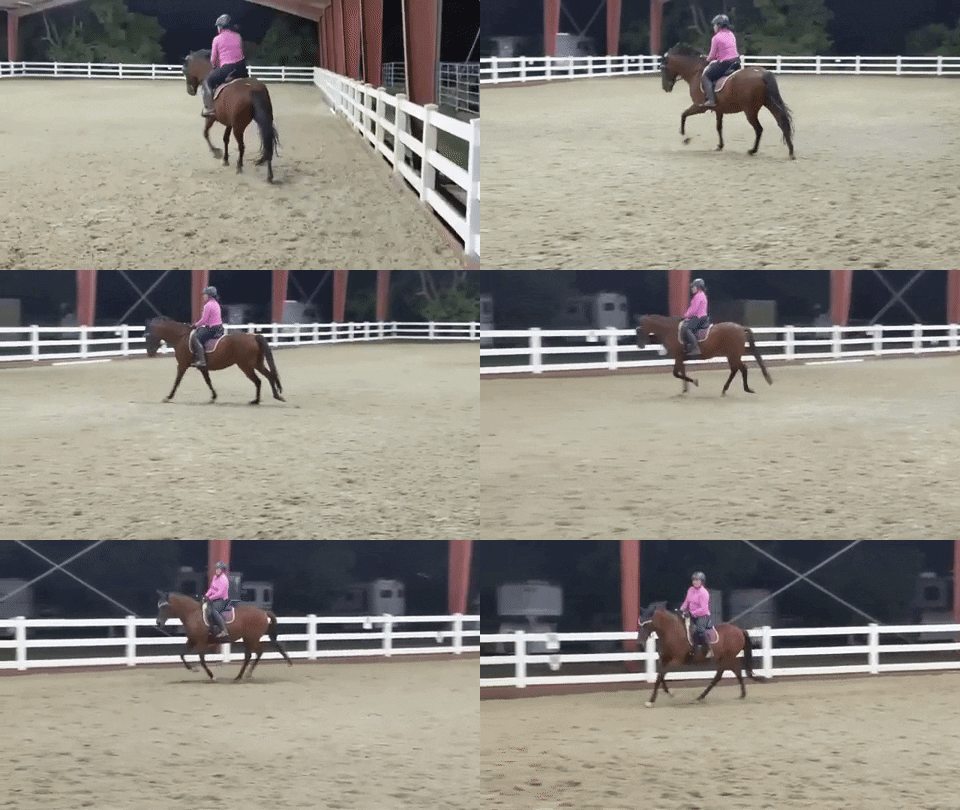
TC these days, we're being all casual like because he was tired from our lessons, but you can
still see how reluctant he is to oscillate! It's improved so much, but he's not a natural back mover
at the canter unfortunately. 
To properly ride the canter, the rider must first learn to stay out of the horse's way at the canter, and this means not blocking the natural oscillation of the neck and staying "plugged in" to the saddle so that the horse doesn't tighten his/her back in response to a rider who is bouncing in the tack.

As young riders, many of us were taught to "polish" the saddle with our seats or "scoop" with the seat to be able to sit the canter. This is incorrect, so with that in mind, let's dive into what a correct following mechanic looks like in a rider.

--------------------------------------------------------------------------------------------------------------------

I want to separate out this post into two large sections: one about the actual sitting of the canter, the second about how to influence the canter in a positive way.

Force Absorption

The goal in perfecting the canter mechanic is to be more in sync with the horse and to have correct following mechanics, which directly relates to the rider position score. A faulty canter mechanic will squash the horse's gaits, make it harder for them to perform movements, and make it difficult for rider and horse to climb the levels while preserving the horse's gaits. You see it everywhere, a horse who at birth was a gorgeous mover and as they move through the levels, they get tighter in the back, lose their moment of suspension, and the canter rhythm breaks down.

Hey look, it's Rico. This is LITERALLY his school canter from
when we did the 4-1, he's put his right hind down before picking
his left hind up because I'm restricting him so much. Wow. Is it
normal to feel attacked by your own blog post???
Allowance of Oscillation

One of the first things to address with riders is to get them to allow the horse to oscillate their head and neck. Many riders will feel like they are because they open and close their elbows by rocking their shoulder forward and back, but this is incorrect. You need to see the riders' hands move. Forward toward the bit when the horse is in the downbeat, up and back (elbows swing backward past the rider's hip) in the backswing.

Very clearly not going to allow him to go down here
Many riders do the opposite, and probably because they feel the horse's head, neck, and forehand lowering and they try to prevent it in fear of the horse being "downhill," but every horse, no matter how nicely built uphill they are, will have a downhill moment in the canter. It's important to let the horse do this. By preventing the down part of the canter mechanic, the rider blocks the horse from using their neck, neck muscles connect into back muscles, so the horse tightens the back to prevent themselves from being pulled on by the rider. Without a supple back, impulsion is lost because the horse's pelvis is unable to flex at the lumbosacral joint (because the lumbar is frozen). And so the moment of suspension is lost. Again, see above.


The Cheese Wedge

I think one of the most common things we see in the canter mechanic is the cheese wedge. This is essentially the rider's seat making a wedge of space behind their butt.

See the space under my butt?
The reason why this happens is frozen hip joints. If you watch the saddle on the horse while the horse is longeing, the saddle drops downward as the horse goes into the moment of suspension and drops their hips to load their hind legs for the first phase of the gait. During this phase, the rider needs to flex their hips to drop their seat down to follow the saddle. When the rider doesn't do this effectively, they get that cheese wedge under their butt like I have in the photo above. 

Peony used to be really good at a cheese wedge, she and I are
also cheese goblins who shovel hoards of shredded cheese into
our mouths late at night, our faces lit only by the light of the
refrigerator, so it makes sense that we're both excellent at
the cheese wedge
Up and Back as Much as Down and Forward

Along these same lines, we tend to emphasize the forward and down motion of the canter. How often have we been told to scoop with our seats or polish the saddle with our butts? But what goes down must go back up, and Mary wants us to emphasize the up and back-ness of the canter mechanic to balance out how much we naturally want to follow the saddle forward and downward. 

Nicole used to be so good at polishing a saddle with her butt,probably because Murray wanted
 to murder her all the time, but if there's one thing we know about people I'm friends with, it's
that they're VERY STICKY PEOPLE. But you can see that there's a lot more emphasis on down
and forward in this video than up and back.
The Carousel Pole

This is actually something I've been teaching for a while, because of this video that was posted of Mary Wanless working with someone at the walk to keep themselves in a good balance. In the canter, the rider's upper body should appear to be a carousel pole. At all phases, they should land on their feet.

Would land on my butt, you can see me basically shoving his
saddle into his withers/shoulders here
Look how much I'm leaning back here, yikes
Shamelessly stolen from Nicole's recent blog post
The typical way this goes wrong is when the rider is rocking their shoulders backward in the downbeat of the canter. When this happens, gravity pushes the rider's weight forward and downward into the saddle and it rocks the saddle forward into the horse's shoulder. The horse is forced onto the forehand as the downbeat is emphasized.

Instead, the rider should make sure their shoulders stay over their hips even in the downbeat of the canter. This is HARD and most riders think it feels like they're leaning forward.

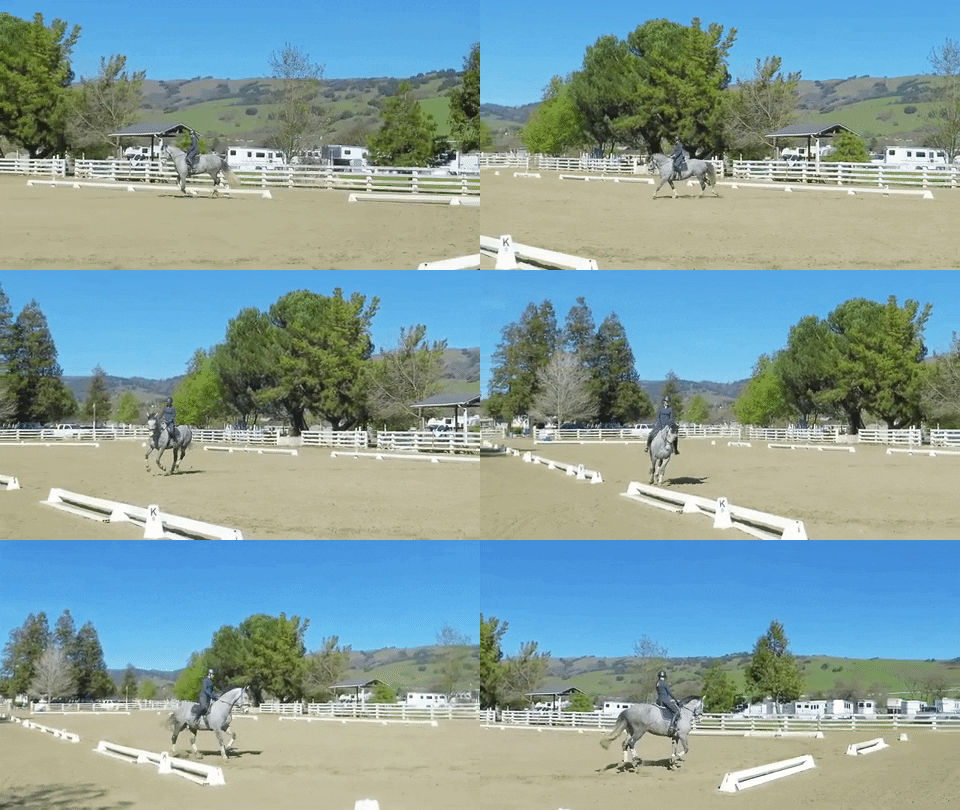
I did my damn best, you can see how much I'm (trying to) moving my shoulders
and how much the downbeat is emphasized in poor TC who thinks I've had a stroke,
compare how on the forehand he is here vs in the other gifs, it's amazing

--------------------------------------------------------------------------------------------------------------------

Force Transmission

Once the rider has correct following mechanics, they can begin to affect the canter in a positive way.

Half Halt Timing

The half halt should occur in every stride at the top of the mechanic (the backswing/upswing), where the rider should essentially say to the horse "hang out here for a bit longer" and then the half halt should be released in the downbeat, the horse should be encouraged to quicken the downbeat and get their haunches back underneath them as quickly as they can. This means the half halt is FAST. It's a split second. Then you HAVE to let go.

I always tell my students the half halt at the canter is a seat aid, not a hand aid. Sure, your hands can half halt during the upswing, but ONLY in the upswing and after that, it's on your seat to hold the horse's balance within the mechanic. The hand just assists the seat in that one moment of the canter.

Slingshot

The slingshot is a great way to balance the canter and emphasize CANada versus mozamBIQUE. This is another fun chair exercise from Mary. Sit in ideally a hard chair with both feet on the ground. Feel your seatbones against the seat of the chair. Now see if you can engage your hip flexors and pull your seatbones backward across your flesh. That's your slingshot.

On the back of the horse, this needs to happen in the upswing of the canter, the outside hind hits the ground and you are holding your hips backward, having shifted your seatbones across your flesh backward toward the cantle during the moment of suspension. This encourages the horse to stay in that upswing for as long as possible as you are holding them there with your seat and thigh. This has been a GAME CHANGER for TC's canter, which is his worst gait.

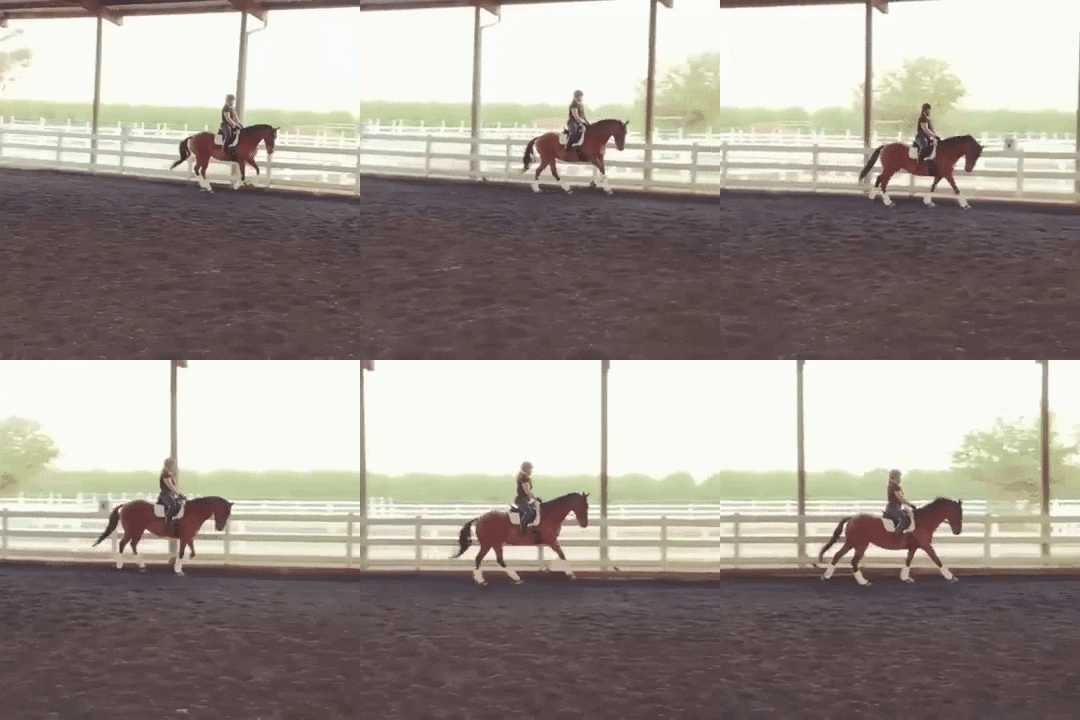
Can we talk about how unfair it is that this is the same rider (Peony) from above? While before
she was showing an excellent cheese wedge, she's showing shit for cheese but she's showing
an excellent slingshot! See how much she's emphasizing the up and back-ness of the canter
mechanic AND how much she's following with her hands AND how she's a carousel pole??
Just fabulous 
Down Up

In addition to the slingshot to keep the horse on the hind end for longer, the rider also must emphasize the "sit" in that moment too. Anne had a great visual for this, she imagines falling back into an intertube during the slingshot moment to emphasize the down part of the mechanic. The horse must be DOWN on the outside hind leg, then as they shift their weight forward to the front legs, they must be UP. So as a rider, you must emphasize the down on the outside hind leg and then emphasize the up on the inside hind leg. Nicole wrote about this first hand and it's a really great read.

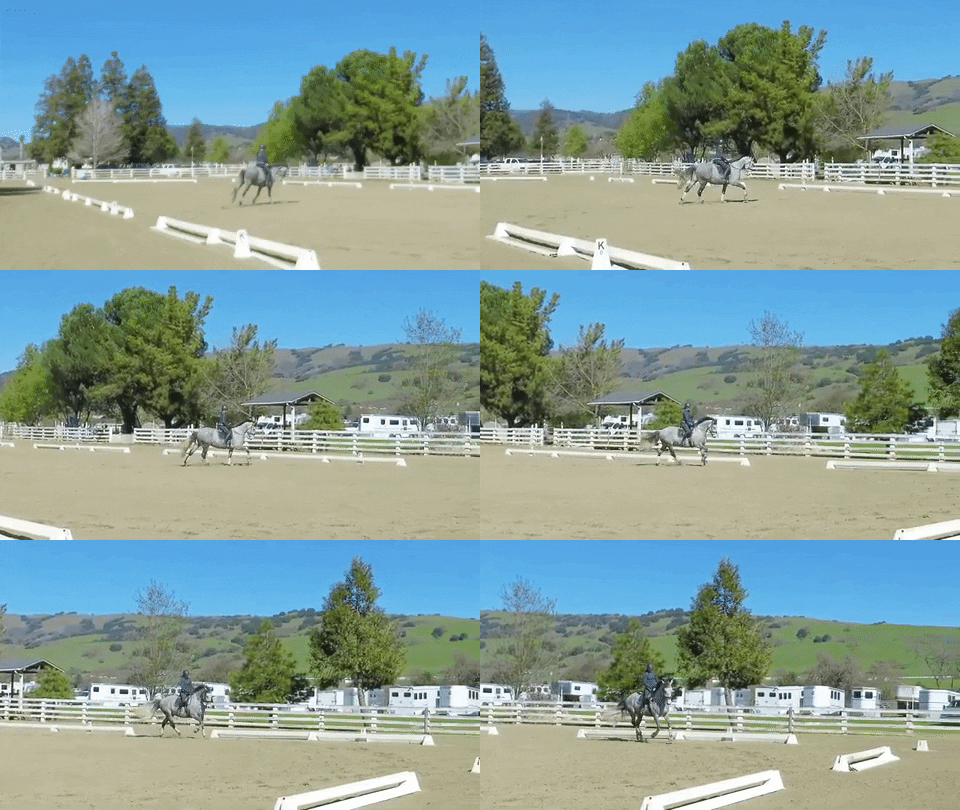
It's hard to keep all these straight, I believe this is me trying to ride properly. I'm nowhere
near perfect, but you can see a) minimal cheese wedge, b) not much shoulder rocking, c) my
hands are mostly following his neck (esp at the end, then I really get it right) 

Overall


The canter mechanic is probably one of the hardest things to learn, at least in my opinion. Also the connection. I feel like 80% of the lessons I teach are about the canter mechanic and the connection at this point. But it's an absolute game changer to get these things right.

I've done my best here in this post, but it's really hard to explain. It takes a lot of hands on work with a rider and a lot of lessons. I've had one rider get it in maybe three lessons. That rider has other problems, don't worry (it's not Peony, she worked hard like the rest of us). I still can't sit the canter properly. It's just so damn hard.

Major shout out to TC for being the best demo horse even though he wouldn't let me ride completely bat shit crazy because he kept stopping to check on whether he needed to take me to the hospital. Also big thanks to my wonderful friends for letting me steal their canter mechanics and put them on the spot. 

Monday, February 3, 2020

Mary Wanless Workshop: Teaching Questions

Another year, another Mary Wanless Workshop! This is the third year in a row I've gone and it's turning into one of my favorite (and most exhausting) weekend of the year.

For those of you who are new, I tend to post an entire week's worth of biomechanics/Mary Wanless themed posts. So if that's not your thing, check back next week! To find the old posts, see here:

2018
Post 1 - Mary Wanless Workshop: The Structure
Post 2 - Mary Wanless Workshop: Truncated Theory
Post 3 - Mary Wanless Workshop: Realignments
Post 4 - Mary Wanless Workshop: The Unexpected Emotions
Post 5 - Mary Wanless Workshop: The Effect

2019
Post 1 - Mary Wanless Workshop: The Lead Up
Post 2 - Mary Wanless Workshop: More Truncated Theory
Post 3 - Mary Wanless Workshop: Riding Takeaways
Post 4 - Mary Wanless Workshop: Teaching Takeaways
Post 5 - Mary Wanless Workshop: The Non Emotions

I was beyond thrilled to be able to attend this year. I thought my niece was going to be born this weekend, so I had paid for it and then hoped she'd be early or late. She's a good future pony rider because she came early enough for me to be able to attend the whole thing! Thanks kiddo!

Best demo riders (you may recognize the one on the gray)
Once again, it was an amazing weekend! I've got a ton to share but it's tough to organize it all, so I'm still figuring out what I want to write about for the rest of the week. I do have a couple of really cool things that came out that I'm super eager to write about, but if there's anything that you're particularly interested in, please let me know.

We began talking about teaching, with Mary saying that we need to help our clients answer two questions:

Where are you now?
Where do you want to be?

Many people know where they want to be, as they point to Charlotte Dujardan or what not, but they have no idea where they are right now. How far along the scale of Beginner to Olympian are you? I honestly have no idea. I'm in the pocket that you fall into when you don't have anyone buying you super fancy horses? Is that a place to be?

We spoke about what struggles we, as a group, were having with our teaching:
- Focus: we assume all of our students pay attention, just like we do, that everyone has the same level of focus that we do.

- Influence: how do we get our riders to have more influence over their horses? When you first start riding, you tend to not have any influence, then obviously when you canter down centerline at the Olympics, you do. When does this shift happen and how?

Lab time
- Self Direction: I doubt anyone who blogs needs this, but many riders struggle to draw their own conclusions and make their own decisions. Many riders don't feel like they have "the right" to ask for more or make mistakes. I honestly don't have this issue because all of my clients are either clinic clients or only ride with me once or twice a week. Plus I give them a ton of homework always and ask a lot of questions. The trainers who were complaining about this have a lot of full training clients who only ride in lessons.

- Responsibility: what responsibility does the student have? What should they do with the information. Many trainers get bored teaching the same lesson over and over again, honestly, I've dropped a few clients for that reason. In addition, there is SO MUCH INFORMATION to impart onto someone, it really hit me this weekend that if I only see my trainer for four hours a month at max, there's no way I'm learning enough to get good at this sport. If you want to get good, it takes more than just lessons to do it.

- Selling change: change is terrible, I hate it. Even the smallest changes (like when Mary asked someone to bring their collar bone forward about an inch) feel ENORMOUS (and the person thought they were going to fall off the front of the horse) and awkward. It takes a lot of deliberate practice in a position that feels uncomfortable and wrong. How, as a trainer, do you sell it?

- Fear: we talked a TON about fear, including a deep dive into polyvagal theory, which deserves its own post if I felt like I knew enough to write it. But Mary says that very often a fearful rider will "have more competence than confidence" and a rider who is too bold will "have more confidence than competence."

We look our most cultish all doing the same
things, but really, it's all amazing

We then walked our way down this question: Are you a rider who teaches or a teacher who rides?

I'm definitely a rider who teaches. If you put a gun to my head and told me I could either ride horses or teach people to ride horses and I couldn't pick both, well, sorry clients, I'm getting me an amateur status.

But in the last several years, I've worked very hard to improve my teaching. Previously, I just taught what I'd been taught. The problem with this is that I'm bound to only be good at teaching the things I have problems with. If any of my clients pull on the left rein, I'm set! What if they don't though?

Anything that naturally comes easy to someone, they are shit at teaching. And the further away the trainer is from the rider's level, the harder it gets. It's been a very long time since I cantered for the first time, I could not teach someone how to do it now. They'd probably fall off and it'd be my fault for talking to them about the specifics of the canter mechanic rather than just telling them to... literally have no idea how to end that sentence because I DON'T KNOW.

Mary encourages trainers to remember to keep our implicit knowledge of these things. Remember back to my first time cantering (I don't, I was like 3 riding double on the trails, I don't remember cantering alone either) and remember those feelings so I can teach from it. I fucking can't though.

This is what Mary says is a huge problem with our upper level riders because they aren't teachers, they're riders. They have automated so much of their riding (because you have to) that they teach PQRs instead of ABCs. So Carl Hester says "I row my arms in the extended walk," but that's just what he thinks he's doing, he's also doing ten thousand other things that he has no idea he's doing. But come on, everyone, let's all go row our arms and get 10s!

Nicole, our most intrusive friend
I thought those were super interesting questions to answer as trainers! I think the more self reflective I get about teaching, the better my lessons get. Like I said, I love riding and want to be a good rider first and foremost, but I also do love teaching and want to get better at it. I want to be like some of the higher level trainers we saw ride at the workshop: fabulous riders, fabulous horse trainers, and fabulous instructors.

And this workshop has been one of the best decisions I've made to continue working to achieve those goals!

So basically, it was an amazing weekend and I can't wait to share more. I also have really exciting, related news happening tomorrow. I'm auditing Mary's riding clinic and am also having my very first physical therapy appointment for the SI injury I had 9 years ago. Looking forward to fixing this thing once and for all. More on those later!

Wednesday, January 15, 2020

The Importance of Organization

I spent an evening last week obsessively watching videos of myself riding. You know, like you do. I was staring intently at a recent video and boyfriend thought something was wrong, when he asked me if I was okay, I said "I'm just watching myself ride BEAUTIFULLY, I think I might actually be good at this sport one day, I'm riding so well recently" and he said "you've also been really humble recently" and that's why I keep him around.

I don't have any new pictures, oh well 
That evening was mostly spent watching recent videos of TC. I hadn't been able to get a lesson recently (then I did!) so taking Soloshot video and having my friends help me has been the only way to know where we are. Other than being a bit underpowered (which we fixed later that week), I was really happy! Way happy with my biomechanics, quite happy with TC.

I had also found my video of Rico's final test, my Gold medal ride, the test we earned a 65% on. I got excited to see myself at my riding prime and popped it in my computer. I hadn't seen it in years.

I was... horrified. Much like I said in this post here, I am really shocked at how I rode in the past. It's really easy to look at what I'm doing with TC now (like just scraping the mid levels of dressage) and think that I'm a way less good rider than I was five years ago, but I've actually improved so much, it's crazy!
Can't wait to be back out there
The biggest thing I see is that I'm a way more organized rider now. While my hands are still not where I want them to be, they don't randomly pop around anymore. I don't lose my balance in transitions like I used to (I didn't even know that was a problem I had!). I don't fling myself in the lead changes even though my horse is so much greener at them now.

For a long time, I was very much a get-er-done rider. Ask nicely and then just make it happen, one way or another. I think that's a very second-toolkit-trainer thing. You start getting disorganized when your trainer just yells the same instructions louder at you.

Studying rider biomechanics has completely transformed my riding and I believe it's the only reason why I'm able to bring TC along in any kind of organized way. He's a very disorganized horse, as opposed to Rico, who was very organized despite his rider. I could get a bit wide and chaotic with my aids on Rico and he'd just be a good boy and do his work. TC tries to get me wide and chaotic and then he gets wide and chaotic and soon we're just mowing along completely out of sync.

Best trail pony

It's mildly depressing to look back at what earned me my Gold medal. I'm proud of all the work I did but maybe not as proud of the end result of my riding (other than the physical medal, so proud of that thing!). I want a Grand Prix video I can be proud of, and I honestly think we're on the right track to get me that video... more on that tomorrow.

Friday, November 22, 2019

Stability and Instability

One of the many interesting things I learned in the A Session of the L program was the desirability of the horse's balance being unstable while the rider's balance is stable. Since then, I've used it a TON in my lessons, so I figured I'd write it all down.

Cutest pony ever

On a side note, one of the things that Mary Wanless talked a lot about at the instructor dinner at her workshop last year was buy-in. Many instructors teach second toolkit stuff, telling the rider what the horse needs to be doing in order to be more like our ideal horse ("rounder" "get him bending more" "more angle" "kick his hind legs under him" "half halt to shift his weight back onto his haunches" etc). Riders get it in their mind that, while maybe they could sit a bit better, they're effective riders, they get results, so rider position gets put on the back burner.

First toolkit teaching is very different, it focuses very little on the horse and more on what the rider is doing to influence the horse ("engage your lats" "foot light" "bear down") that will help the horse become more like the ideal horse. It's a really effective way of teaching, but it requires more thought from the instructor, who has to see the horse as it is, think of what they'd rather the horse look like, then let the rider know what their body needs to do.

Need to get more stable

I have some riders who want primarily first toolkit instruction, most of these riders are somewhat subscribed already to the biomechanics stuff, some of them have hit a wall and want to hear something different than just hammering on their horse all the time, and some are just happy to do whatever their instructor says. There are some riders though, who really don't subscribe to the first toolkit type of instruction. They don't understand that by becoming more secure in their position, that they will be able to influence the horse better, they think they're fine the way they ride. And why wouldn't you think you're fine if the last time you were told to make major changes to your posting mechanic was when you were nine years old.

This idea of stability vs instability has created a lot of buy-in for my riders in terms of rider biomechanics. So that's been nice! It's also had the effect of immediately putting a lot more tone in my low tone riders' positions.

I'm quite dislodged here lol

Back to the theory. The L program slides showed two images, one a sumo wrestler and one a gymnast, both in balance. To maintain balance, the sumo wrestler takes a wide stance, lowers their center of balance, they won't be moved from this position easily. To maintain balance, the gymnast gets narrower, walks along the beam, they can easily move from this position if they need to do another movement, or if someone walks by and shoves them off the beam (how rude).

The rider should be like the sumo wrestler, unable to be moved by the mechanics of the horse. They should be sturdy, in a wide stance, with a lowered center of gravity. Their balance should go unchanged regardless of what happens. If you walk up to a sumo wrestler and push them, they will not fall. Same with a rider, as you're riding, what would happen if say, Kate, came up to you and tried to shove you sideways, would you move?

The horse shouldn't be unmoveable, how ridiculous would dressage be if we rode sumo wrestlers? The horse needs to be like the gymnast, balanced, but the balance needs to be easily changeable by the rider. So the horse needs to get narrower, more responsive to the rider.

In order for this to go down though, the rider's stability has to be there first. Riders who are particularly stable will not be affected by their horse. They will not slide off to the outside during lateral work (hello yes this is me), they will not be left behind in the medium trot (hi also checking in here), they will not be dislodged by a fabulous canter mechanic (okay I'm working on it).

A stable rider can then affect an unstable horse, and again, unstable does not mean unbalanced. An unstable balance is balanced. The horse is balanced, but the balance is different between a collected pace and a medium pace, a canter and a trot. So the rider needs to be stable to be able to change the horse's balance.

My lats could be better here, also my leg gets so externally
rotated and I pull my thigh off of him

An unstable rider does not inspire a horse to be narrow, to be moveable. Horses want to be in balance, so when an unstable rider is on them, they will become wider, they will find their own balance and keep it amidst chaos from the rider. They learn that they can't trust the rider to remain in balance, so they find it themselves. These horses are then hammered on by riders who want to feel them be more responsive, more balanced. When they're the ones who are unstable.

I was teaching this concept a bit ago while a beginner lesson was going on. The kid was so cute, the pony was much cuter. The pony was on the longe line trotting and you could see how stable he was, how wide he got. The kid was practicing her posting like most kids do, learning about being balanced. She'd sometimes get left behind, post too high and then come down a bit hard, missing a beat. She was learning to be in balance and the pony was providing her with a very stable balance to do it on.

Then back to my rider, who was riding a green horse, we were working to get the horse in balance. Green horses tend to get off balance, then try to catch their balance in whatever way they've learned how, this one got quick. At first when the horse got quick, my rider got dislodged, slipped a bit sideways, got a bit left behind, the horse pulled her arms too straight. We stopped and talked about stability, looked at the beginner and saw how stable the horse was. I said she needed to be the stable one if we were going to be affecting the horse's balance. She then came out with more tone, more strength to her position, we had a quick discussion on timing of half halts and the horse was more balanced than we'd been able to get. So was my rider.

Still so excited by how good he is in the bridle in this bit!

It was so cool to see such a stark change in both horse and rider. It didn't take a change in equipment or harsh aids to get this speed demon to sit down and be more balanced, it took a change in my rider's stability. The minute the horse couldn't dislodge the rider, the horse's balance became dependent on the rider's, and she could move the horse around, including into a more balanced state.

I've been thinking a lot about this with TC too, the new bit has changed how my mechanic interacts with him, it's pulling me out of stability. I can feel now when that happens, because he loses tone and gets real wide, almost like he's saying OKAY I AM READY TO CATCH YOU WHEN YOU FALL.

So I've been working hard to maintain stability while dealing with the new weight in the reins. It's hard, but TC does feel more balanced and more rideable than he has been, so that's been fun to feel!

Monday, September 16, 2019

Halt, Not Stop

On Saturday morning I had another lesson!

With how tough the last lesson had been on me, how hot it was that day, and giving a clinic the next day, I decided to finally tell Tracey what I had been saving for a day where I needed an easy lesson... TC's halts are terrible.

There are a few reasons why they are terrible:

1) I don't work on them
2) He had a bolting problem so I taught him to stop quickly, not well
3) I really don't ever work on them
4) He is just a very front-end oriented horse who wants to get over his chest, so keeping his hind legs under him in general is tough
5) I can't emphasize enough how much I've ignored them

How TC would like to halt: in a heap but looking cute
We started with some trot to walk transitions and she had me essentially kick him back into trot every time he became a bit unbalanced. This led to some really great transitions where he kept himself engaged, ready to trot off, into the walk and then the walk was a much higher quality too.

From there, we schooled the halts, but they were predictably terrible. Tracey said it was fine to teach him to stop, and to still use that for when he's being rude (she says she appreciates a good e-brake for horses that run off in tempis, for example), BUT that there's a big difference between stopping a horse and halting a horse, and TC needs to learn to halt.


We then got sidelined into a conversation about thighs, because I was apparently using too much calf again even though it felt like I had my leg only resting lightly on him. She really wants it OFF of him. So I told her that I was struggling with that. She said I needed more internal rotation, I said that I felt like I was squashing his back with my thigh when I was getting a significant enough internal rotation to get my calf off, so then he can't move as well.

TC is built like a teardrop, so he's very narrow by my hips and gets wider as he goes down. Right where my calf lays is his widest part.

I explained that and Tracey and I talked briefly about how great narrow horses are (because she and I both have narrower builds), then she mentioned that she doesn't really want me into my thigh at all on this horse.

My leg position before Mary

Decent alignment and tone, but not a lot of internal rotation
Ever since the Mary clinic, I've been working on getting my thigh ON horses. I had a habit of riding on my hamstring and riding with my thigh a bit loose off the horses, especially on Rico because he was so lazy.

With TC, it paid off when he was so bolty, but now he's not and it's squashing him. I've ridden plenty of horses who take a lot of thigh, he's just not one of them now.

BUT Tracey wanted me to maintain the internal rotation while getting my thigh off by engaging my abductors (pulls the thigh out) and letting go with my adductors (pulls the thigh in). I tried this for 20 seconds before having to stop because my right hip was immediately fucked up. I stretched it out and tried again.

It made a huge difference in his trot and I could actually sit the Ms quite a bit better. From there, the halts were way easier. Still tricky though, and it's because TC is rather low tone. Tracey said that I'm a very high tone rider, which she likes, but that TC is one of the lowest tone horses she's seen. Disagree, only because I know of a certain potato with her own gravitational force that drags the tone out of you. TC doesn't drag tone out of me as much as he just doesn't have many strings inside of him holding him together. And when we go to do a downward transition, all the strings he does have fly out and he crumples.

More tone in the downward transition, but not so much tone that there's tension where it ought not to be. Dressage is hard.

Actual video of TC doing a downward transiton

Into canter, Tracey seemed pleased with how much I was able to take off my calf and not have him stutter. She liked our transitions in and out of walk, but the downwards are still him landing a bit in a heap.

She said for Second, totally fine. They're clean and not a total heap. Honestly with Rico, I felt like his canter to walks didn't get good until way beyond Second level. They were always clean like TC's, but he also felt like a heap. Pirouette canter makes for good canter to walk transitions, and I keep comparing TC's now to Rico's at PSG+ when he was able to sit way more than TC can now.

Overall I had such a great time! I like getting harped on for the little things that seem to make all the difference. And it was a great way to spend such a hot day, doing light work and learning a ton. My confidence remained for the clinic yesterday, which I so enjoyed, and today I practiced what I learned both on TC and a client's horse (who did fabulously well, although he wants more pressure on my thigh, they're all so different).