Every now and then I teach a lesson where I end up feeling like I learned more, or clarified more for myself, than my rider did. This happened a few weeks ago and I want to talk about what came up.
 |
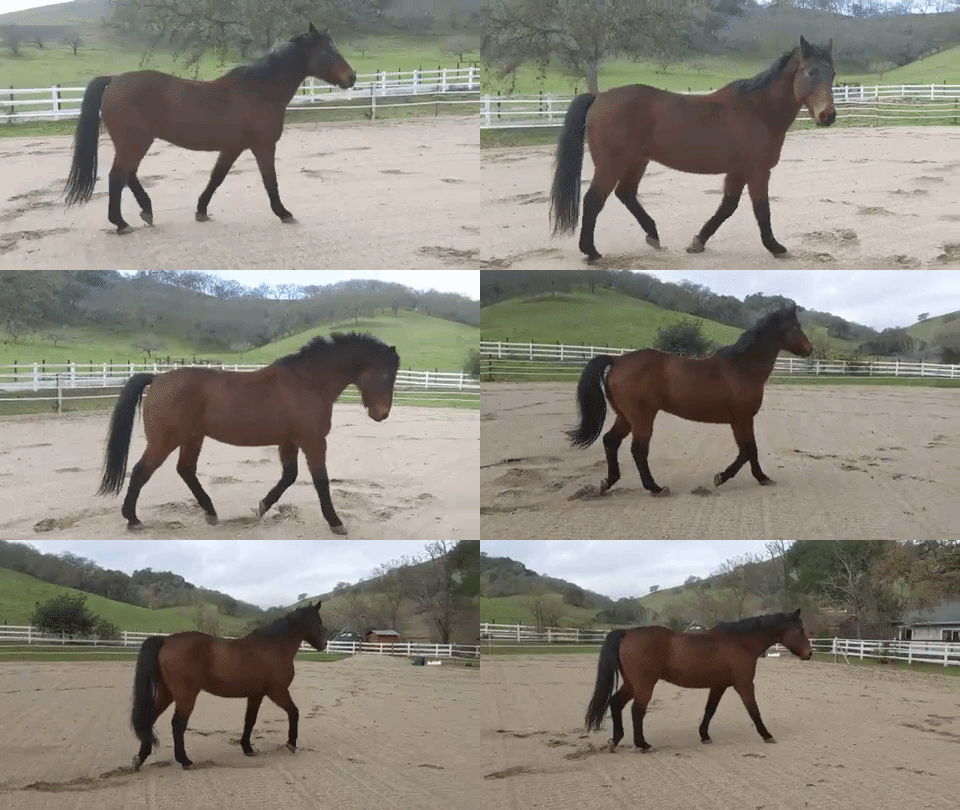
| Meeting some new friends at the new barn! |
We got on the subject about reinforcement histories and reframing the interpretation of the horse's behavior. Pretty much any behavior a horse offers is a) a trial behavior to see if it results in reinforcement or b) a behavior that has been reinforced before. Period.
I mean, we know that horses do not do things because they are assholes, or because they know better but don't feel like it, or because they want to get out of work. Horses
always take the path of least resistance. So the logical conclusion is that it is the rider's fault if they have accidentally reinforced behavior they don't like, created a pathway that is less resistant than the one they would rather the horse take. Or, it's the rider's fault for making the correct pathway more difficult to take than another one.
So instead of thinking "why are you being such a dick doing
this behavior all the time?" with TC, I've been thinking "this is a behavior that has previously been reinforced, I will make sure that it does not warrant a reaction from me this time." In addition, I've been really reinforcing the behaviors I do want to occur more often, like going on the bit and being in front of the leg.
 |
It doesn't look like it, but I pressure washed my
trailer over the holiday and it's so clean! But my
phone is real sharp so can see all the spots I
missed, thanks for nothing, Google |
With this in mind, the main goal in this lesson was to solidify the
baseline gaits. To stop having roundness come from the rider making adjustments but rather to be a state of being that the horse is in at all times.
Aids should be left for specific movements that the rider wants to turn on and off during a ride. I don't want my horse to be in shoulder-in all the time but I do want my horse to be straight all the time. I don't want my horse to be in extended trot all the time, but I do want my horse to be forward all the time. All of these "all the time" things are contained within the realm of baseline gaits. And for those baseline "all the time" things, they should not be aided for, but rather be a state that the horse is constantly in while being ridden.
Just like the horse habituates to the girth and the rider's weight on their back, they should kind of habituate to being in roundness, in straightness, into the bridle. The "aid" for roundness and straightness should be the rider's weight in the saddle and the rider's leg around the horse and the rider's establishment of a steady connection in the reins. Not pushing with the seat, moving the bit in the mouth, shaking the horse off the bit into artificial lightness, or nagging the horse forward with the leg.
 |
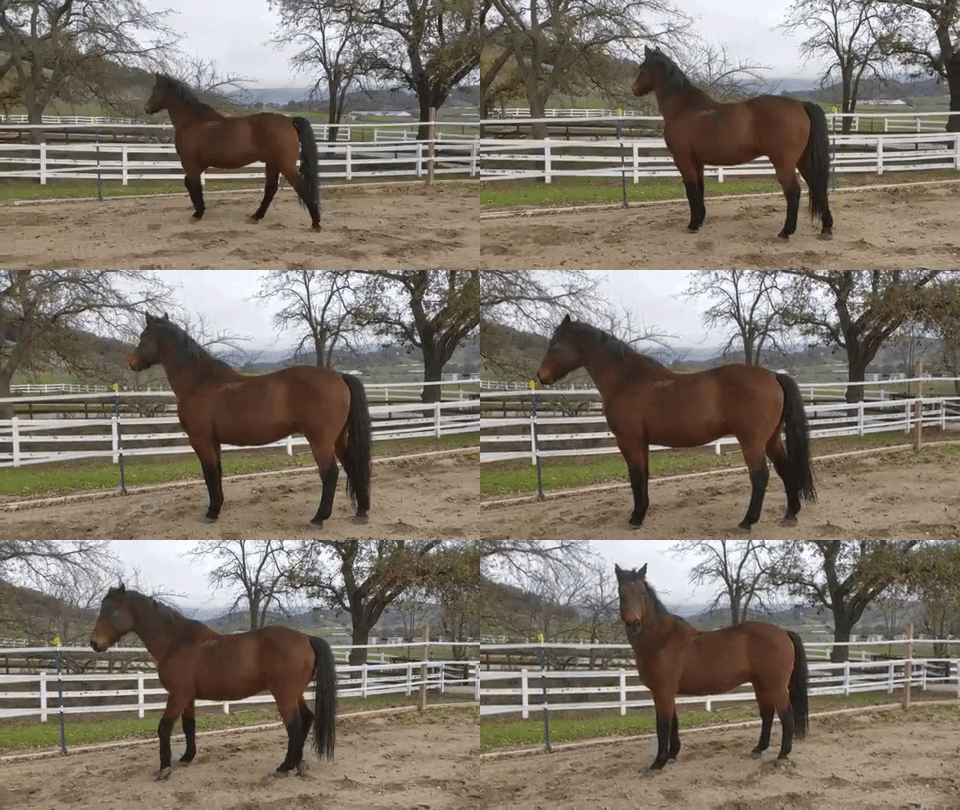
| Wandering around the new barn |
Horses often perform what are called superstitious behaviors. A horse paws before the feed truck comes and then think that pawing causes the feed truck to come, so they paw more. Maybe the pawing only "works" when certain other signs appear too. I have a hilarious example of TC developing a superstitious behavior. We were working on changes and I was praising him after his attempts. I noticed though, that every time we passed a tree he'd shy away at it, shake his neck, then I'd send him across to the change and praise. I realized that he thought the entire series was what I was praising. First you shy at the tree, then you shake your neck, then you do confusing things with your legs, then you get praise.
So a rider that aids and aids and aids the horse for baseline behaviors that we want apparent at all times is leaving way too much room for superstitious behaviors. First the rider wags the head, then we go sideways, then we do a circle, then finally on the bit and praise. If classical conditioning is used instead of operant conditioning, the superstitious behavior is less likely to occur. I am simply waiting for the horse to offer something like roundness and then shaping that behavior with reinforcement (scratching the wither mostly, but I did clicker train a lot of baseline behaviors in TC).
 |
Not being an asshole in the cross ties, he's
actually growing up! |
But how to create this? This horse made things easy actually. She is highly motivated by reinforcement and very willing to trial behavior. TC is like that too. He wildly guesses even if he thinks he will be wrong (since the only time he gets punished is when his wrong answer is dangerous, he doesn't get punished for guessing, so he is more likely to feel comfortable guessing).
I got on, I established contact, I wrapped my leg around her, and I waited. For a long time. Eventually she went to root lightly (a behavior that has been reinforced probably by the rider getting the reins yanked out of their hands accidentally before) and I scratched her wither for putting her neck in a more roundness-oriented place. She tried several other behaviors that have clearly been reinforced: spooking at something, leaning off to one side, slowing down, and putting her head up, before the neck went down again. Another scratch. Another long wait.
After about forty minutes, I had her pretty committed to roundness without my involvement. She knew that was a place she could go for the reinforcer she had been searching for. I put her rider on and we worked through all the same things.
 |
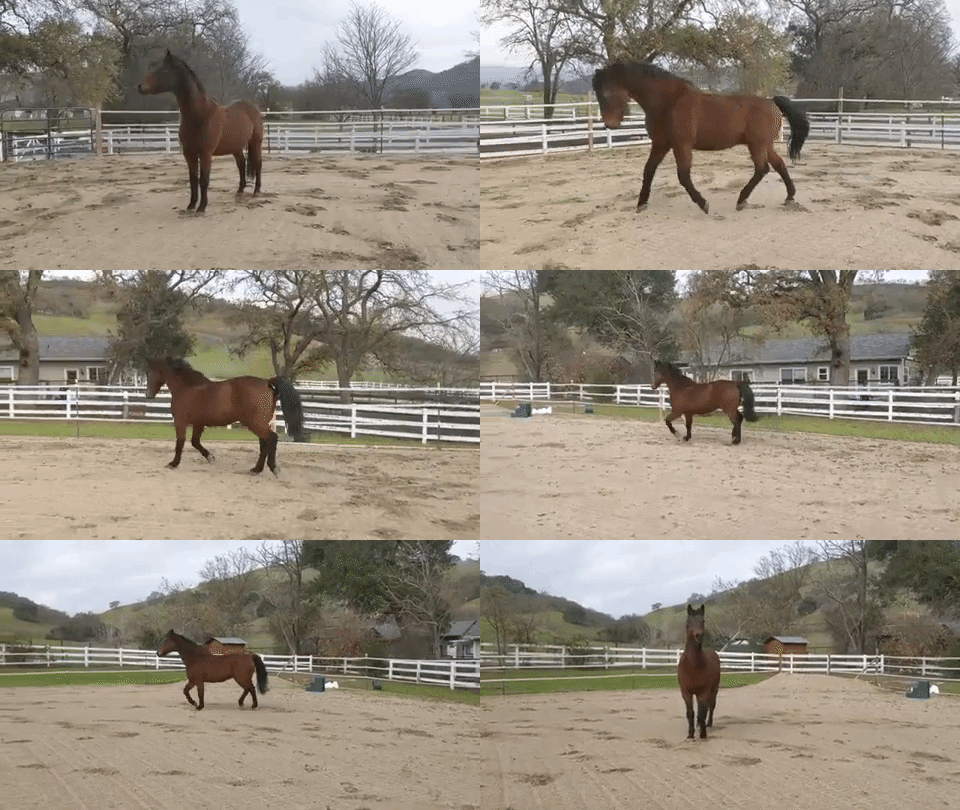
| He really wants to go in that field... |
By the end of the ride, which was over an hour, we had a horse who was solidly into the bridle, swinging over her back, relaxed, and most importantly, confident that she knew what her job was. She wasn't trialing undesirable behavior anymore, she had found what she wanted, which was praise, and she had enough of it to keep her motivated to continue to perform this particular behavior for however long rather than trying to find another behavior that led to a reinforcer.
Homework was to do this every day. For months. Until the horse comes out of the stall confident with what her job is. For weeks. Then aids can start to be applied. Movements can be played with. But always the baseline gaits first. Always.
 |
The cross ties are a step up, so he looks gigantic
all the time now |
For me, saying outloud that there is no aid for roundness was what surprised me, when I said it I stuttered for a second because I was like "what the FUCK did you just say, Megan, there is no aid for roundness? Why do people pay you to do this?" and then had to restate it again to let it sink in for me (this is part of the reason why I love teaching so much! I feel like my subconscious thoughts come to the surface). How many times do we hear "hold the outside rein and soften the horse to the inside" or "slide the bit in the mouth" and all that stuff? Hey, I've TAUGHT a lot of that in the past, like, the recent past.
A lesson like this is tricky to teach a lot of the time (not this time), people want an answer, they want to hear about some black magic aid that will put their horse on the bit once and for all. They do not want to hear that they have to sit and wait every day. For months. They do not want to hear that their horse isn't just being an asshole when they yank the reins out of the rider's hands or shake their neck at them or refuse to do something that the rider is convinced they're asking for in a clear way.
 |
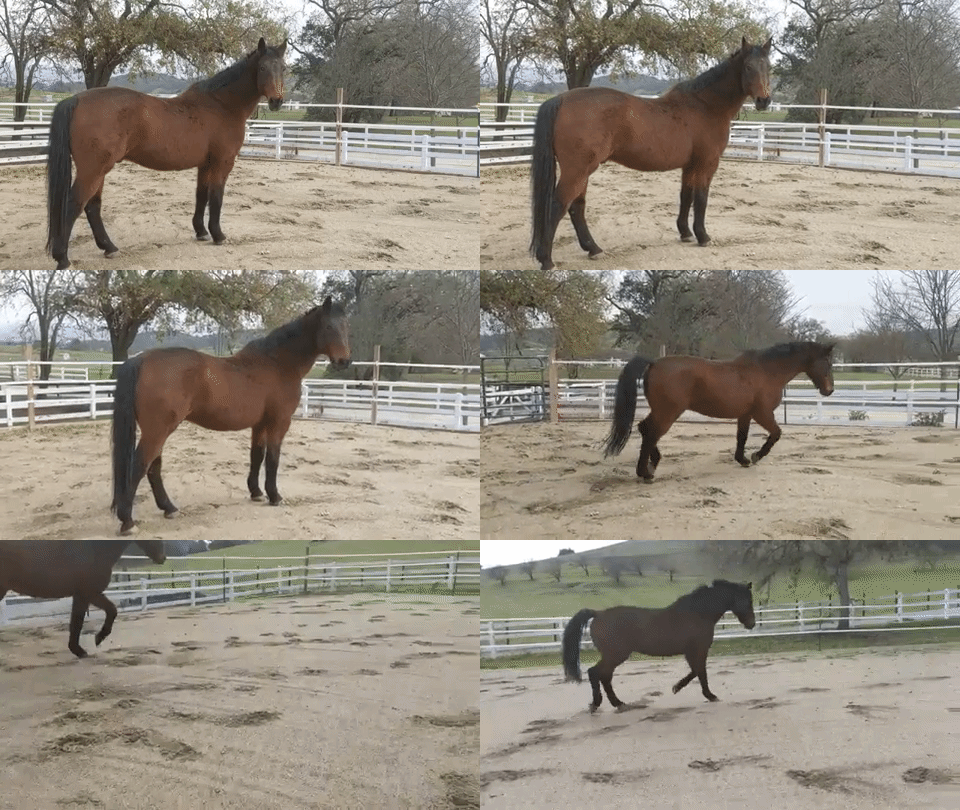
TC's new bff. Look at his SUPER CUTE EARS, he smashes
them forward like this when he's happy |
But really, creating reinforcement histories is how horses learn, it's how we all learn. So I need to reinforce the things I want the horse to do, and stop reinforcing things I don't want the horse to do. It is that simple. It is that easy. It does take a LONG time. But when I get on TC, I do not think about forward, I do not think about roundness, I do not hope anything (other than that a leaf doesn't blow by us lol), I know without a doubt that he will be on the bit. Not because he's some perfect being that was born on the bit, not because of some black magic that I'm doing.
But because we put in the work, he had the reinforcement history. Going on the bit has been a thing that has gotten him way more praise than anything else in his life. And so he goes. On the bit. All the time.
And so now, looking upward, as I get really tempted to pull him into collection or
make him stay straighter... I have to stop and remember the reinforcement histories, and just keep building on them.